Echoes of History and Industrial Clues: A Journey to Hebron, Labrador
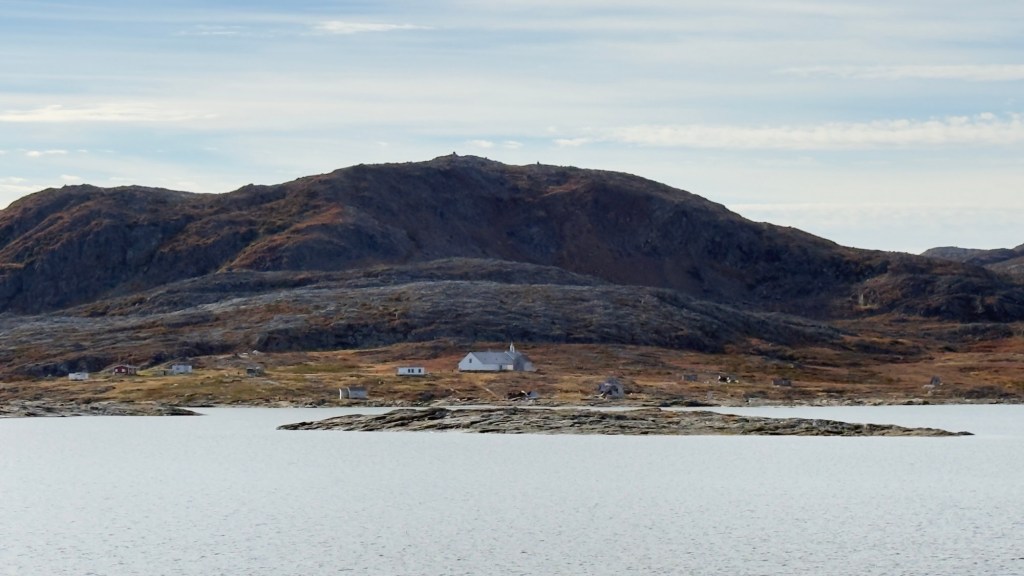
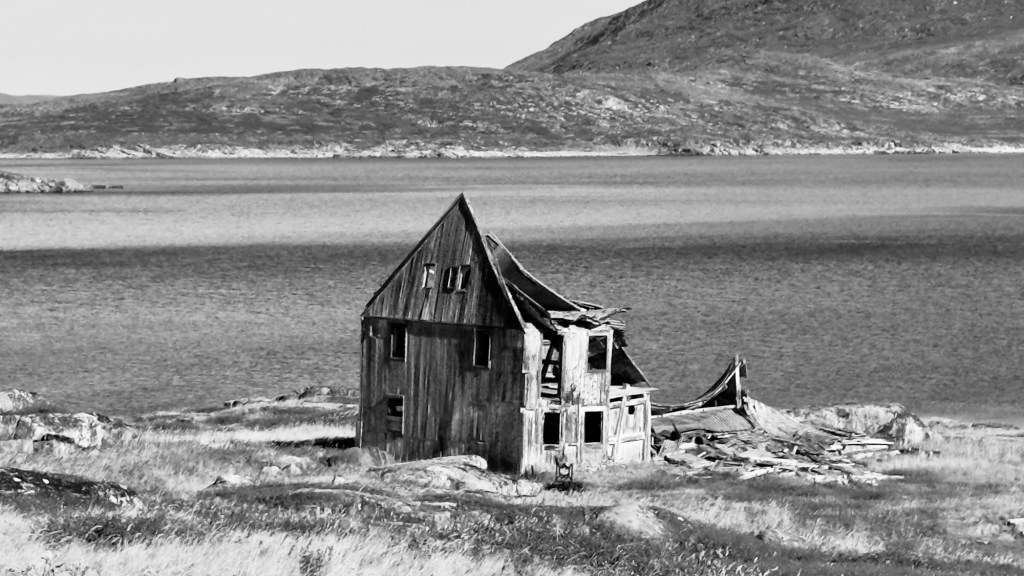
The morning on board the MS Roald Amundsen started in normal fashion—a workout in the gym followed by breakfast. Strong winds forced the cancellation of the morning kayaking, but as I hadn’t booked onto it anyway, my eye was firmly on our main objective for the day: a shore visit to Hebron, a remote ghost town nestled on the wind-battered coast of northern Labrador.
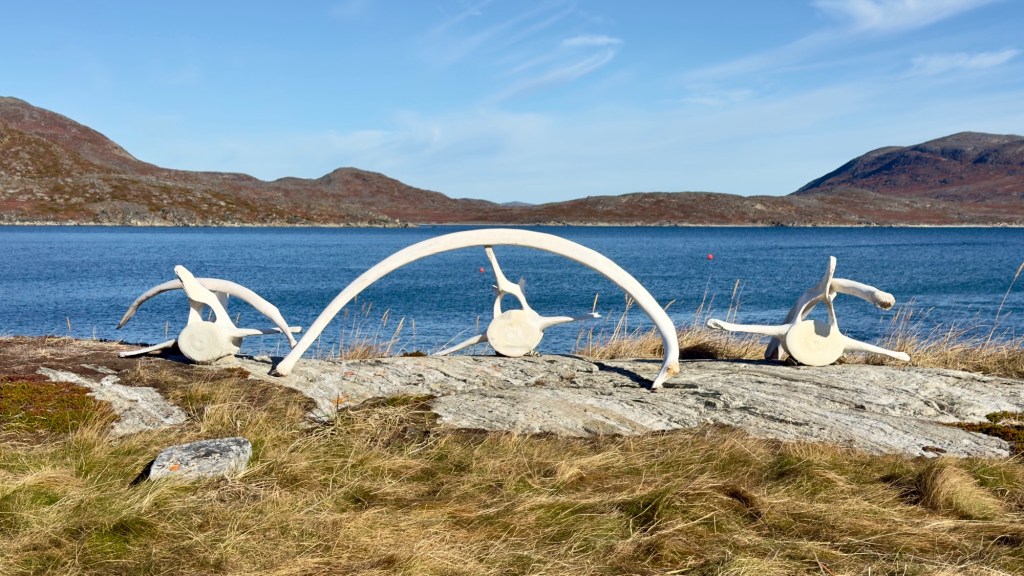
By 10:30am, we boarded the RIB for the transfer to the landing site. Standing on this sub-Arctic coastline, you feel instantly disconnected from modern civilisation. There are no roads here—just an unyielding expanse of bedrock, wild grasses, and the cold North Atlantic.
Exploring the Settlement & The Shadow of 1959
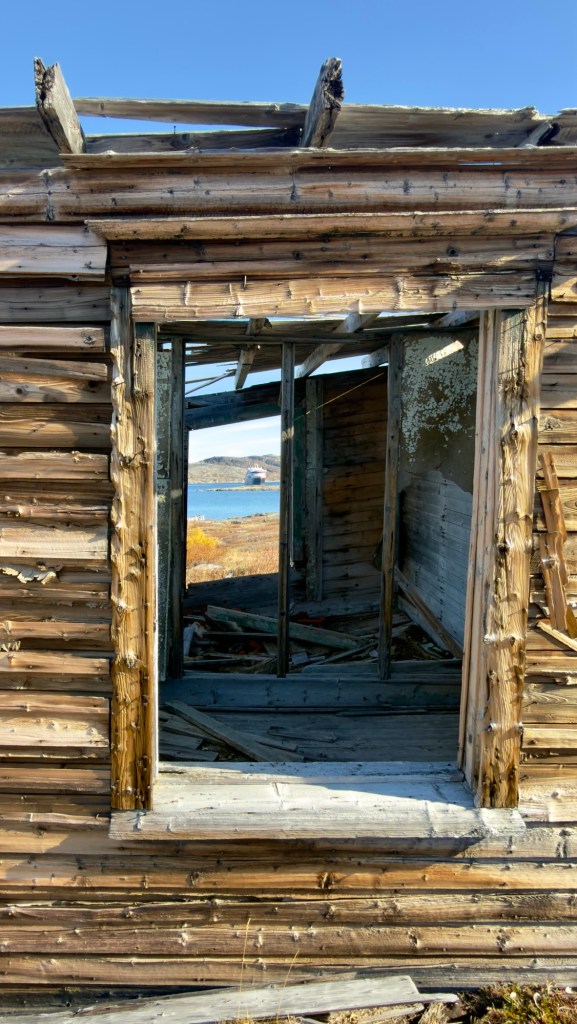
Hebron was originally established as a Moravian settlement in 1831, used heavily for hunting, fishing, and trade with the local Inuit. Today, much of the original settlement is grassed over. At low tide, a natural land bridge exposes a walkway to a small island in the harbour.
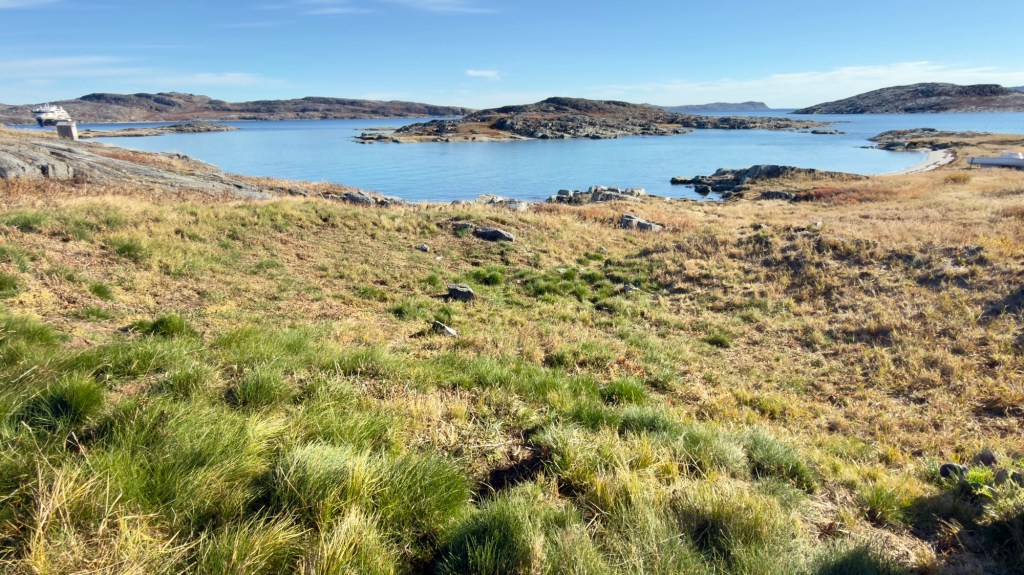
The abandoned settlement now serves as a National Historic Site focused on Inuit cultural preservation and community healing.
Current Activities
- Building Restoration: The Nunatsiavut Government leads seasonal projects using Inuit volunteers and specialised carpenters to stabilise the historic 19th-century Moravian mission buildings.
- Healing Reunions: Funded community initiatives bring displaced Elders and their families back to the site to reconnect with their ancestral roots following the forced 1959 relocation.
- Traditional Practices: Inuit from neighbouring towns like Nain travel to the area by boat or snowmobile to hunt, fish, and camp using seasonal cabins.
- Heritage Tourism: The remote location features a monument of the province’s 2005 official apology and is occasionally visited by arctic expedition cruise ships, such as the one we are on now, and researchers.
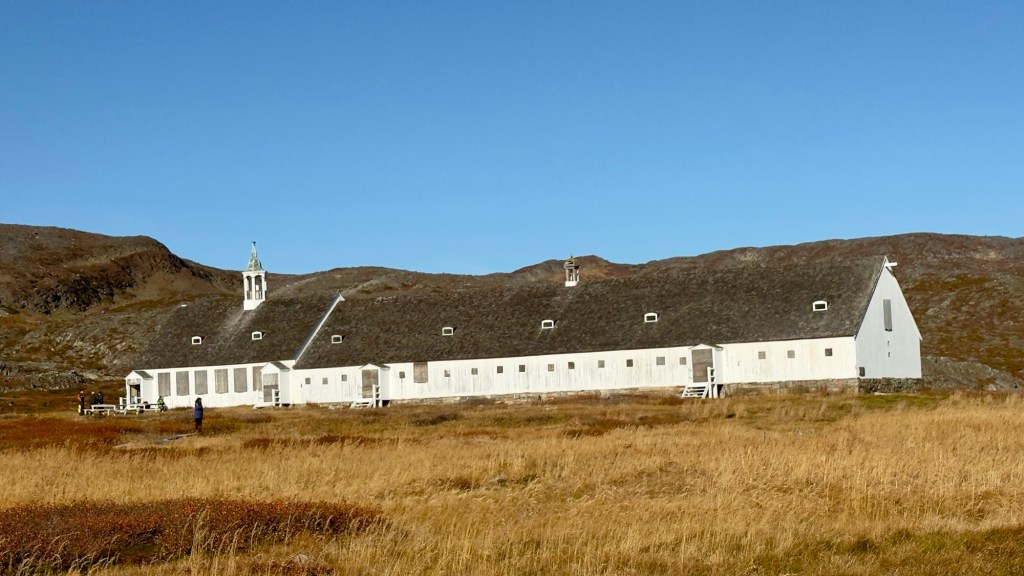
We walked up toward the prominent white wooden Moravian Mission church under the watchful eye of bear guards stationed around the site. The church itself is a striking, quiet structure. Inside, it was dim without overhead lights, but we could make out photos adorning the space—portraits of local Inuit, hunters, and fishermen who have called this isolated place home.
The text in the image below is a handwritten transcription of The Lord’s Prayer in Labrador Inuttut (Inuktitut), based on the biblical passage cited at the bottom: Matthew 6:9–13.
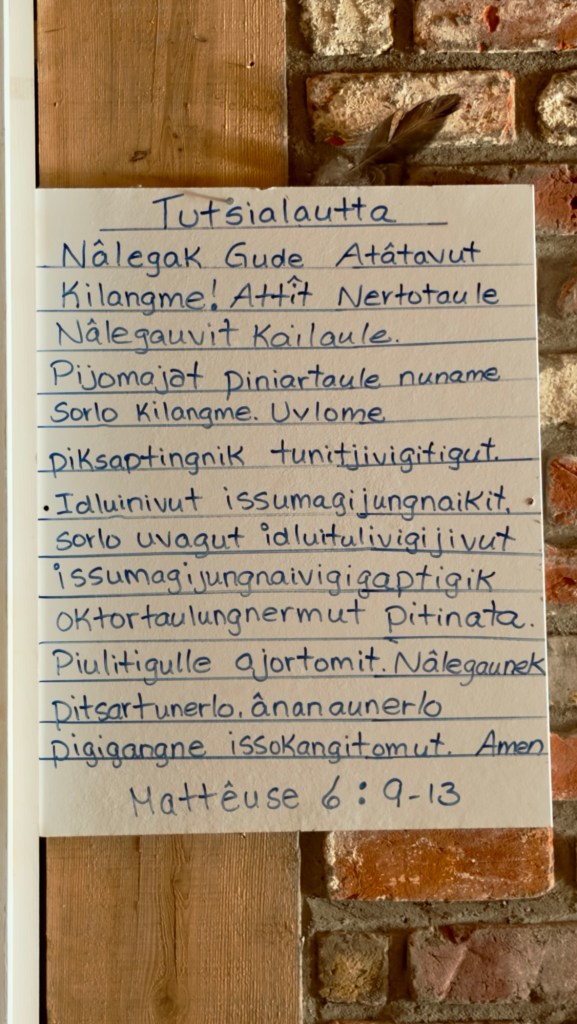
Here is the line-by-line English translation matching the standard English Lord’s Prayer text:
- Tutsialautta
Let us pray - Nâlegak Gude Atâtavut Kilangme!
Our Lord God, Our Father in Heaven! - Attît Nertotaule.
Hallowed be thy Name. - Nâlegauvit Kailaule.
Thy Kingdom come. - Pijomajat piniartaule nuname Sorlo Kilangme.
Thy will be done on earth as it is in heaven. - Uvlome piksaptingnik tunitjivigitigut.
Give us this day our daily bread. - Idluinivut issumagijungnaikit, sorlo uvagut idluitulivigijivut issumagijungnaivigigaptigik.
And forgive us our trespasses, as we forgive those who trespass against us. - Oktortaulungnermut pitinata.
And lead us not into temptation. - Piulitigulle ajortomit.
But deliver us from evil. - Nâlegaunek pitsartunerlo, ânanaunerlo pigigangne issokangitomut.
For thine is the kingdom, and the power, and the glory, forever. - Amen
Amen - Mattêuse 6:9-13
Matthew 6:9-13
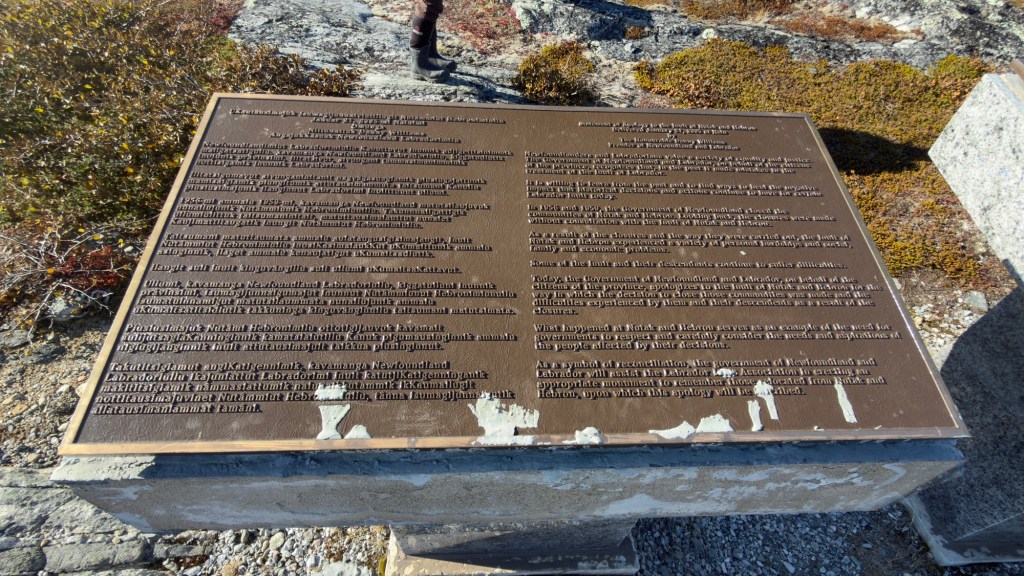
Stepping outside, the deeper human history of Hebron comes into stark focus. Near the church stand three bronze plaques mounted on a stone monument, erected in August 2009 to mark the 50th anniversary of the community’s painful forced relocation in 1959:
- The Government Apology Plaque: A formal statement from Premier Danny Williams on behalf of Newfoundland and Labrador, apologising to the Inuit of Nutak and Hebron for the closure of their communities:
“The Government of Newfoundland and Labrador, on behalf of the citizens of the province, apologises to the Inuit of Nutak and Hebron for the way in which the decision to close those communities was made and for the difficulties experienced by them and their descendants as a result of the closures.”
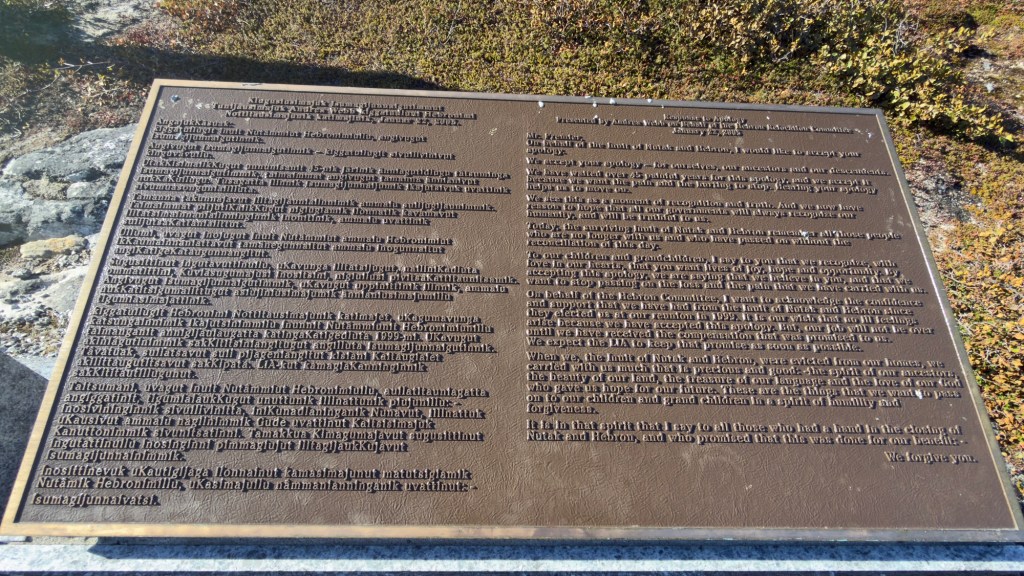
- The Inuit Acceptance Plaque: A moving response from the Labrador Inuit community, accepting the apology:
“We accept your apology — for ourselves, our ancestors and our descendants. We have waited over 45 painful years for this apology, and we accept it because we want the pain and the hurting to stop. Hearing your apology helps us to move on… We forgive you.”
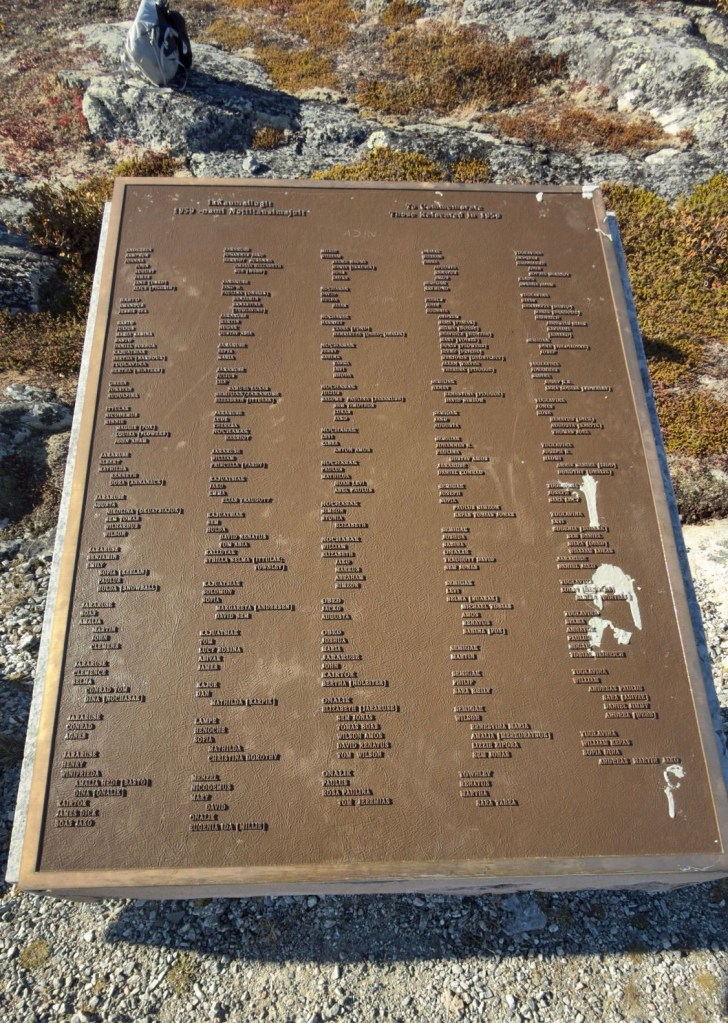
- The Names Plaque: A solemn memorial listing all 233 Inuit residents forced to abandon their homes and leave their ancestral lands behind.
A separate federal National Historic Site plaque near the shoreline commemorates the original 1831 Moravian foundation and its official heritage designation in 1976.
The Curiosity in the Turf: Stourbridge in the Sub-Arctic
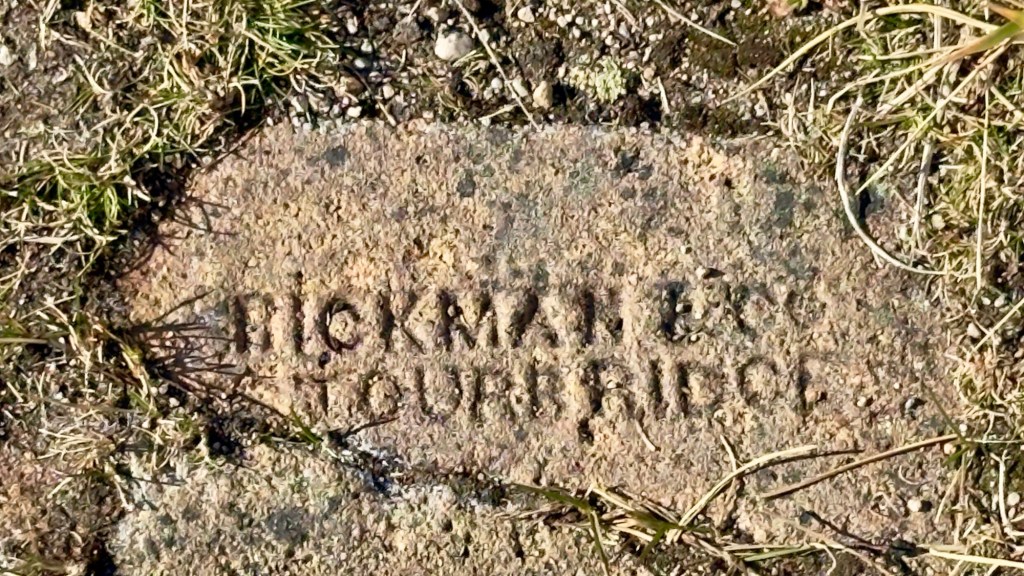
As I walked along the dirt pathway near the church, a rectangular shape caught my eye in the earth. Looking closer, I was surprised to find a heavily stamped firebrick bearing the inscription:
HICKMAN & CO STOURBRIDGE
I did wonder how a heavy clay brick from an industrial town in the West Midlands of England end up embedded in a remote Inuit settlement thousands of miles across the Atlantic?
A bit of investigation reveals a remarkable story of industrial logistics:
- The Industrial Hub: In the 1800s, Stourbridge was a booming centre of the British Industrial Revolution. A businessman named Henry Thomas Hickman operated coal mines and brickworks at “The Delph” in Brierley Hill, producing world-renowned fireclay capable of withstanding extreme temperatures.
- The Arctic Barrier: High above the tree line, Hebron lacked both timber and suitable clay to manufacture structural bricks. To build a functioning survival base, the Moravians had to import everything.
- The Lifeline: Every year, the Moravian supply ship Harmony braved treacherous ocean ice. Packed in its hold were prefabricated timber, window glass, and thousands of heavy Hickman & Co firebricks.
- Survival Architecture: Ashore, these heat-resistant bricks weren’t used for ordinary walls—they lined the forge in the blacksmith’s shop and built the heavy thermal stoves needed to keep wood-framed buildings operable during brutal sub-zero winters (-30°C and below). Over decades of weathering, fragments from these hearths found their way into the pathways beneath our feet.
Reflection and Remembrance
After taking photos and processing the sheer contrast between British industrial history and Inuit heritage, we walked back down to the shoreline and took the RIB back to the ship.
Once on board, we stripped off our heavy layers—after all the walking in the sun, we were feeling very hot. We cooled down, enjoyed lunch, took a stroll on the open deck, and then relaxed in the lounge.
As the MS Roald Amundsen pulled away from the harbour, the ship sounded its horn three times—a respectful substitute for the traditional three-gun salute usually offered when a vessel departs an Inuit community.
Back in our room, we changed for dinner. Today happened to be Orange Shirt Day in support of Canada’s National Day for Truth and Reconciliation. Wearing an orange top for our evening meal felt like a fitting end to a day spent reflecting on history, displacement, resilience, and the quiet connections that tie our world together.


Leave a Reply