The Resilient Heart of Nain: A Journey Through Labrador’s Moravian Heritage
After a delightfully lazy morning aboard the ship—complete with a relaxed breakfast and a peaceful stroll along the deck—our afternoon took a meaningful turn. Following lunch, we boarded the zodiac and set off on a short, bouncy boat ride to Nain, the northernmost permanent settlement in Labrador.
Our time in Nain turned out to be a deeply moving masterclass in history, culture, and absolute human resilience.
Welcome to the Church: Tasting History and Tradition
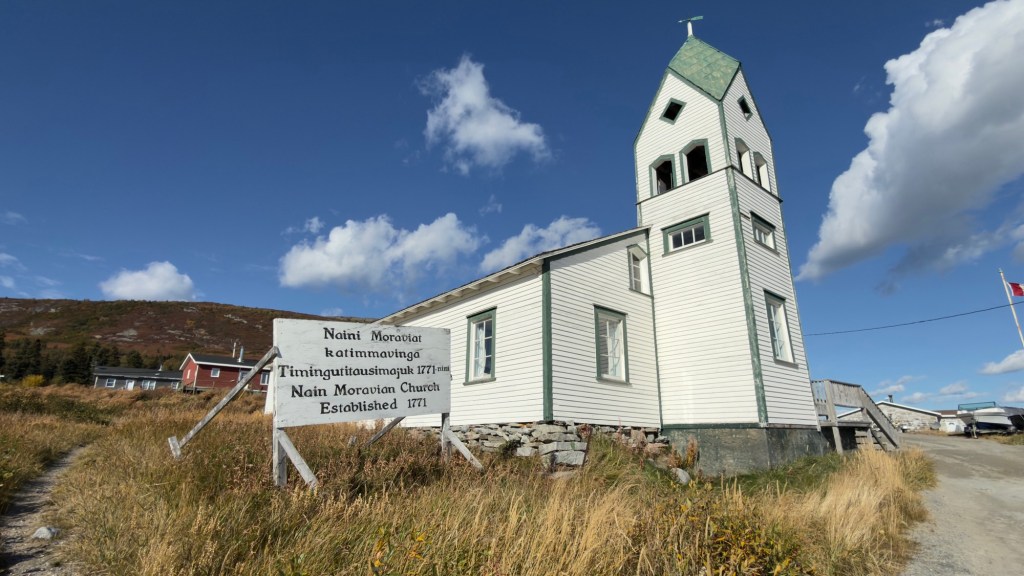
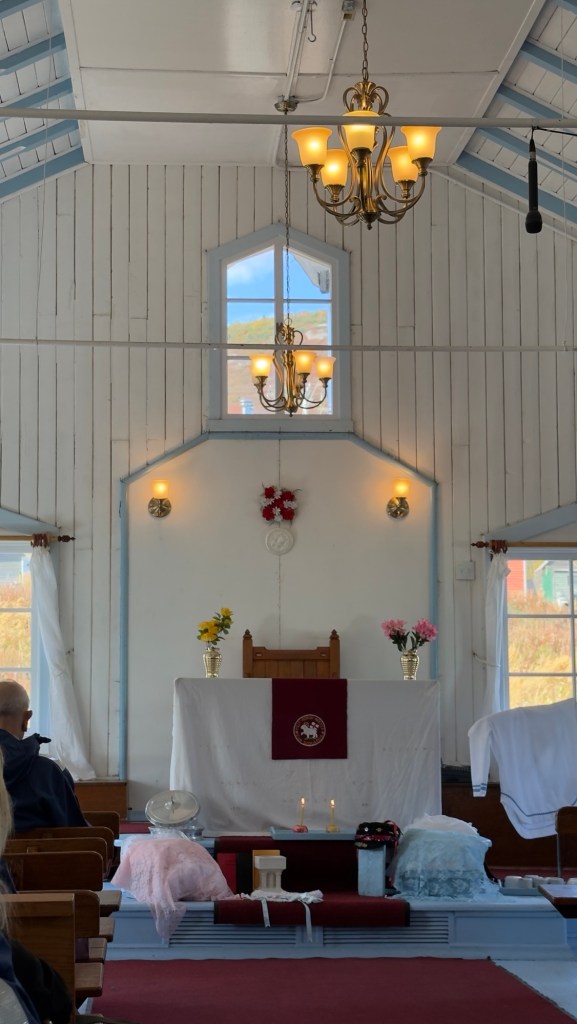
Our visit began inside Nain’s central Moravian church, a stunning building painted crisp white inside and out, framed by exposed roof beams in a soft light blue. At the front stood a simple altar adorned with two bunches of flowers, set against a display of historical photographs and traditional local dress.
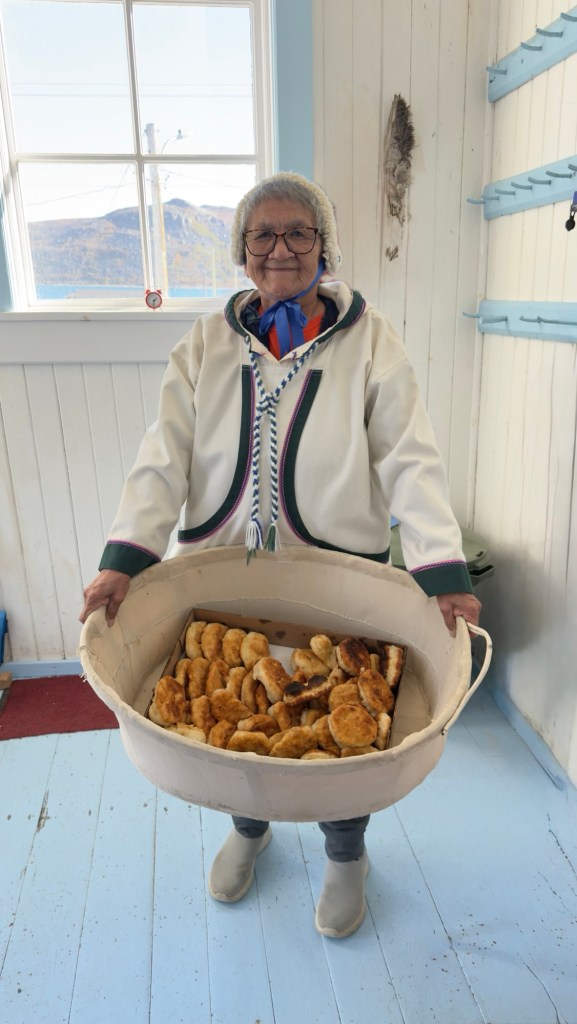
Before we sat down, an elderly community member greeted us with a smile and a large 200-year-old bread basket filled with panizia (a local flatbread/bannock). Trying a piece felt like a warm, edible welcome to the community.
We then listened to a presentation from a local community development officer who works in regional infrastructure. Through her interesting talk, we gained an intimate look at daily life, local traditions, and the complex history of Nain.
Life on the Land and Sea
Nain’s local economy and culture are intimately tied to the surrounding environment:
- Fishing & Harvesting: Arctic char and scallops are central to the local market. Commercial fishing also covers shrimp, crab, and halibut, alongside traditional fishing for personal consumption.
- Traditional Smoking: Fishing folk still smoke their catch the traditional way—over open fires out on the land.
- Sustainability: Five active fishermen and 20 fish processing workers keep the local plant running. While char stocks were depleted in a couple of nearby bays in the past, overall stocks are stable and carefully managed.
- Changing Environment: Though Labrador shares a climate and biodiversity similar to the High Arctic, the impacts of climate change are becoming increasingly visible. Trees and gorse are expanding into areas they previously did not grow, and the weather during our visit was unusually mild. Local hillsides are so overgrown with fast-growing alders and brambles that the municipality recently applied for funding just to clear them.
Preserving Artifacts and Heritage
Our host proudly showed us a collection of sacred and daily objects that tell the story of the Inuit and Moravian heritage in Nain:
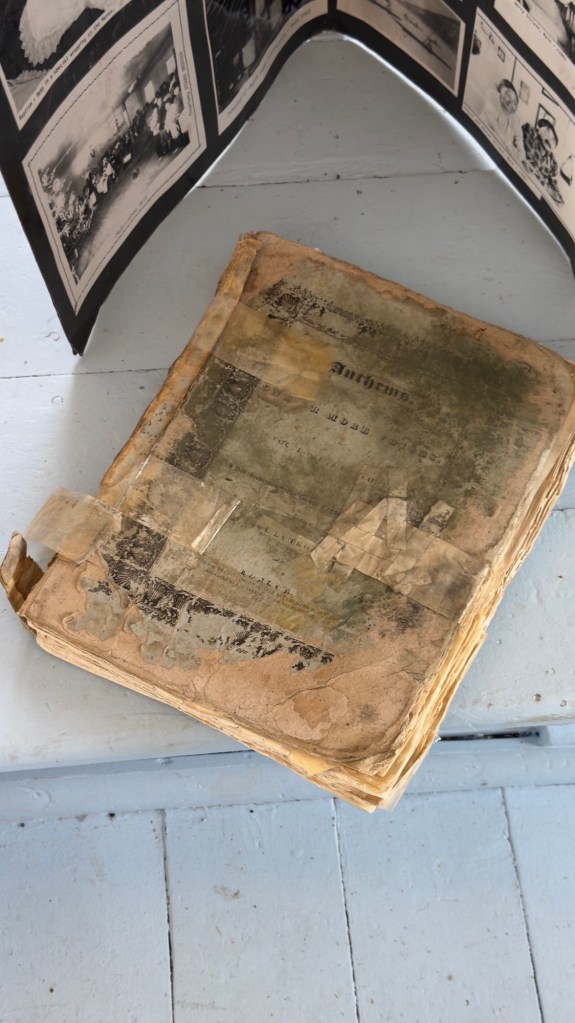
- The Organist’s Book: A fascinating 200-year-old music book used by church organists through the generations.
- The Amauti (Traditional Parka): Beautiful traditional garments worn by both men and women. White is saved for special occasions, featuring intricate trim on the hood. The hood of an amauti is specifically extended so a baby can sit comfortably inside, often lined with fox fur for warmth.
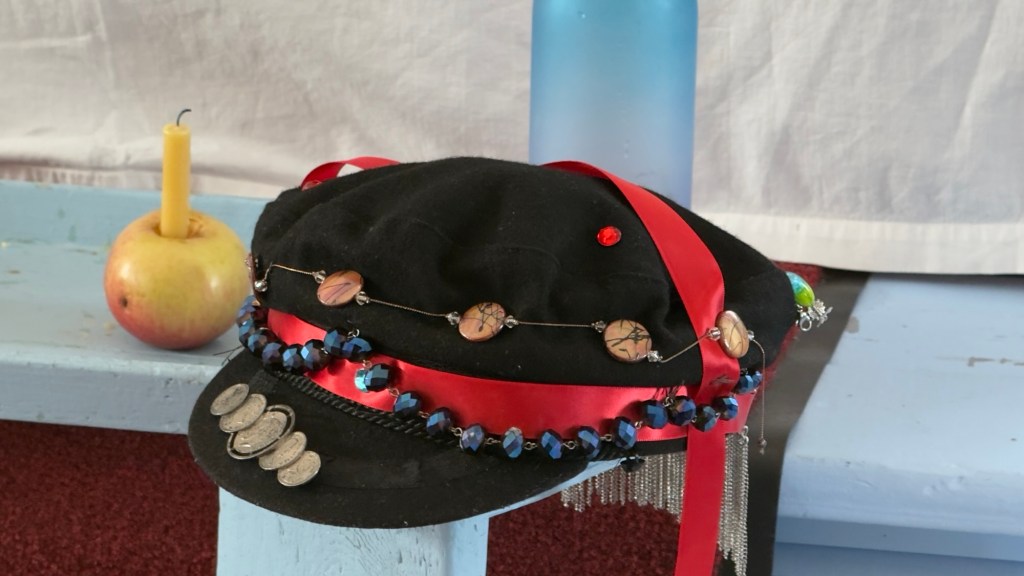
- Colour-Coded Ribbons: Men’s coming-of-age hats carry subtle social cues through coloured ribbons—red for single, blue for married, and yellow for widowers.
- Baptismal Blue and Pink Lace: A delicate lace garment kept specially folded so it remains protected for generations of baptisms.
- The Christingle: A Moravian Christmas tradition given to children under 15, featuring an apple (representing the world) holding a lit candle (representing the light of Christ).
- Inuktitut Hymnals: Bibles and hymn books carefully translated from English into Inuktitut, allowing congregation members to worship in their native language.
A Journey of Strain, Survival, and Sovereignty
The history shared with us was raw, heavy, and inspiring.
Historically, the local Inuit were nomadic, moving across the land according to animal migrations and seasonal changes—living in sealskin or caribou skin tents in the summer, and turf or sod houses or igloos in the winter.
The Arrival of Missionaries
When traders, Basque whalers, and missionaries arrived in the early 1700s, they brought useful new materials like metal to make tools and needles. However, language barriers and an absence of clear governance led to extreme tension, conflict, and loss of life as the local population sought to protect themselves.
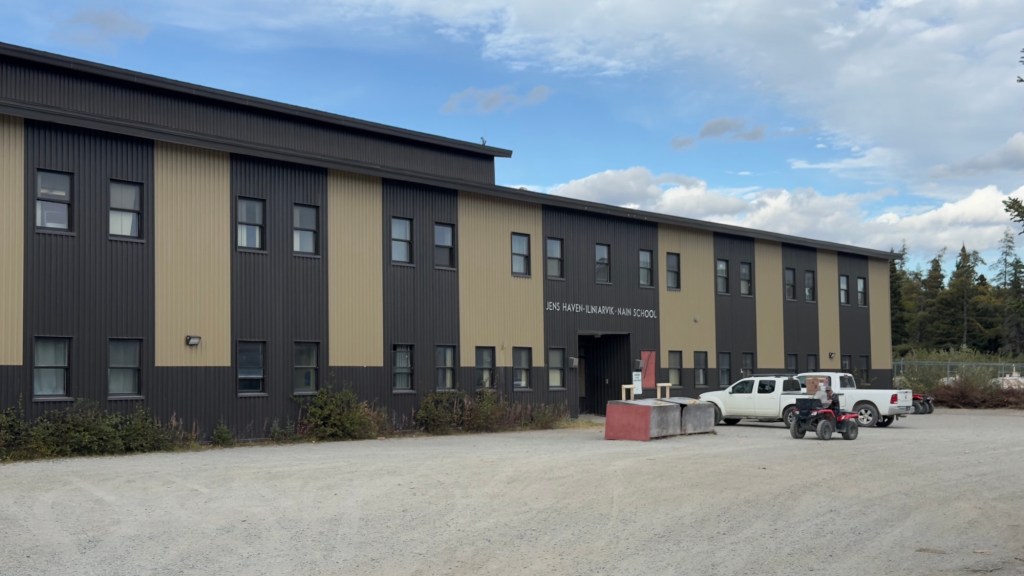
Seeking peace, a Moravian missionary named Jens Haven—who had previously lived in Greenland and learned the language—travelled to the region. His efforts eventually led to the establishment of the Moravian Mission in Nain in 1771. Over time, traditional practices shifted, and European surnames of Moravian origin were introduced alongside traditional single Inuit names.
The Struggles of Resettlement
The 20th century brought heartbreaking disruption. During the 1930s, a US military base was built in Hopedale, drawing many away from Nain for salaried work. Later, government decisions led to forced relocations. Inuit families were uprooted from northern settlements and sent to Nain with promises of housing and services that never materialised.
Left without familiar hunting grounds or adequate shelter, families faced 30 to 40 years of severe hardship, poverty, cold, and social distress.
“Behave Like Caribou”
Yet, Nain’s story is defined by perseverance. As our host recalled, her mother used to give her a piece of advice whenever times were tough: “Behave like caribou—the herds always move forward.”
By the 1970s, Inuit leaders organized to fight for their rights, forming the Labrador Inuit Association and paving the way toward self-governance. Today, local culture is experiencing a powerful revitalisation—drum dancing and throat singing are being reintroduced, and church services are proudly held in Inuktitut.
While Nain still faces modern challenges—such as an ageing population in a town of 1,200 residents, and a housing crisis that makes it hard for students returning from university—there is an overwhelming sense of pride in this community.
Before concluding her talk, our host sang a traditional hymn to us as travellers, with three other local people.
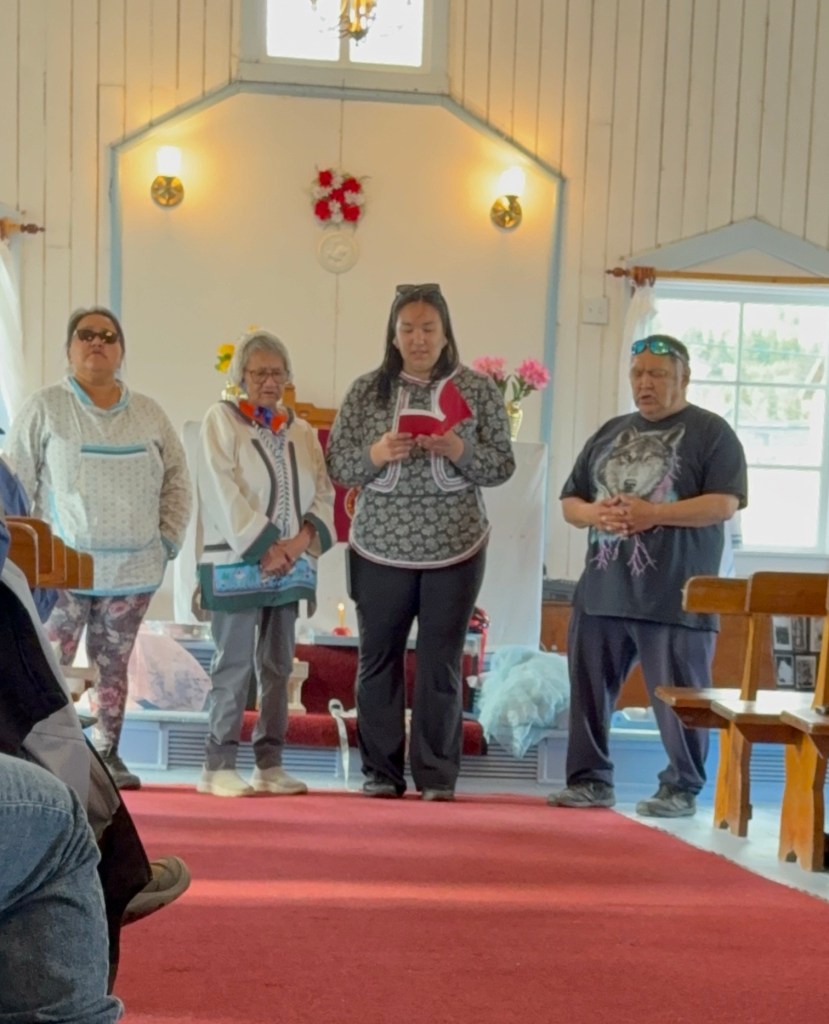
Exploring Nain
Following the church presentation, we split into smaller groups. Our local guide, Sarah, walked us through the community and took us to a fantastic local artist’s studio. The shop was filled with gorgeous handcrafted goods, and I couldn’t resist picking up a handmade decoration for my Christmas tree back home.
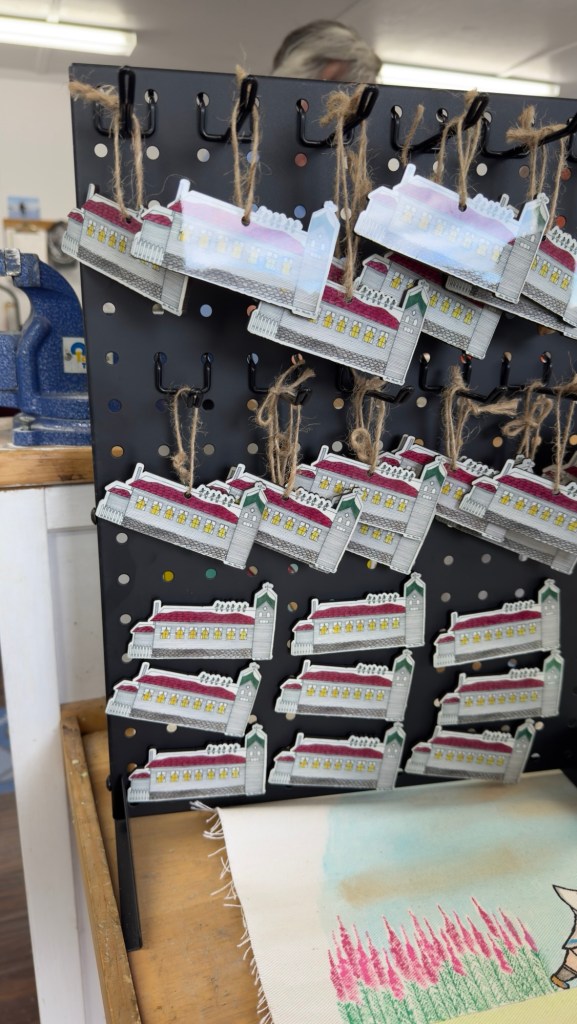
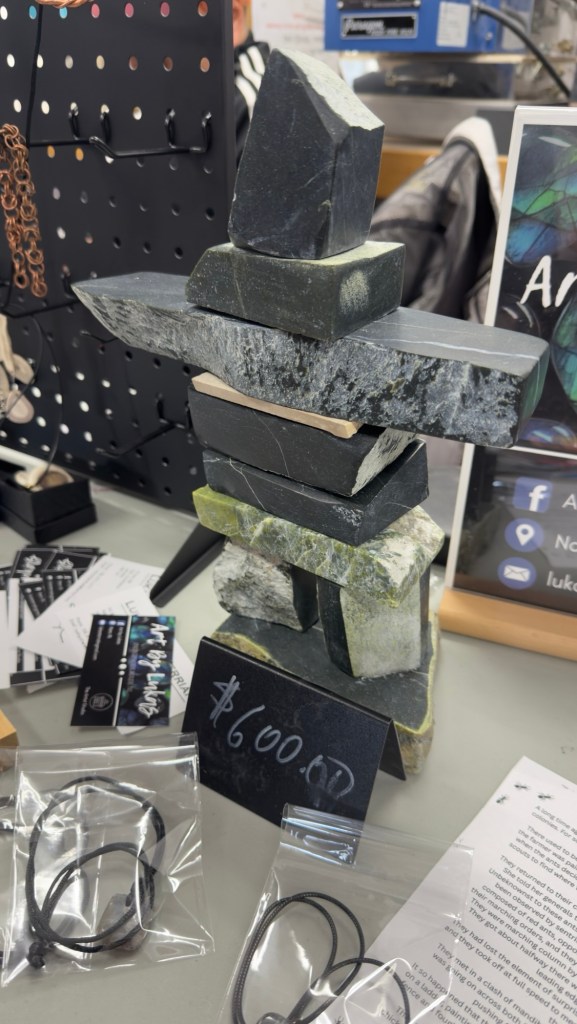
We decided to skip the final scheduled stop at the local school, choosing instead to wander quietly around the town, taking in the sights of locals, huskies and quiet coastal views.
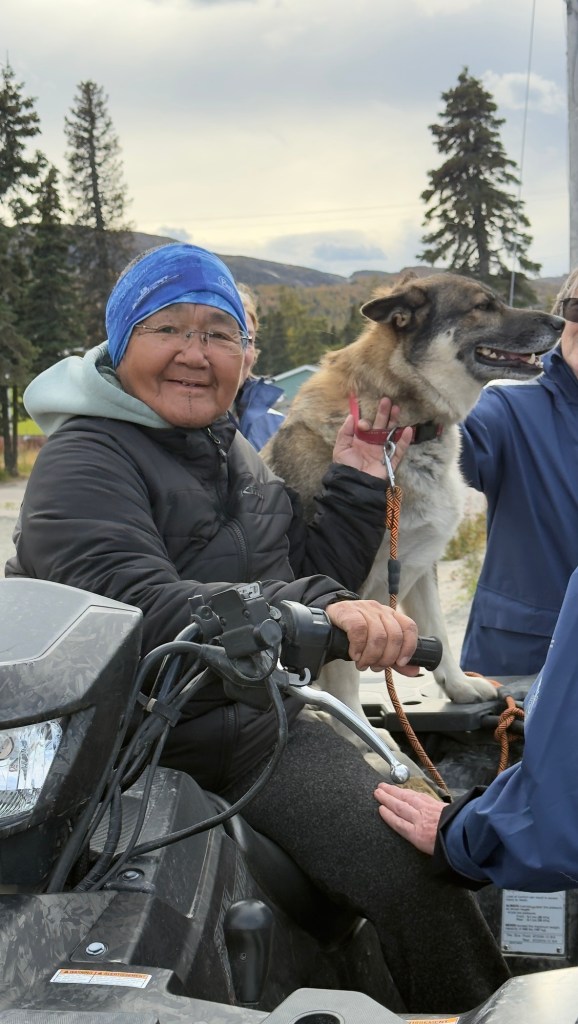
Eventually, we caught the zodiac back to the ship for our evening meal, completely full of new stories, rich history, and deep admiration for the resilient spirit of Nain.
Another highlight was stepping in deck to see a brief show of Northern Lights – a perfect end to the day.



Leave a Reply