Nachvak Fjord: Rocks, Research and Polar Bear Land
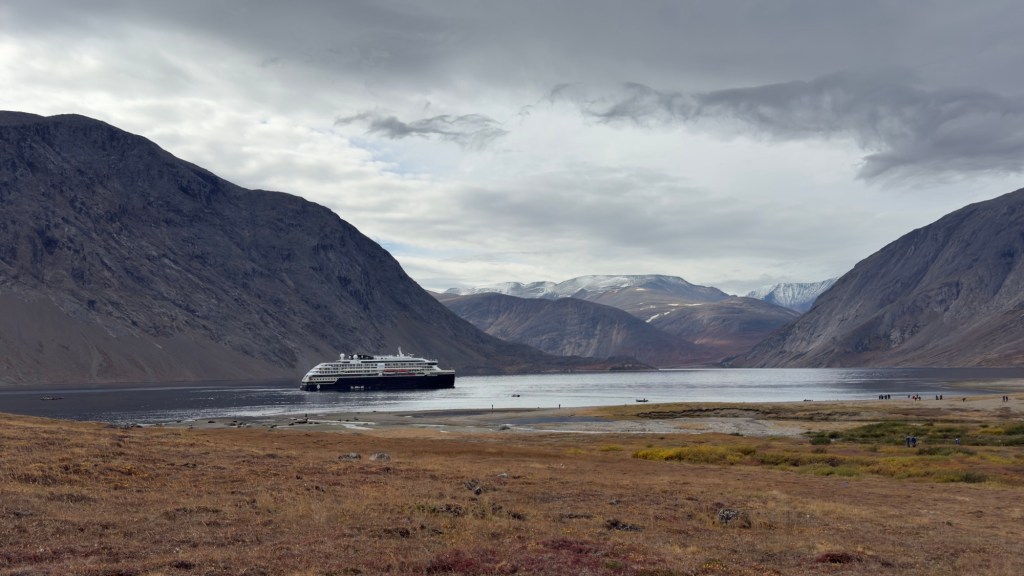
The day began with a workout in the gym, but the real adventure started when we headed out onto Nachvak Fjord. Surrounded by the snow-dusted peaks of the Torngat Mountains, the fjord looked vast and deep — around 80 metres, we had been told — and we settled into the cruise aboard the RIB assuming there was plenty of water beneath us.
That assumption lasted until the zodiac boat struck something hidden below the surface.
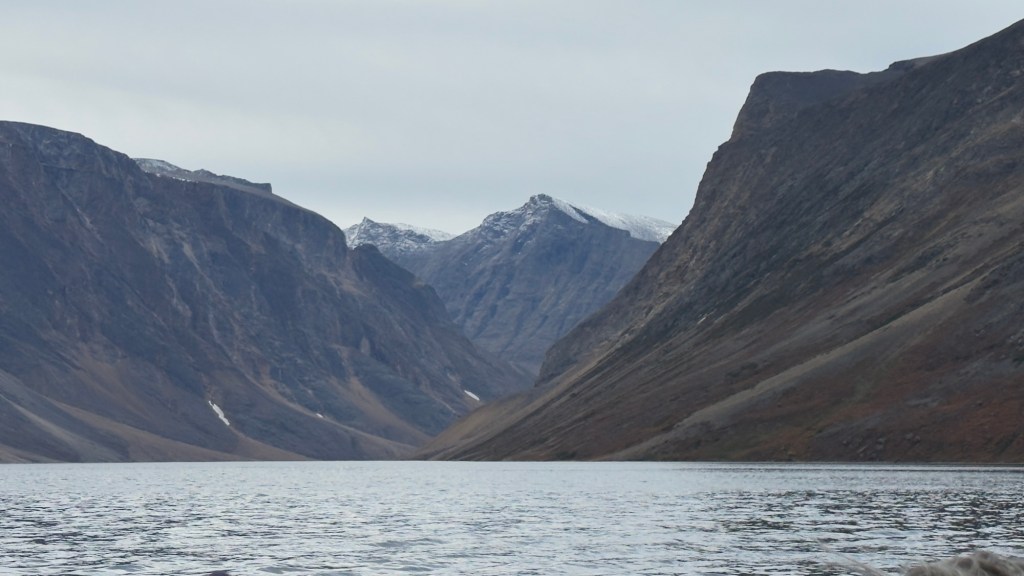
Our guide, Pawel , had slowed down to watch some people kayaking, which turned out to be extremely fortunate. Moments later, the engine hit a submerged rock and smoke began pouring out.
Pawel quickly radioed the other boats and warned everyone about shallow water and submerged rocks. It appeared that we had encountered an underwater extension of a peninsula, although it was extremely difficult to see from the surface.
We proceeded much more cautiously after that, waiting until the water became deeper again before continuing towards the far end of the fjord.
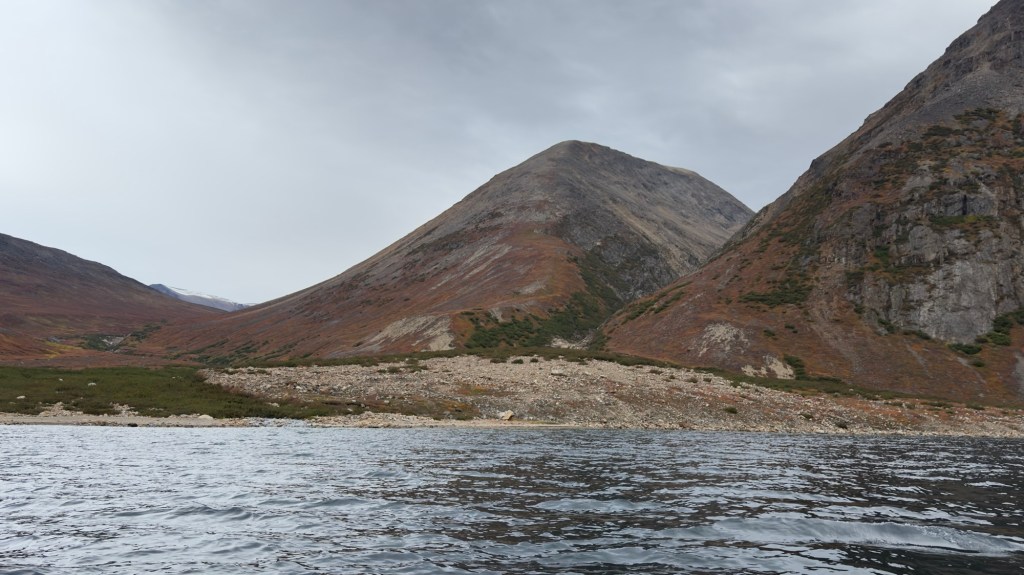
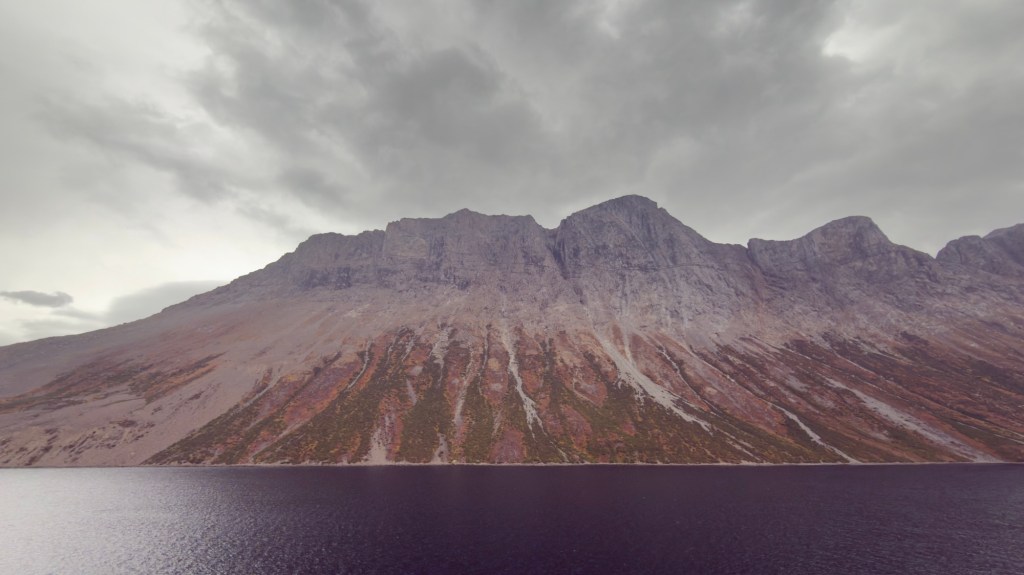
There wasn’t a huge amount of wildlife to see, although we spotted a few birds. To be honest, I was quite happy concentrating on the geology. The landscape was spectacular, with snow-capped mountains rising around the fjord, dramatic rock formations and fascinating layers of exposed strata. The rocks here are a reminder of just how ancient this landscape is, with geological processes having shaped the mountains over immense periods of time.
We reached our furthest point surprisingly quickly — around 20 minutes — so it was time to turn around and head back towards the ship.
Our companion boat then managed to get itself grounded for a while, so we turned around to see if they needed assistance. Fortunately, by the time we got there they were fine and were able to continue on their own.
Back on course, Pawel explained that the planned landing site had actually been changed. Archaeological remains of old houses had been discovered at the original location, and understandably, we weren’t allowed to land there and risk disturbing the remains.
A little science on the fjord
Our next adventure was something completely different: the Science Boat.
This was an excursion we’d had to book on the HX app and then wait to be allocated a particular time slot. So, for us, today was the day. Seven of us met environmental scientist Ashton at the checkpoint, where our names were ticked off before we headed out onto the water.
It turned out to be a brilliant hour.
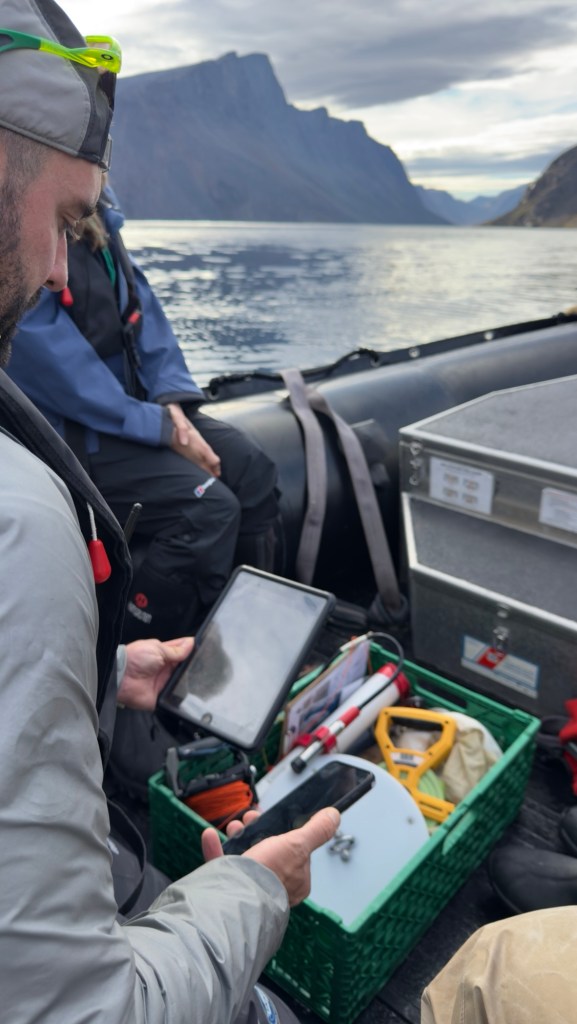
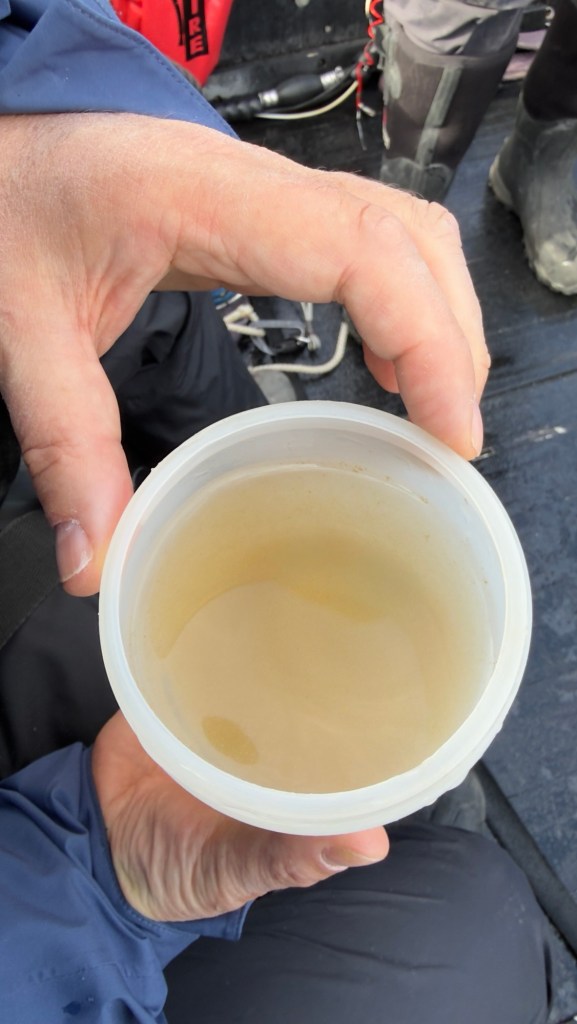
Rather than simply being passengers, we actually got involved in collecting scientific data from the fjord. We measured the conductivity of the water, which helps determine its salinity, as well as its depth and temperature. We also measured chlorophyll levels and collected a water sample for further analysis.
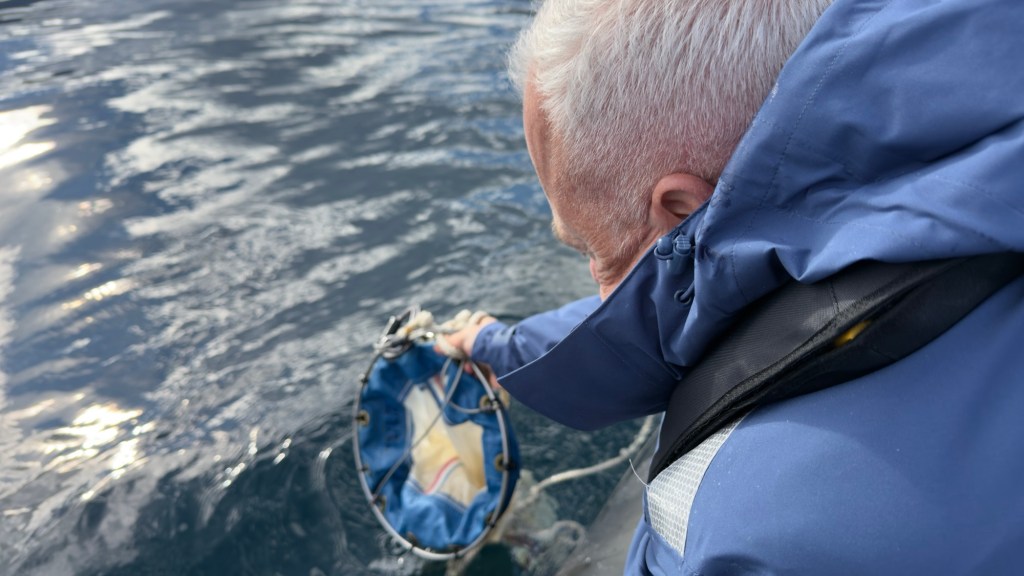
Ashton was pleased with our sample, so we’ll hopefully find out more about what it reveals later in the expedition.
It was a fascinating experience and a nice change from simply looking at the landscape. For an hour, we were effectively a very small and rather enthusiastic research team!
Welcome to Polar Bear Land
After lunch, it was time to head ashore.
As we approached the landing, one of the crew greeted us with the words:
“Welcome to Polar Bear Land.”
Well, that’s one way to make everyone feel completely relaxed!
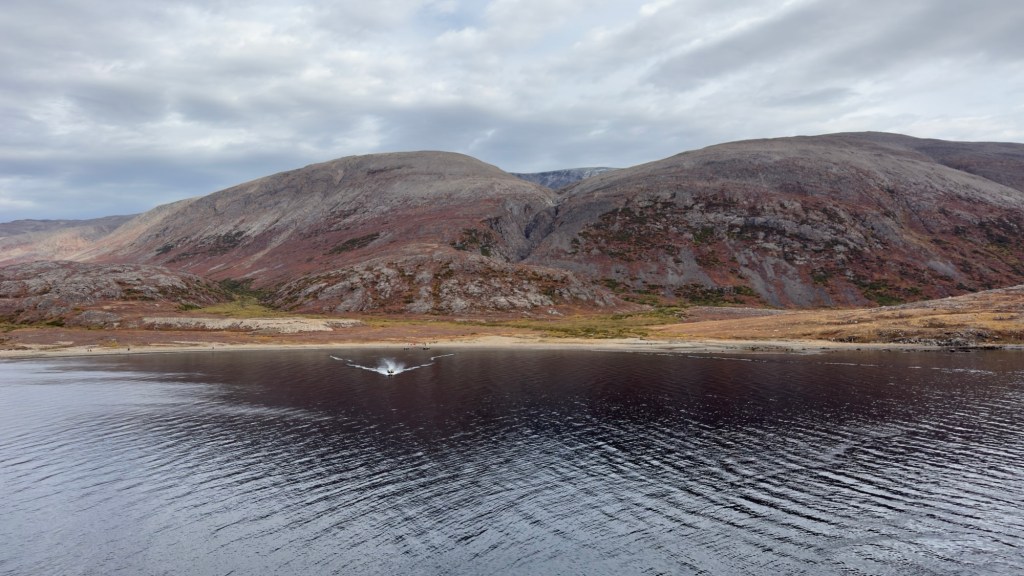
I was still slightly apprehensive after watching the polar bear safety video a couple of nights earlier, but I decided it was time to brave it. We had five official Canadian bear guards with us, along with other crew members keeping watch around the perimeter, so we were in very capable hands.
Our instructions were simple: stay within the designated area and follow the blue cones. The orange cones and red flags marked the outer safety perimeter, and nobody was to go beyond them.
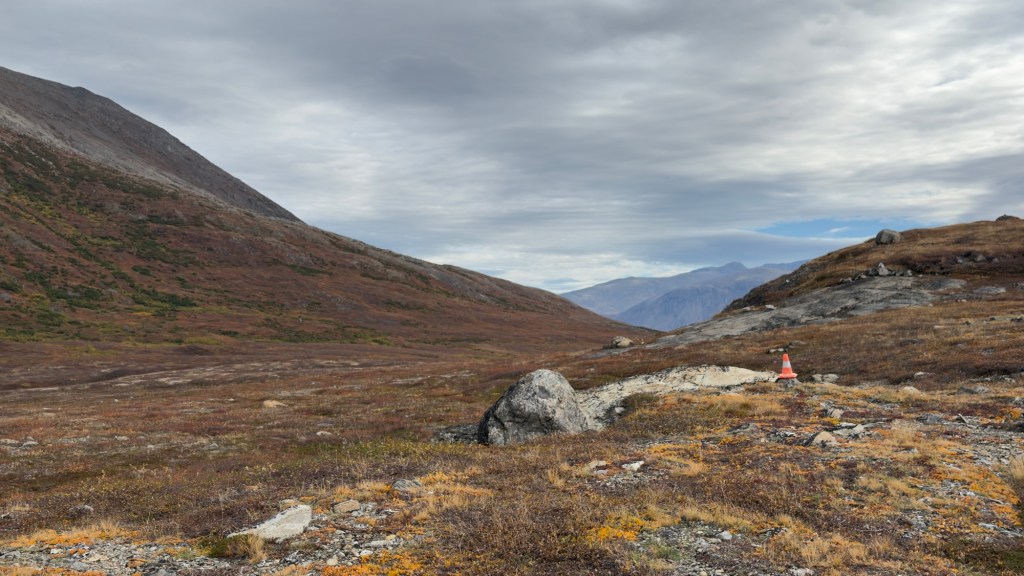
Once we started exploring, the nerves gradually disappeared.
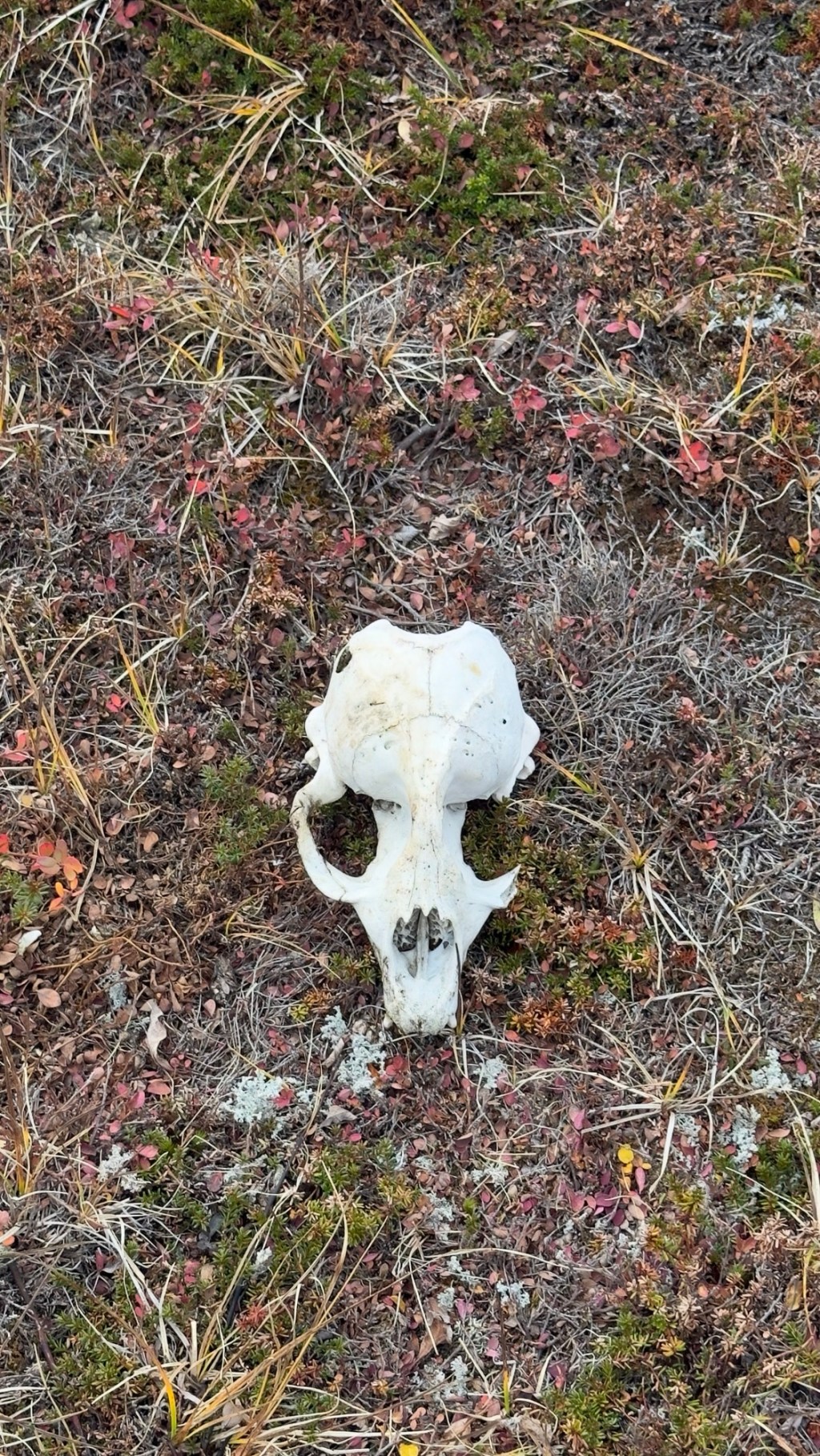
We spent about an hour walking across the landscape, stopping constantly to photograph plants, rocks and shells. We even came across a skull, which added another little mystery to our collection of Arctic discoveries.
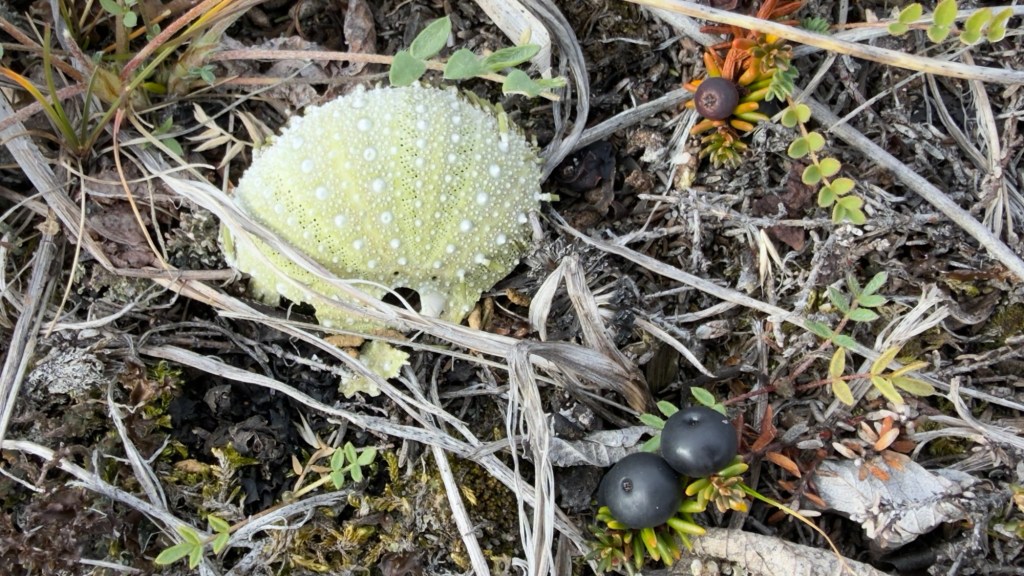
Eventually we made our way down towards the shoreline, where we felt a little more comfortable knowing that the area had been carefully monitored. We walked along the water’s edge, looking for more interesting specimens and taking in the incredible scenery.
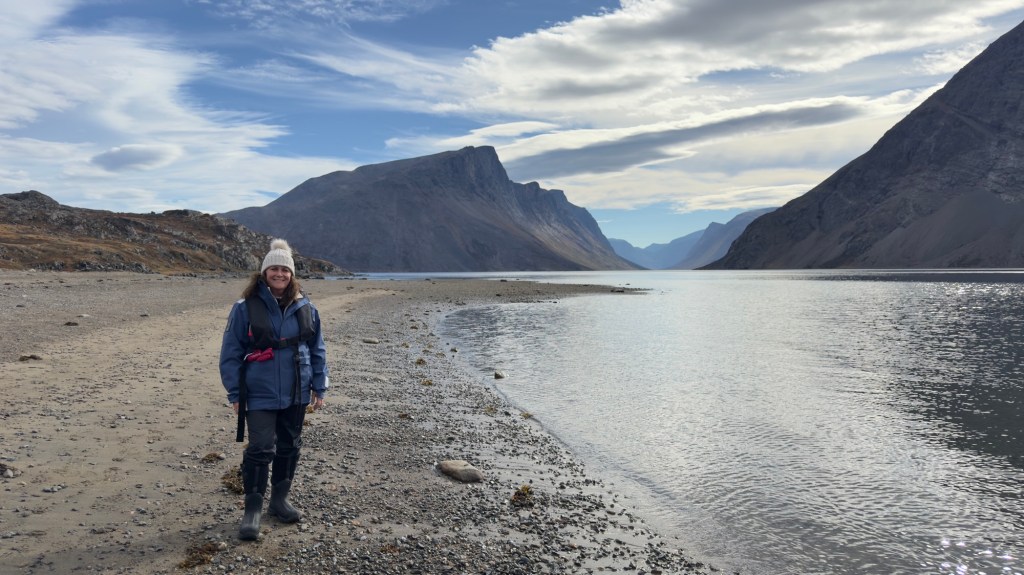
The landscape around Nachvak Fjord really is something else. Towering mountains, exposed rock, patches of vegetation and the cold waters of the fjord all come together to create a landscape that feels wonderfully remote and almost untouched.
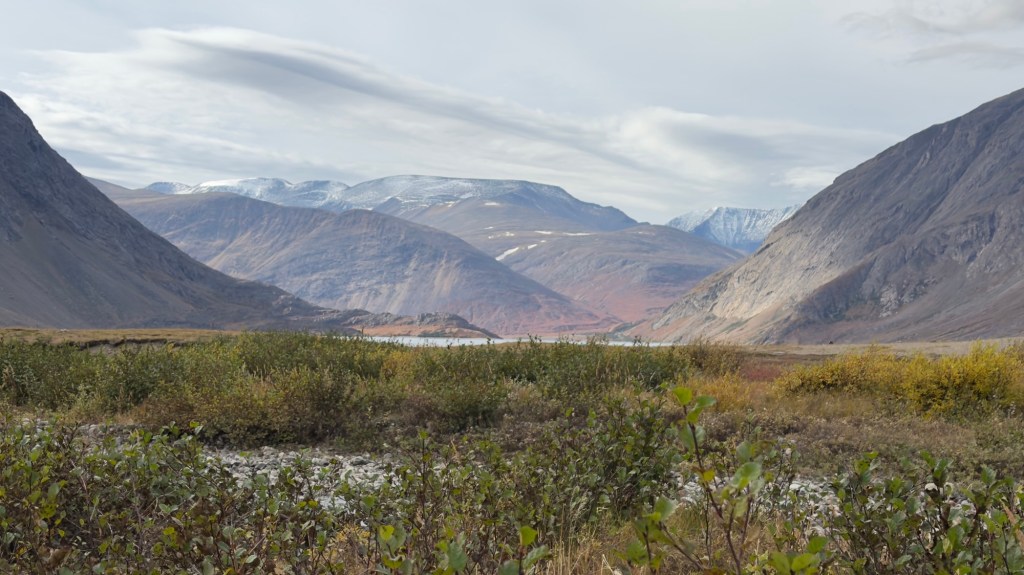
After about an hour, it was time to head back to the RIB.
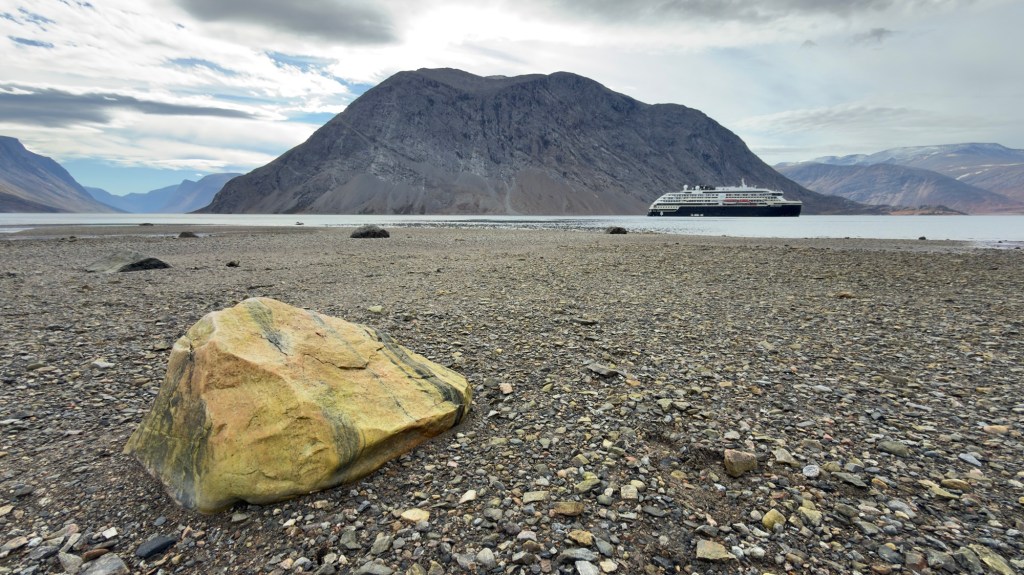
The wind had started to pick up, and although it had felt surprisingly warm while we were walking along the shore, we were very glad we’d followed the advice to wear plenty of layers for the crossing back to the ship.
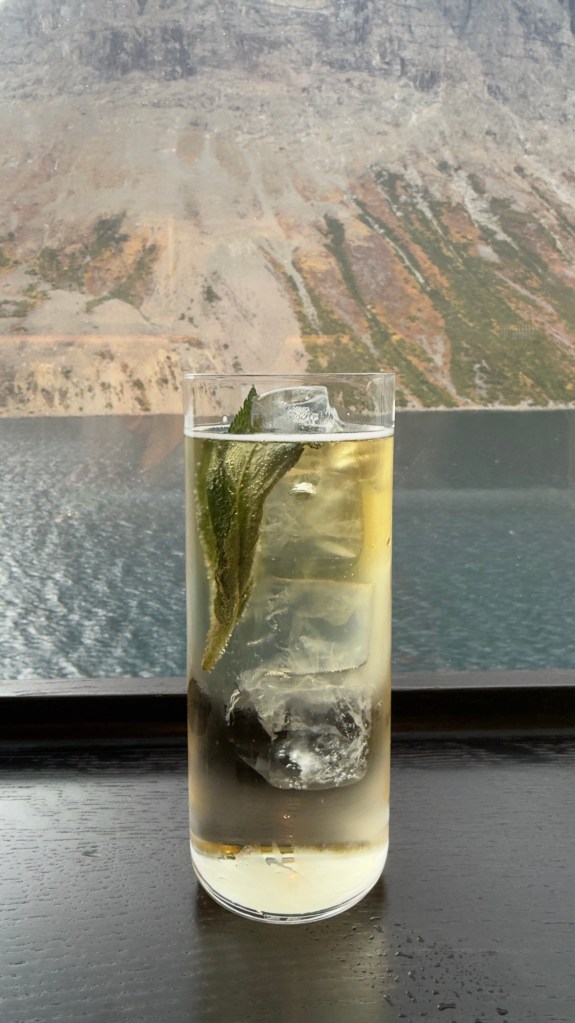
Once aboard, our boots were cleaned and we headed back inside. It was time for a well-earned drink and a chance to relax in the bar.
Then came another announcement over the tannoy:
A black bear had been spotted.
Of course, I immediately looked out to see if I could spot it.
Nothing, I wasn’t quick enough before it disappeared into the vegetation.
Somehow, everyone else always seems to see the wildlife before me!
We eventually headed to dinner, talking about the day’s adventures — from nearly finding the bottom of the fjord with the boat to collecting water samples and cautiously exploring Polar Bear Land.
After dinner, we returned to the cabin and chilled for the rest of the evening.
Another day in the Arctic, and another collection of stories that add to the memories we’ve already made.


Leave a Reply