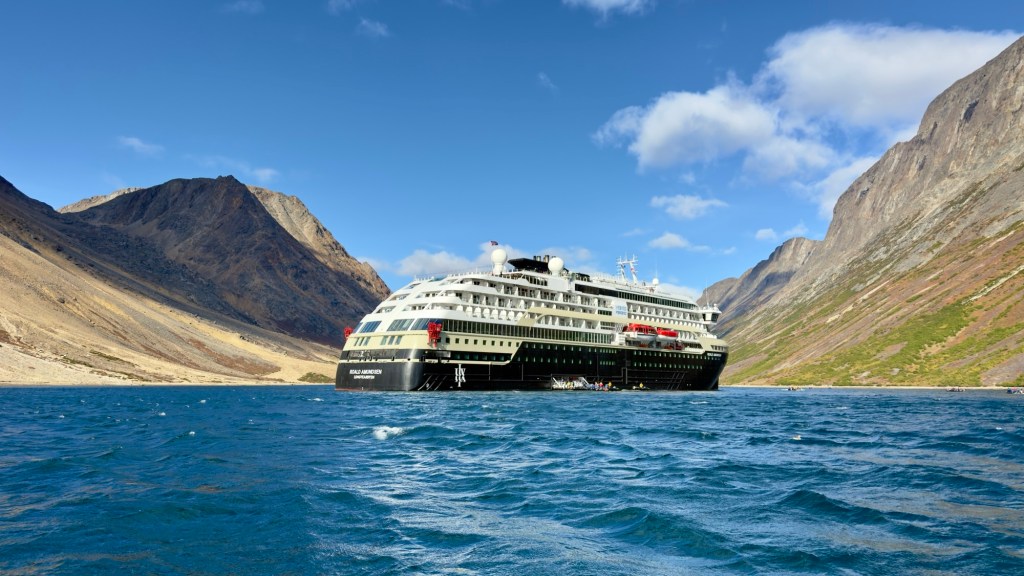
Saglek Fjord – Into the Wild
The sea was still putting on a bit of a show when we woke. The journey overnight had been rough, although thankfully not as bad as some of the previous crossings. The waves were around three metres, which was enough to keep the ship gently — and sometimes not so gently — moving throughout the night.
After breakfast, we were soon told to get into our outdoor gear. Muck boots, waterproofs and plenty of layers were the order of the day, with a warning that we might get wet. That usually means one thing on an expedition like this: we were heading somewhere properly wild!
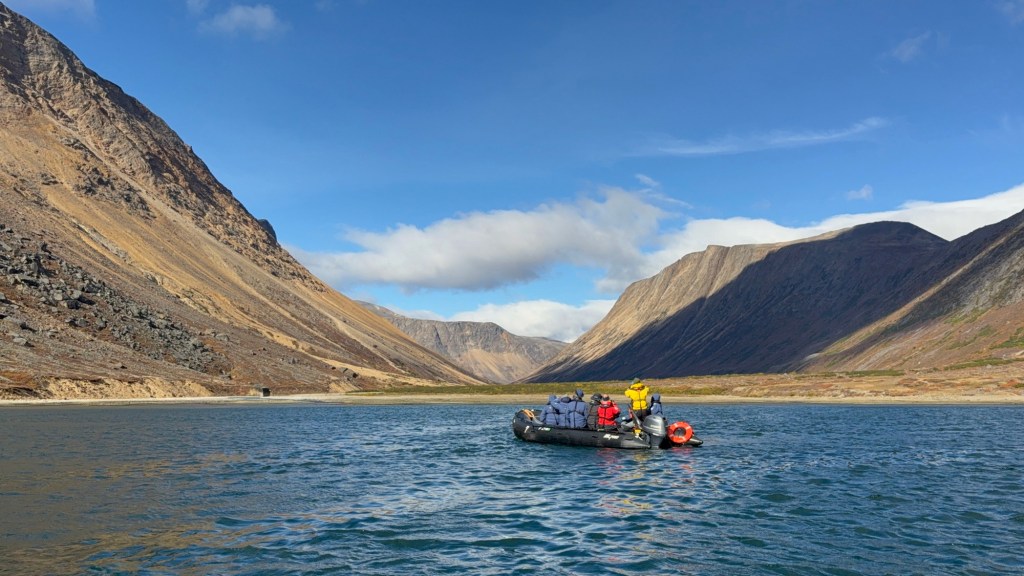
We waited for the call for the Arctic Char group, then made our way down to the RIB and climbed aboard.
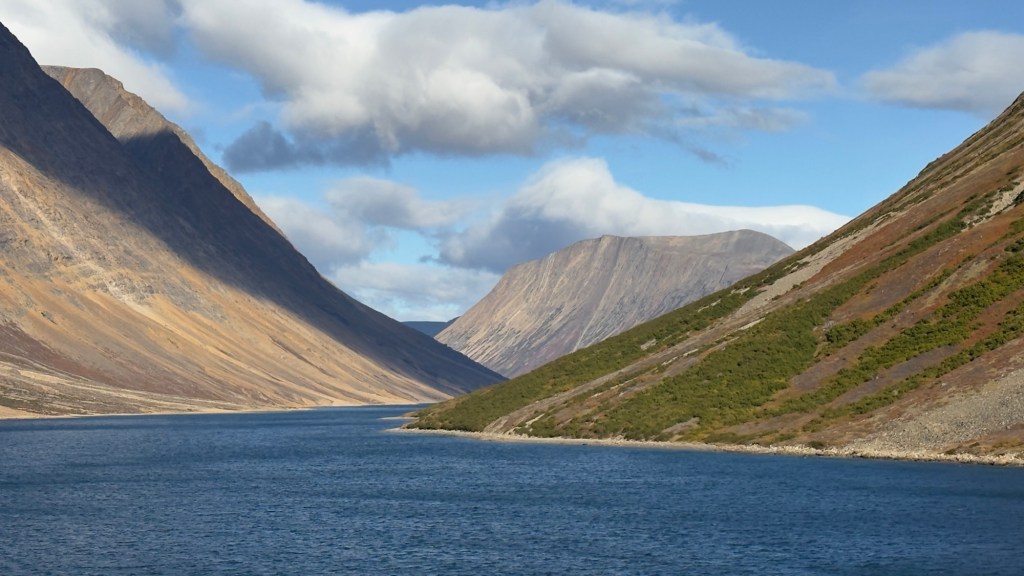
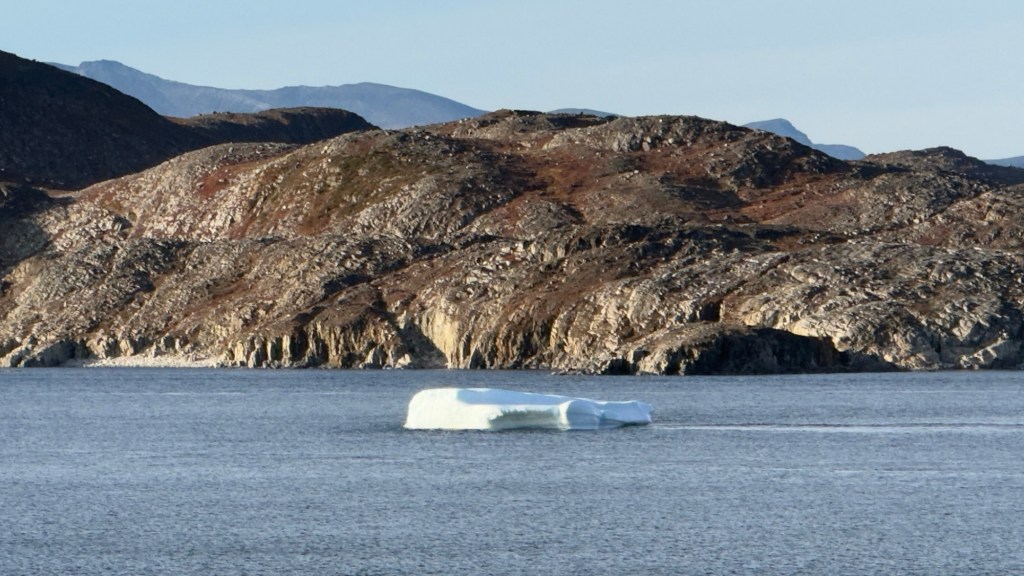
Our destination was Saglek Fjord, within Torngat Mountains National Park, one of the most spectacular and remote protected areas in Canada. The park stretches along the northern Labrador coast and encompasses dramatic mountains, deep fjords and a landscape shaped by immense geological and glacial forces. It is also the traditional homeland of Inuit communities, whose connection with this land goes back thousands of years.
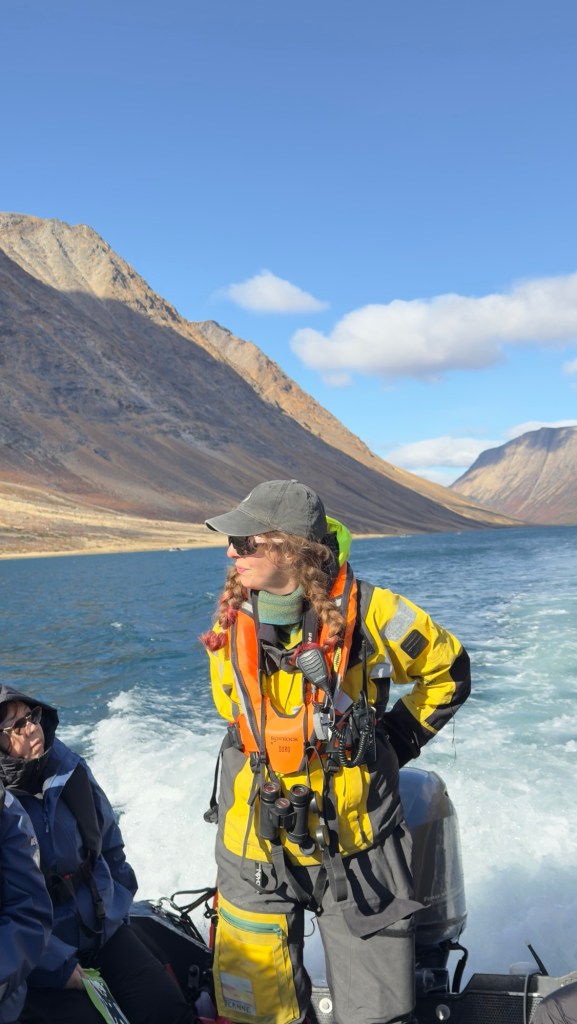
Our guide, Jeanne, is French and, as well as being a guide, she is a geologist. As we travelled deeper into the fjord, she pointed out different features of the landscape and told us about the incredible age of the rocks beneath us.
Some of the rocks in this region are estimated to be between 3.6 and 3.9 billion years old. To put that into perspective, Earth itself is about 4.54 billion years old. Standing in a landscape containing rocks that formed so incredibly early in our planet’s history is quite difficult to comprehend.
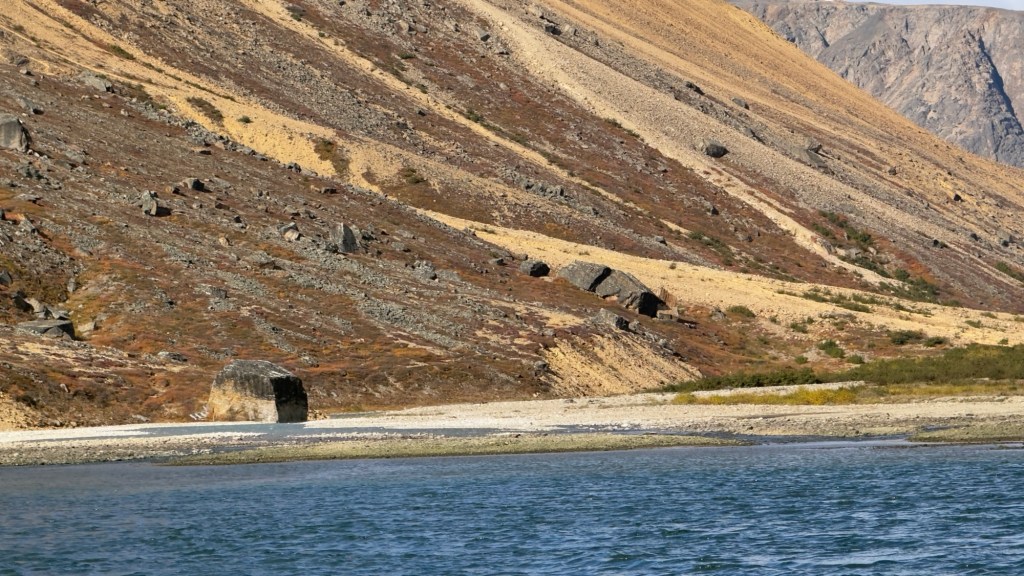
The landscape we were travelling through was also shaped by enormous amounts of ice. During the last Ice Age, vast areas of northern Canada were buried beneath the Laurentide Ice Sheet, which at its greatest extent covered roughly 15 million square kilometres. Glaciers carved and deepened valleys and helped create the dramatic fjords we see today.
But it wasn’t all geology. Jeanne also entertained us with an Inuit story about a giant who apparently had an extra-long third leg! The story goes that he stood on this unusual third leg, lost his balance and fell, leaving three impressions in the rocks where he landed.
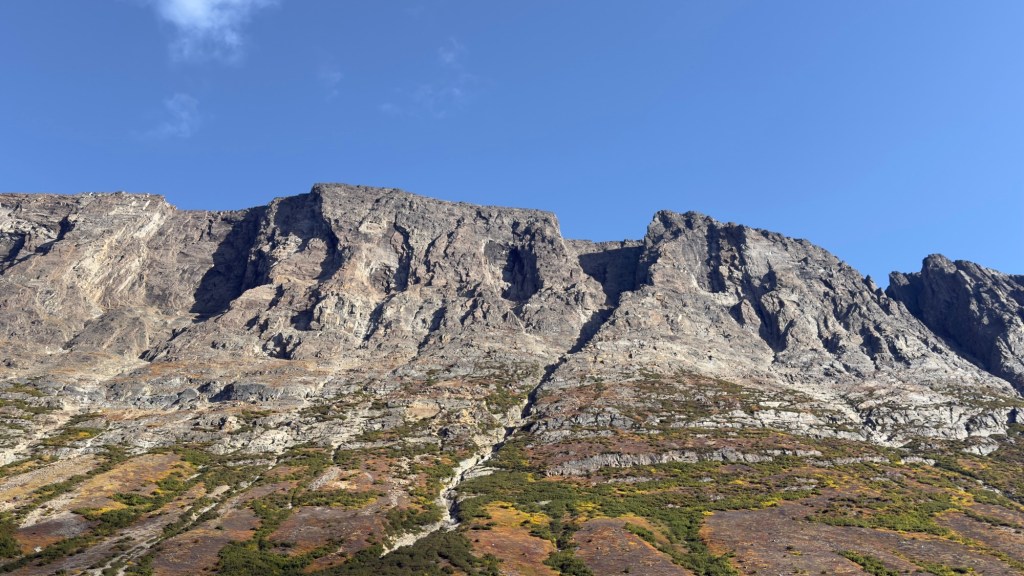
Whether you believe the story or simply enjoy the imagination behind it, it was a great reminder that these landscapes have been places of storytelling and tradition for generations.
We continued right down the fjord, keeping our eyes peeled for wildlife. We had already seen plenty of birds, but everyone was hoping for something rather larger.
Then Jeanne received a message over the radio. Another guide had spotted two black bears somewhere in the area. Unfortunately, they were too far away for us to see, but suddenly everyone became much more alert and started scanning the shoreline.
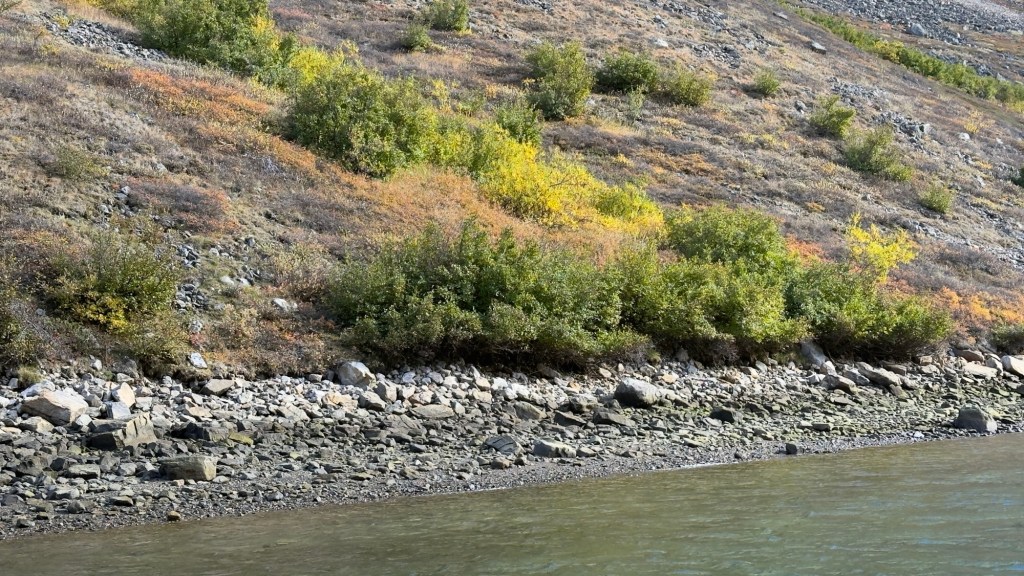
We even spotted another guide trying to call the bears, presumably hoping they might wander a little closer. No such luck for us, but knowing they were somewhere out there certainly added another dimension to our expedition.
For around 90 minutes we were completely immersed in the wilderness. No roads, buildings or signs of civilisation — just the RIB, the fjord, the mountains and the possibility of wildlife around every bend.
It was fabulous.
Back on board, we stripped off the waterproofs and muck boots and headed back to the cabin to dry off and change. After lunch, we settled down in the bar for a while before heading to a beginner’s navigation session with Sam from the expedition team.
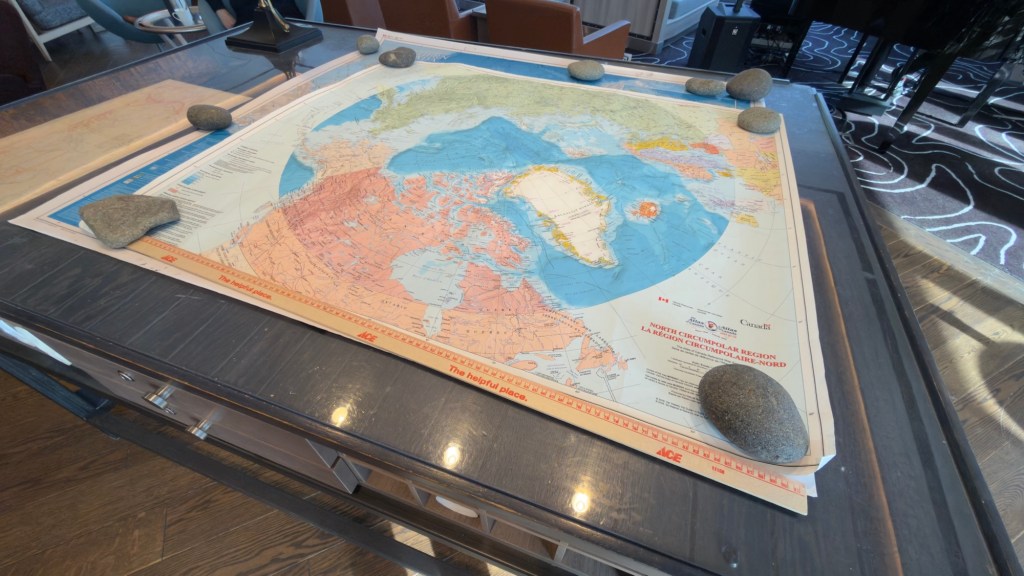
It turned out to be much more interesting than I expected. We learned some of the basics of navigation and how to find our way using maps, bearings and the surrounding landscape. It was also a good way to pass a quiet afternoon after our morning adventure.
We then relaxed in the Explorer’s Lounge before getting changed for dinner.
And what a dinner it was.
I started with beef tartare, served with pickles and a raw egg — apparently one of the ship’s signature dishes. It was delicious and certainly not something I’d normally be ordering on an average night at home!
For the main course, I had a lovely piece of roast salmon with roasted root vegetables. After a day spent bouncing around in a RIB and exploring the wilderness, it was exactly what I needed.
After dinner, we finally retired to our cabin. Another expedition day was waiting for us tomorrow — and after today, we had no idea what the Labrador wilderness might have in store next.


Leave a Reply