From Vikings to Root Canals: A Whistle-Stop Tour of Northern Newfoundland
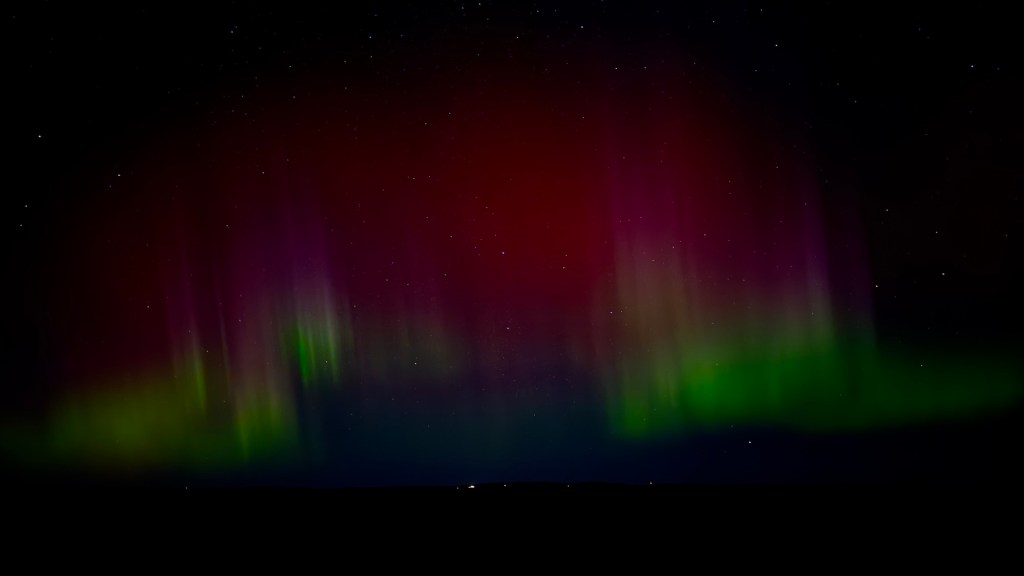
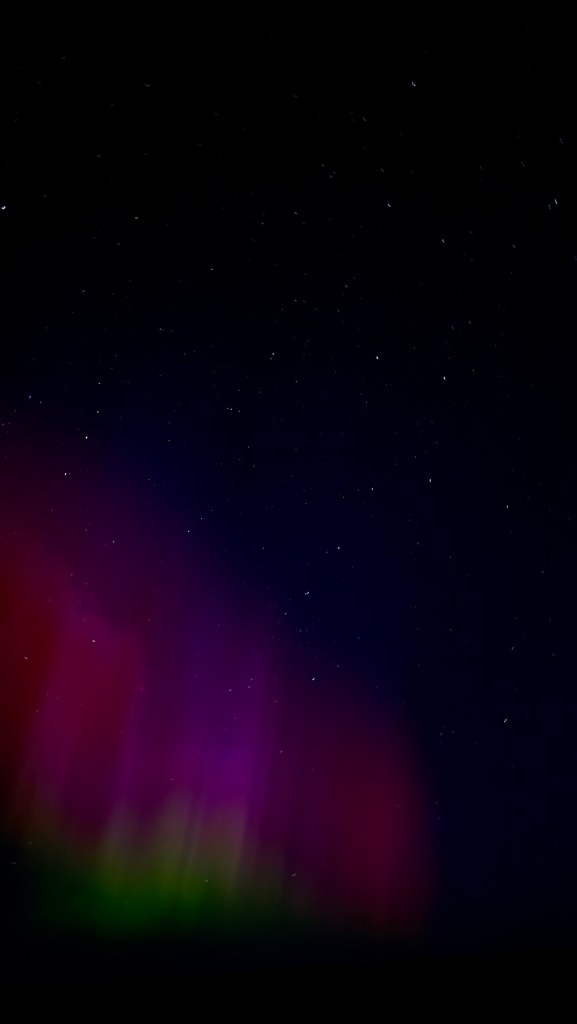
Waking early is easy when your destination is the rugged tip of Newfoundland. I’d already been awake around 5am as I’d been a bit restless, and there was a nice display outside from Lady Aurora.
After a quick breakfast, we boarded the tender to Saint Anthony, greeted by a gloriously sunny morning—and a chilling northerly wind that reminded us exactly how far north we were.
Waiting for us on the pier was our transport for the day: a coach that looked, sounded, and felt remarkably like an old school bus. It rattled, creaked, and groaned, suggesting it was long overdue for a service. But what it lacked in suspension, it made up for with our guide—a slightly crazy Scottish lady who moved to Canada 36 years ago and brought a delightful mix of Celtic warmth and local Newfoundland lore to the microphone.
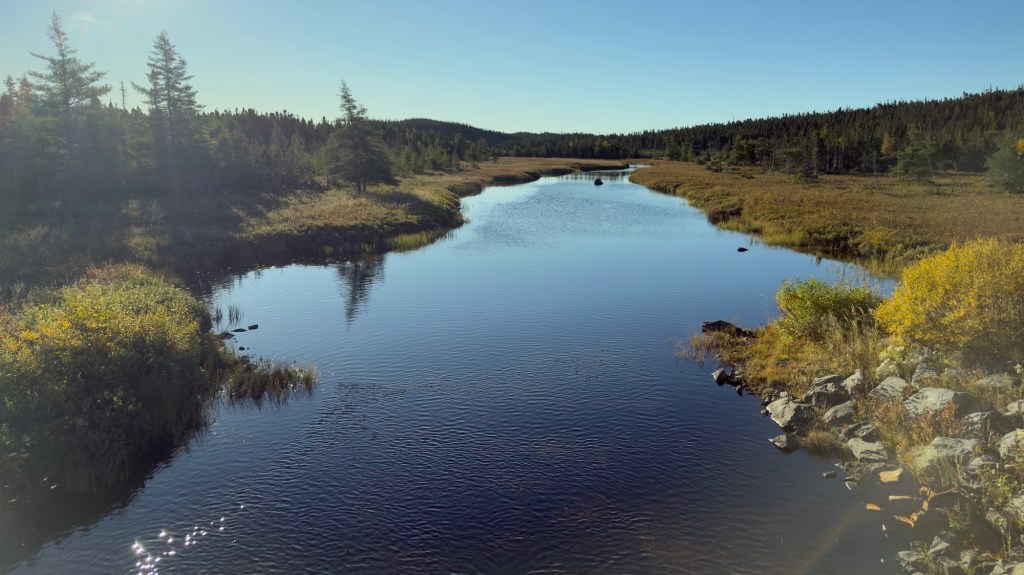
As we rattled along the coastal road, she wove a tapestry of local life. Saint Anthony’s main employer today is the hospital, a stark shift from the province’s historic lifeline: cod fishing. Everything changed with the infamous 1991 cod fishing moratorium. Today, locals are strictly restricted to catching just five cod per day per person. Instead, restaurants buzz in the summer with the offer of local shrimp, scallops, haddock, salmon, crab and lobster. In fact, the local seafood is so pristine that high-end spots as far away as the French islands of Saint-Pierre and Miquelon actively try to source their fish directly from these waters.
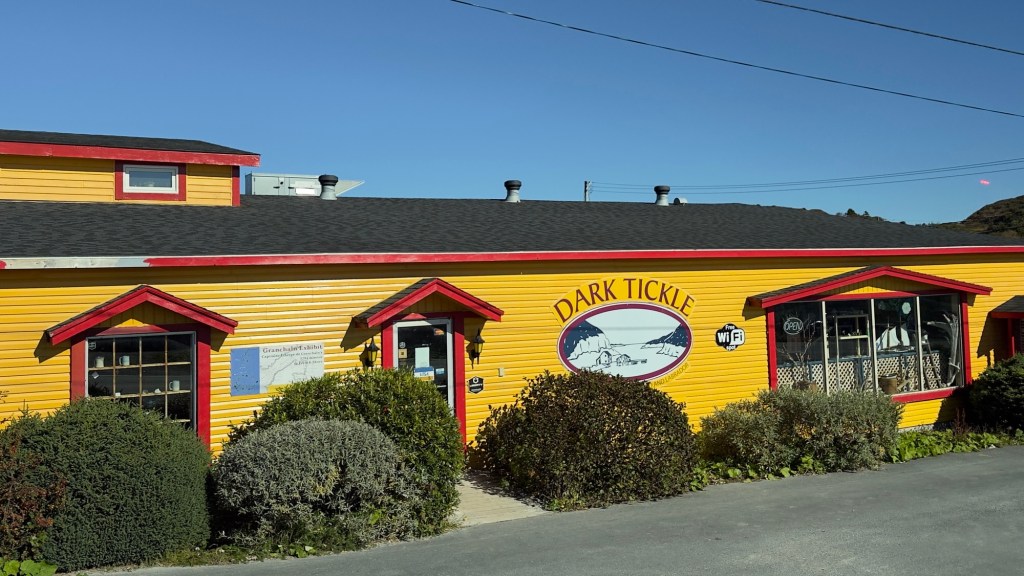
We passed The Dark Tickle Company, which is a must-visit destination in St. Lunaire-Griquet, Newfoundland, celebrating the province’s rich wild berry tradition. This unique shop and “économusée” transforms handpicked local berries—like bakeapples and partridgeberries—into delectable natural jams, chocolates, and teas. Visitors can sample unique local flavours, explore an interpretive bog boardwalk, and even book thrilling ocean expeditions to view icebergs and whales.
Of course, Newfoundland isn’t just about the ocean; the wildlife stories here are legendary. Take the moose, for instance. They aren’t even indigenous to the island—a single pair (an adult male and female) was introduced back in 1902, followed by a second female when the first sadly died. Today? The population has exploded to an astonishing 150,000! Hunting them is strictly regulated; when locals apply for a licence, they have to specify the exact area where they intend to hunt.
Then there are the caribou—home to the largest herd in nearby Labrador—though only 20 hunting licences are granted a year. In the dead of winter, these massive animals are notorious for causing traffic jams as they wander onto highway lanes to lick road salt. Add in summer black bears, winter polar bears that hitch a ride on the ocean ice chasing seals from Labrador, and elusive lynx, and you have a true wilderness. Our guide even shared a story about a local doctor, Dr. Hornet, who once performed a root canal on a tranquillised polar bear before it was tagged and safely airlifted back to Labrador! (The bear, apparently, is doing fine and has since been spotted back in the wild.)
Looking out the bus window, the landscape itself tells a story. We passed rivers perfect for salmon fishing, powered entirely by the region’s abundant hydroelectric energy, and caught sight of tuckamores—stunted, windswept evergreen trees twisted into low-lying shapes because the bitter northern winds continuously shear their tops off. It’s a harsh climate where 50 cm of snow can drop in a single storm, home to a resilient population of just 500,000 across the entire province of Newfoundland and Labrador. Yet their hospitality is famous: Saint Anthony hosts a popular Iceberg Festival every year, where adventurous eaters can try local delicacies like seal flipper pie. And if you want to become an “honorary Newfoundlander,” you’ll have to undergo the famous “Screech-In” ritual: downing a shot of high-proof Screech rum and kissing a fresh cod on the lips!
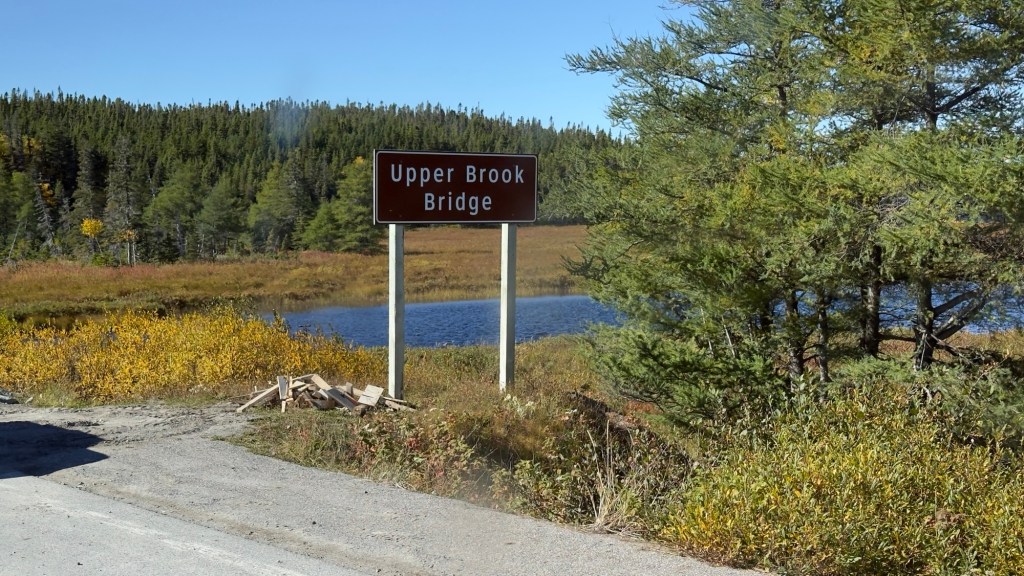
Because September is the end of the cruise season—around 25 ships visit between May and September—many of the local sites and shops had specially opened their doors just for our arrival.
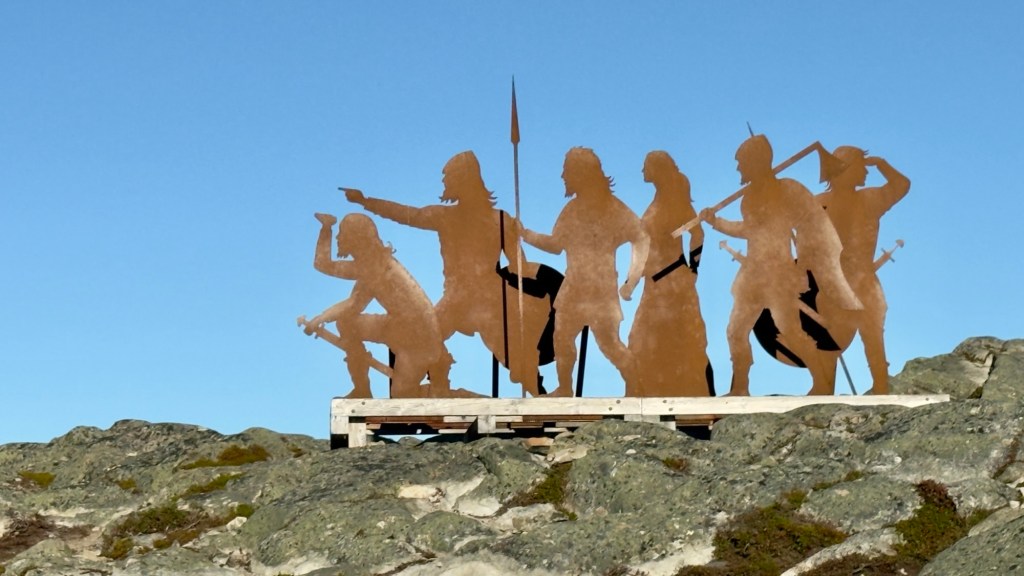
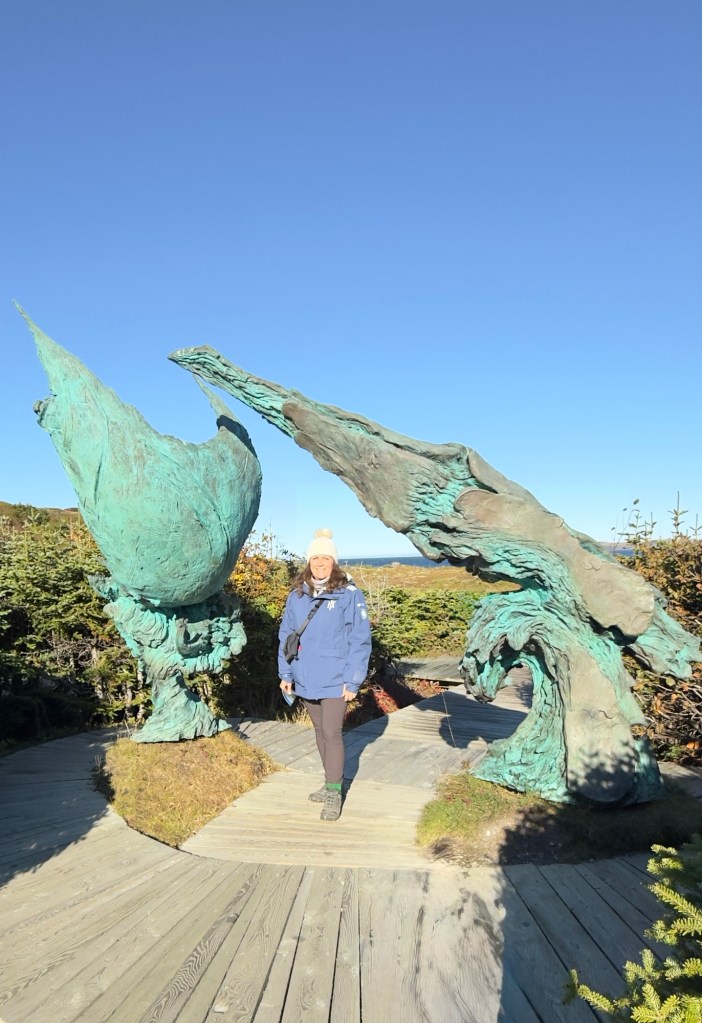
Our primary destination was the legendary L’Anse aux Meadows, a UNESCO World Heritage site and the only authenticated Norse site in North America. Standing on the windy headland, we had a great view looking at the metal sculpture above. We entered the visitors centre to make a quick purchase and then wandered along the boardwalk outside. We passed another sculpture commemorating the Old World meeting the New World, it was mind-blowing to imagine Viking longships pulling into this very bay over 1,000 years ago.
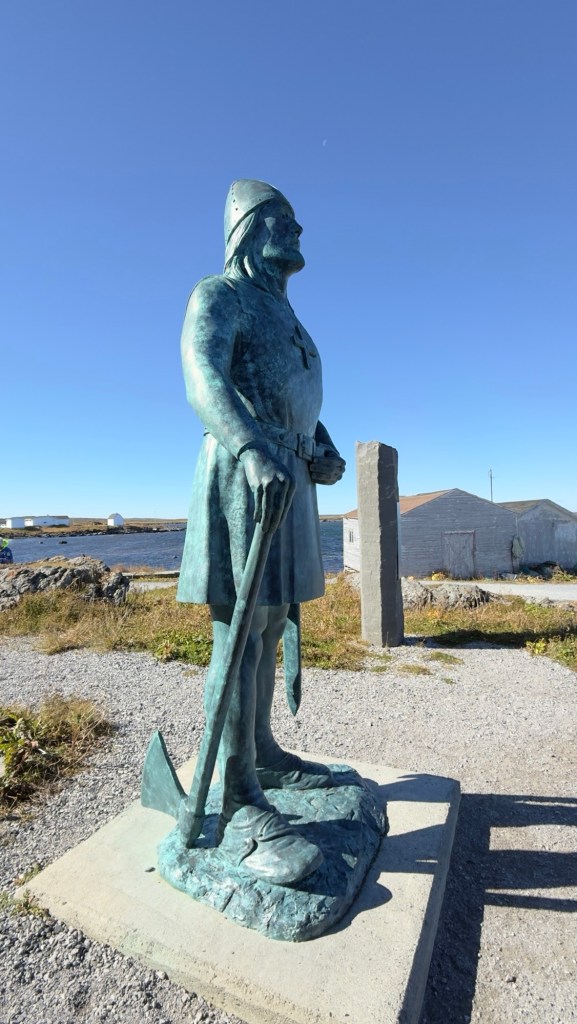
Archaeological digs here famously unearthed a bronze Viking cloak pin, proving beyond doubt that Leif Erikson and his crew made landfall long before Columbus. Nearby stands a majestic statue of Leif Erikson—one of only three in the entire world, cast before the original mould broke, making it impossible to produce any more.
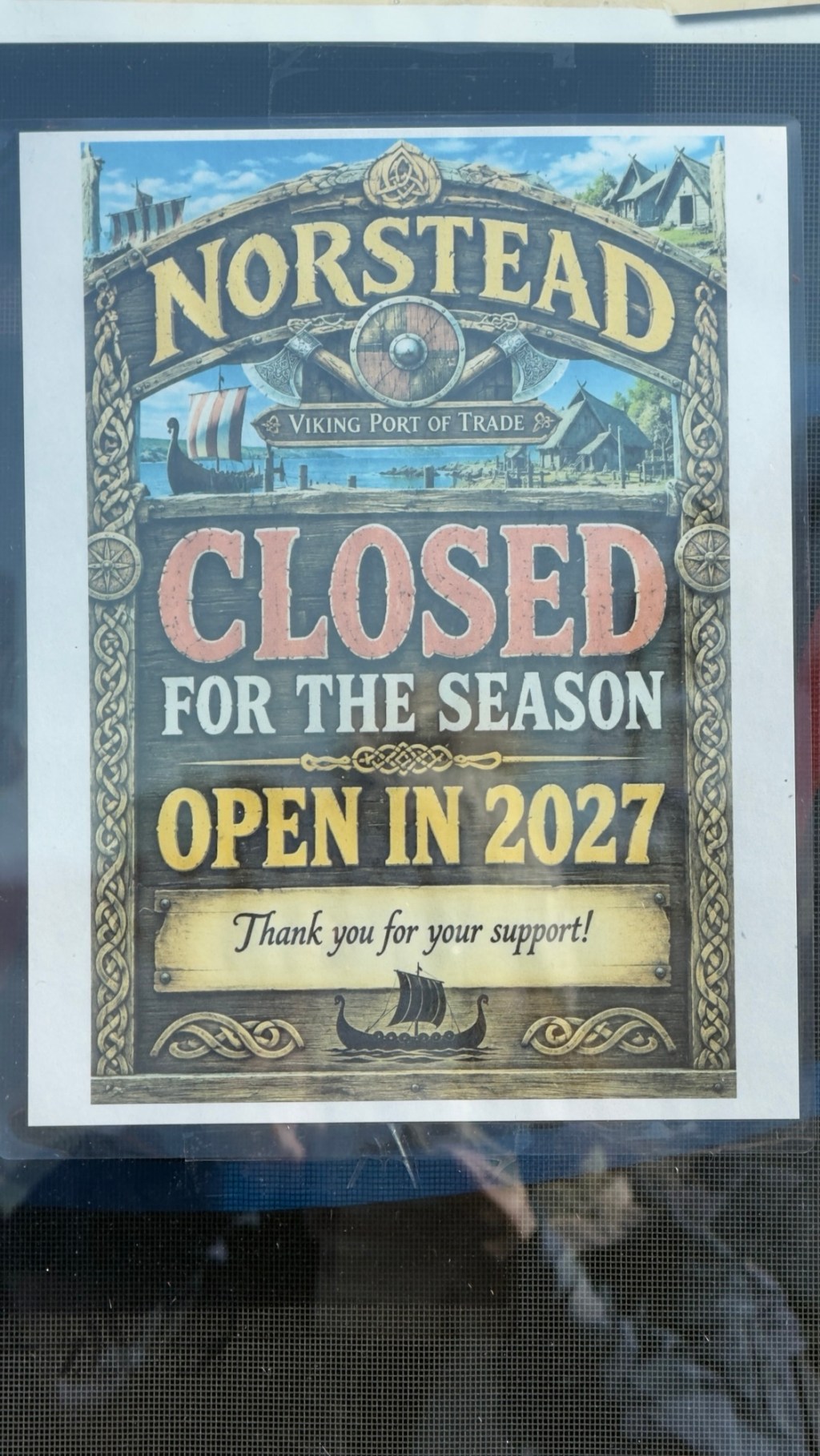
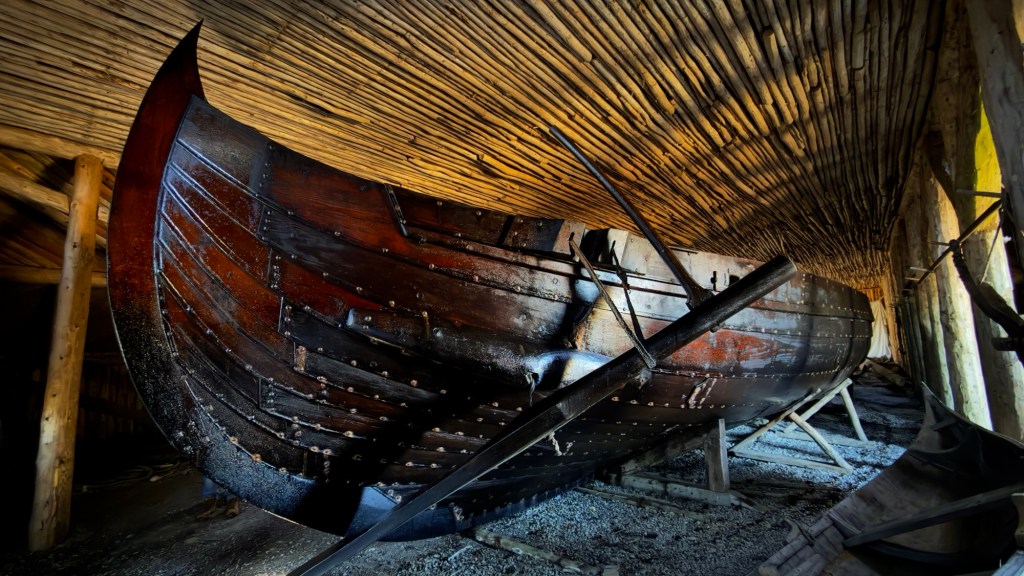
Just down the road, we visited Norstead, a recreated Viking trading village. On display in a purpose built building is the Snorri, a 12-tonne Viking cargo ship replica named after the very first child born in North America of European descent.
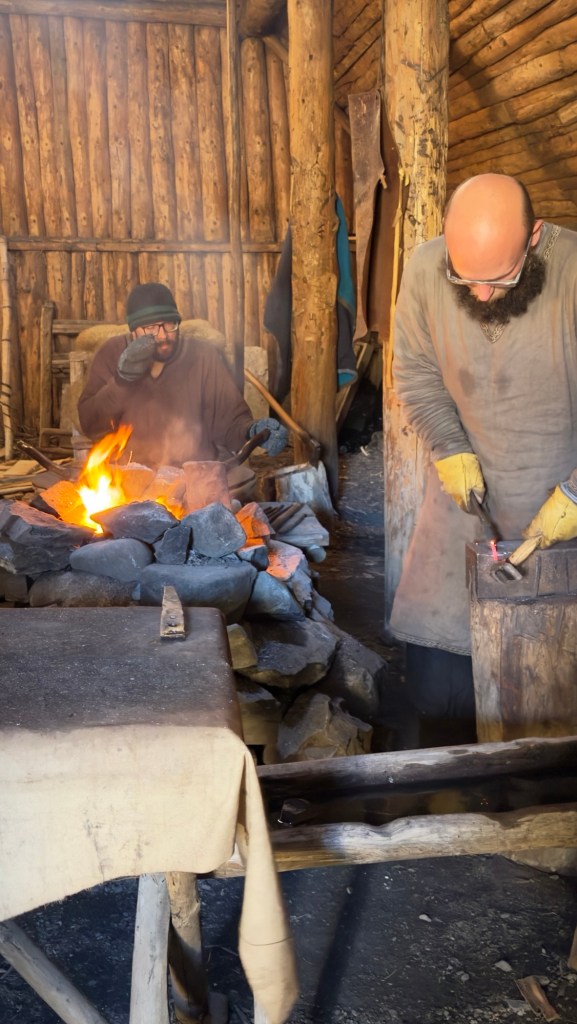
We stepped inside the dim, fire-lit blacksmith’s shop, where an artisan was busy forging a nail from authentic local bog iron using centuries-old techniques. He was explaining about bog iron to one of the visitors, explaining everything in a strange Canadian-Irish sounding accent.
With the northern wind nipping at our faces, we piled back into our charter bus. The metallic grinding sounds seemed to get progressively worse with every pothole, but against the odds, it delivered us back to the tender dock in one piece!
Back on the ship, we caught a late lunch and spent the afternoon getting our affairs in order—packing bags and watching a brief disembarkation presentation as our incredible journey nears its end on Wednesday. After a quiet drink at the bar, a delicious dinner, and a bit of evening relaxation, it was back to the cabin to rest up, catching another glimpse of the Aurora.


Leave a Reply