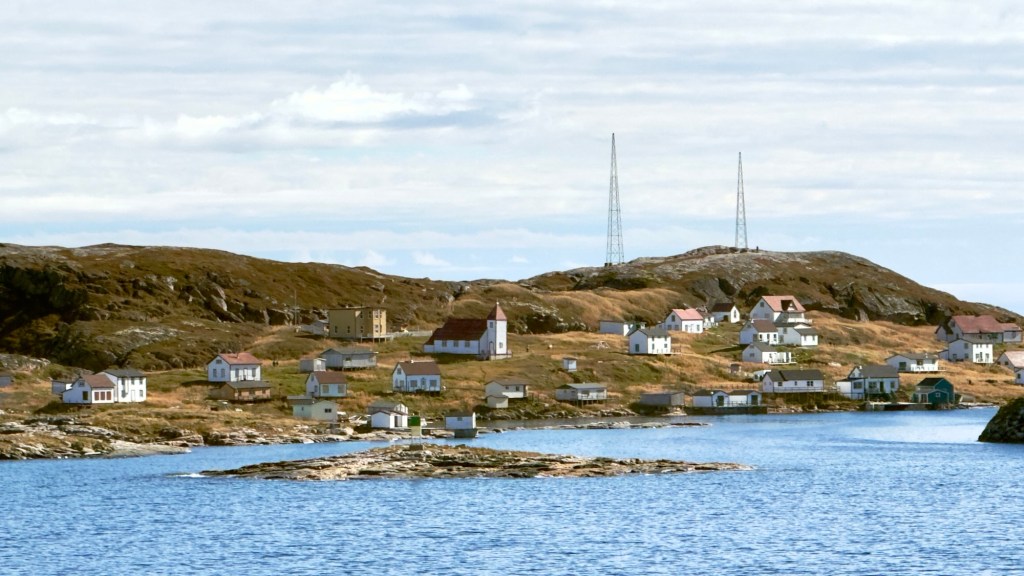
The raw power of the North Atlantic has a way of grounding you, and today was one of those days where remote history, rugged wilderness, and a touch of Arctic wonder aligned perfectly.
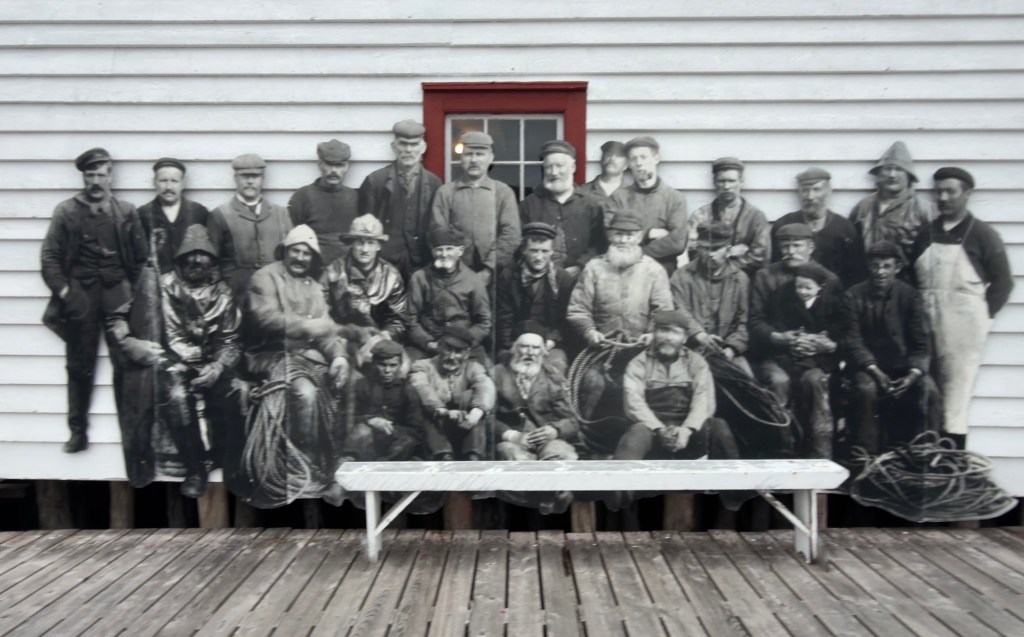
Whispers of History on the Edge of the Map
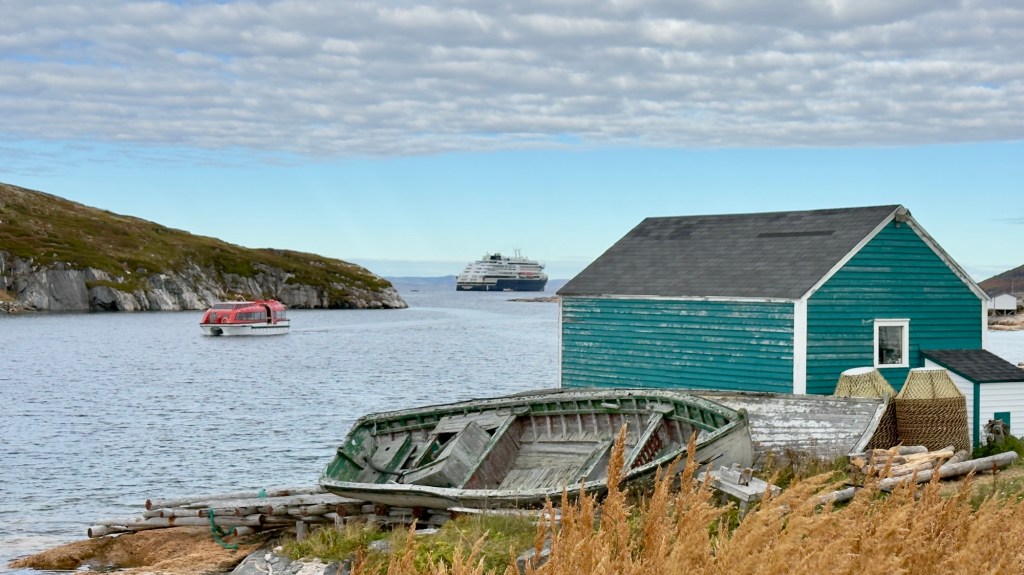
Morning arrived with a classic high-latitude welcome—a subtle ocean swell that made the 9:30 am tender transfer to shore feel like a true expedition. Navigating from the ship’s gangway into the tender boat requires a bit of timing, but the crew made quick work of the chop, landing us safely on an island steeped in stories of survival, salt, and seafaring.
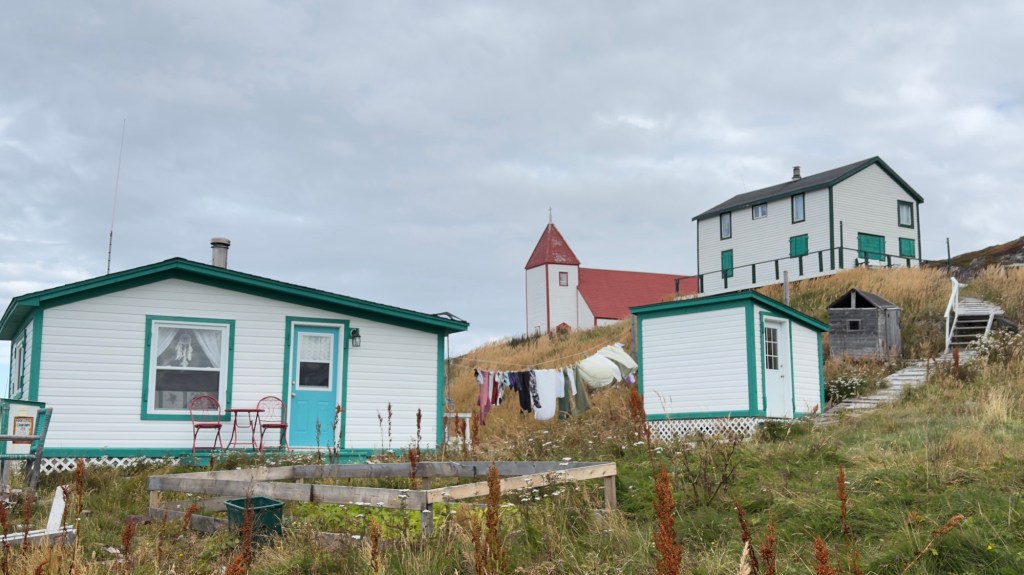
While many of our fellow travellers opted for a guided trek to identify native flora and fauna, we chose to move at our own rhythm. Walking through the island’s historic enclave felt like stepping back a couple of centuries.
We wandered amongst preserved heritage structures:
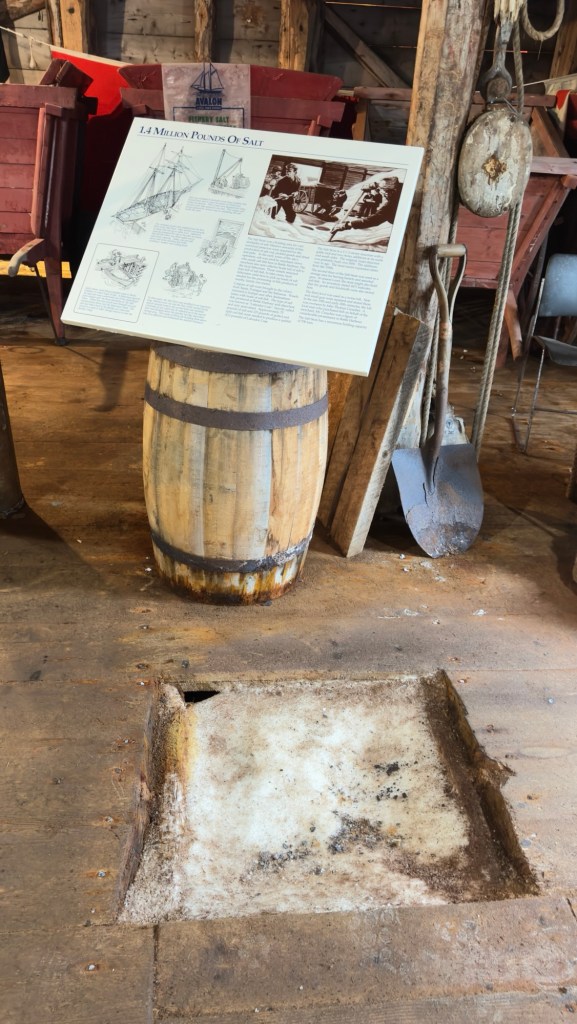
- The Salt Store: A reminder of how crucial salt curing was to early maritime survival and trade, preserving catches for long sea voyages.
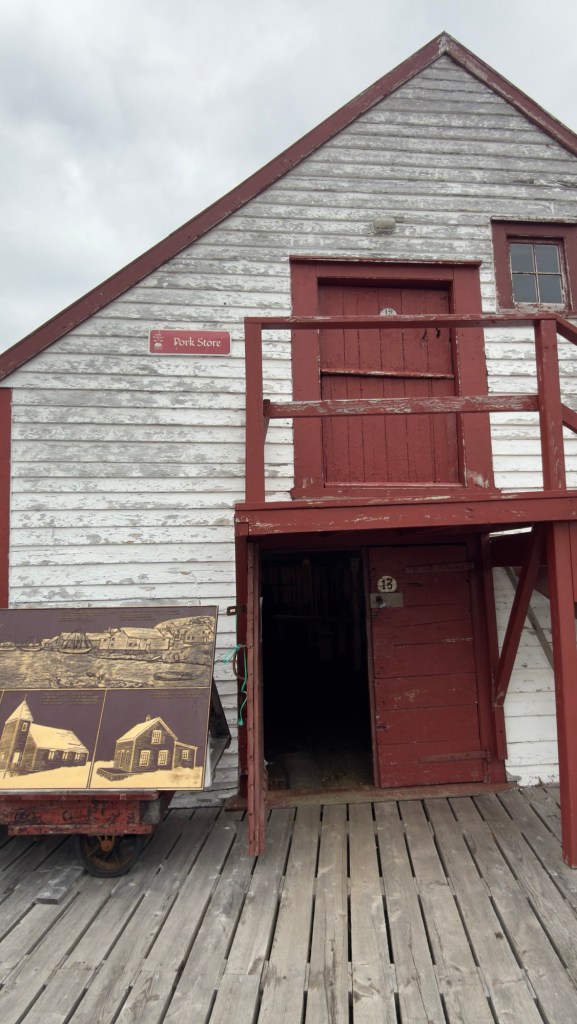
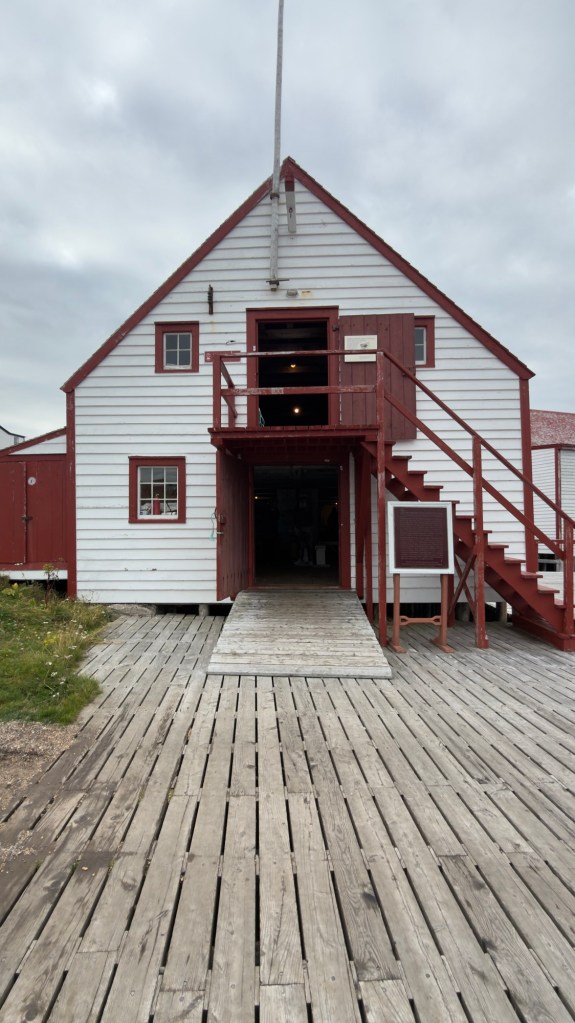
- The Pork Store, Flour Store & Merchant’s Store: Silent testament to the dry-goods supply lines that sustained these isolated outposts through brutal winters.
Perspective & Visual Storytelling
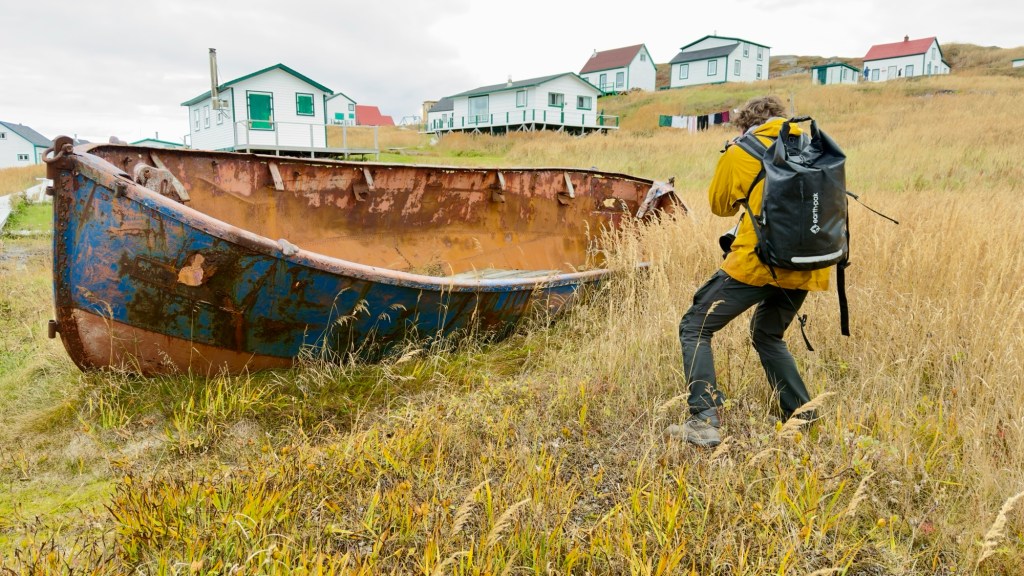
At 10:30 am, we bumped into Kai, the ship’s onboard photographer. He took a few minutes to walk us through some creative framing tips—focusing on changing our height to play with perspective, finding natural leading lines in the rugged landscape, and choosing strong visual anchors in harsh lighting. It immediately shifted how we looked at the scenery for the rest of the day.
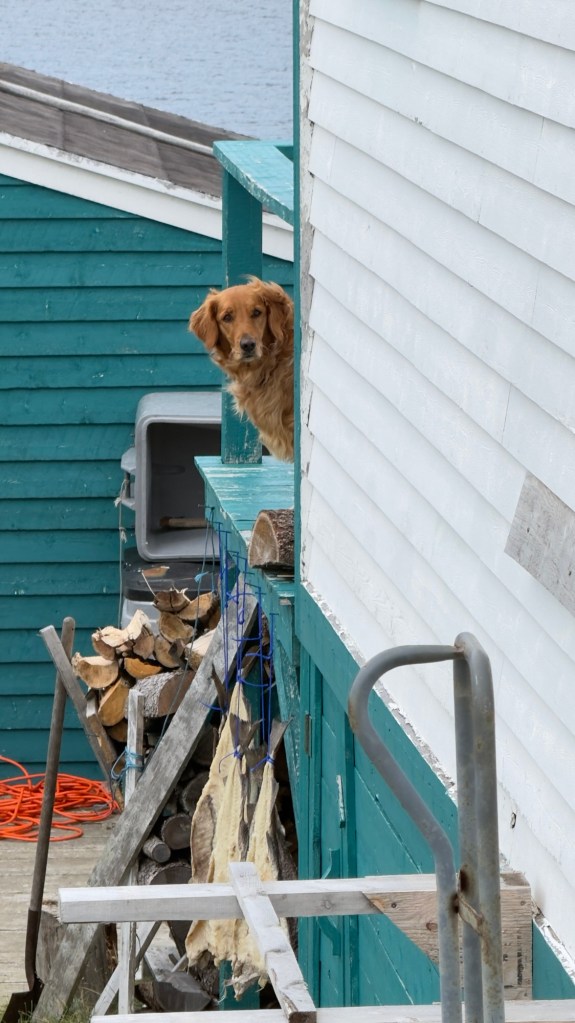
As we wandered through the small village, we took various snaps, even one of this cheeky pouch guarding the fish being hung out to dry below him.
Armed with fresh inspiration, we hit the island’s designated loop path:
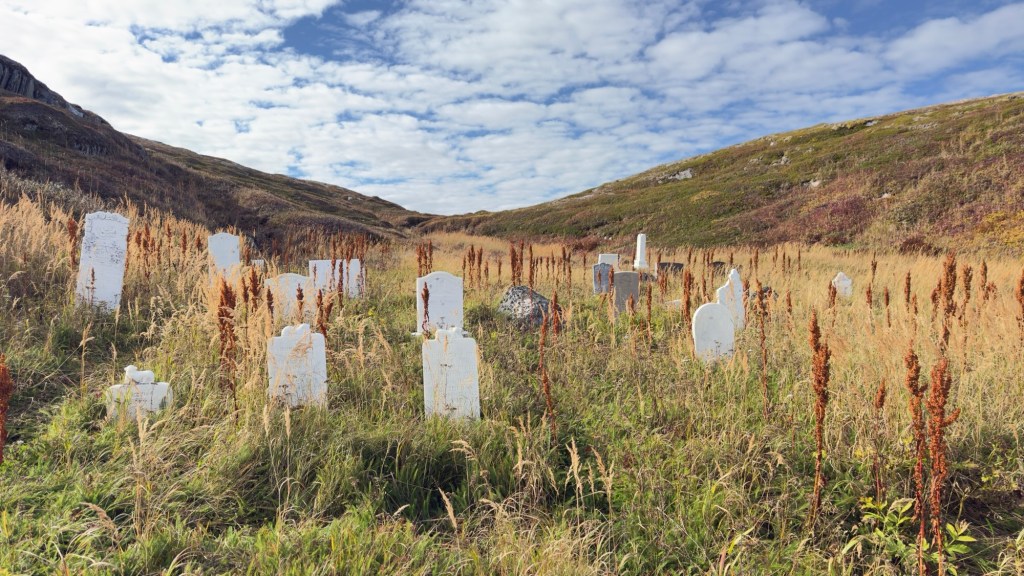
The Historic Church & Cemeteries: Moving past the old and new burial grounds was a poignant reminder of how fragile life on the frontier could be. Just earlier that morning, a sleek Arctic fox had been spotted slipping through the headstones—a surreal blend of wilderness and history.
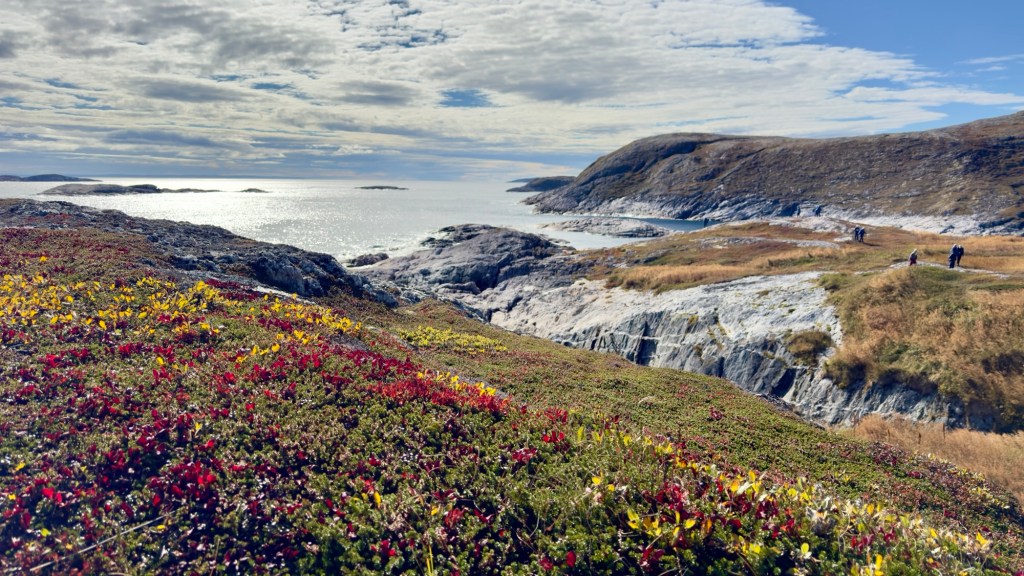
The Windswept Headland: A dramatic vantage point overlooking a raw, battered edge of the island where sea-carved rock formations met resilient Arctic-alpine flora clinging to the granite.
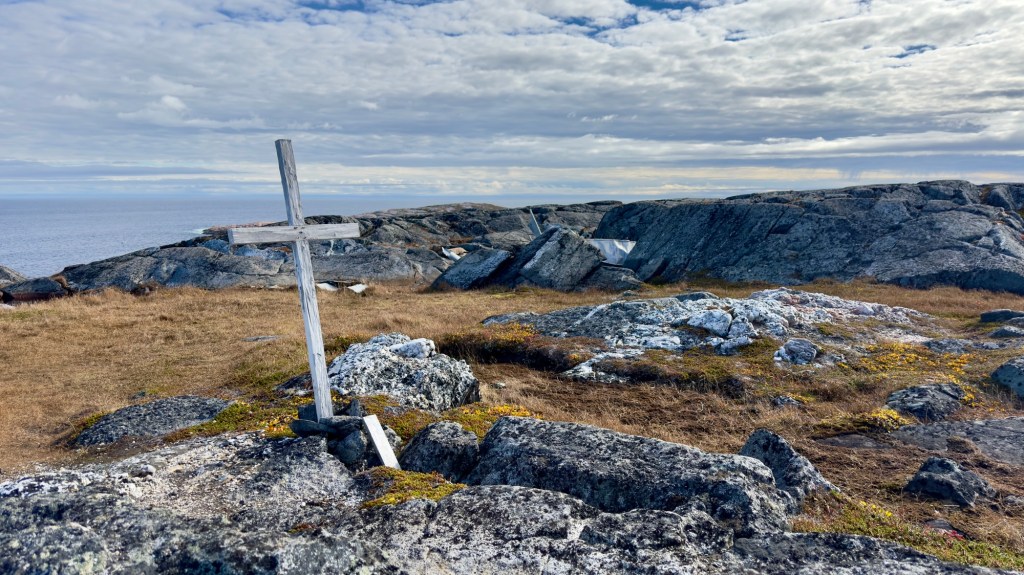
The Crash Memorial Site & Marconi’s Wireless Tower: Standing near the wireless tower location really highlights the significance of early radio technology in the North Atlantic. Wireless stations like Marconi’s were literal lifelines, bridging vast oceanic divides and delivering critical navigational warnings to ships at sea.
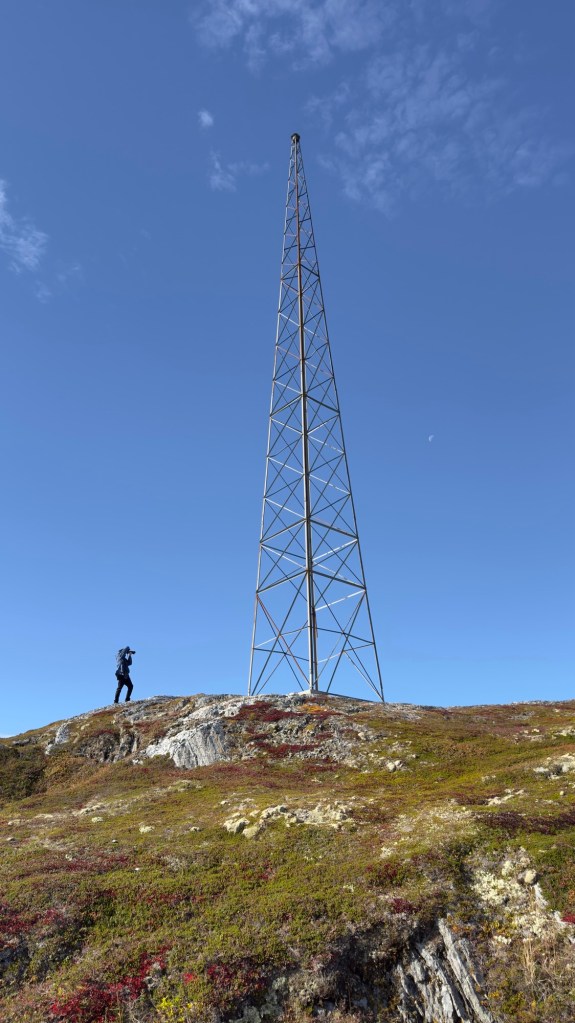
By just after midday, we made our way back to the living museum site to catch the return tender.
Deck Walks & Whale Horizons
Returning to the ship around 12:30 pm gave us the perfect window to peel off our heavy outdoor gear in the cabin before heading up for a warm, well-earned lunch.
After taking some time to recharge, it was time to stretch our legs again—completing a solid 3 km walk around the top deck. There is something uniquely relaxing about pacing the promenade deck with nothing on the horizon but open ocean and crisp sea air.
At 5:00 pm, the captain’s voice crackled over the PA system: humpback whales spotted nearby!
We wrapped up warm and rushed out onto the observation deck. Whilst we didn’t get close-up breaches like yesterday, we were treated to several majestic whale blows off in the distance—tall plumes of mist catching the late afternoon light as the giants travelled through open waters.
An Evening at Lindstrøm
After a brief pre-dinner visit to the bar, we made our way to Lindstrøm for our evening meal. Named in honour of Adolf Lindstrøm—the famed Norwegian polar chef who fuelled the legendary expeditions of Roald Amundsen and Fridtjof Nansen—the restaurant always delivers an elevated dining experience that feels fitting after a day spent exploring harsh northern environments.
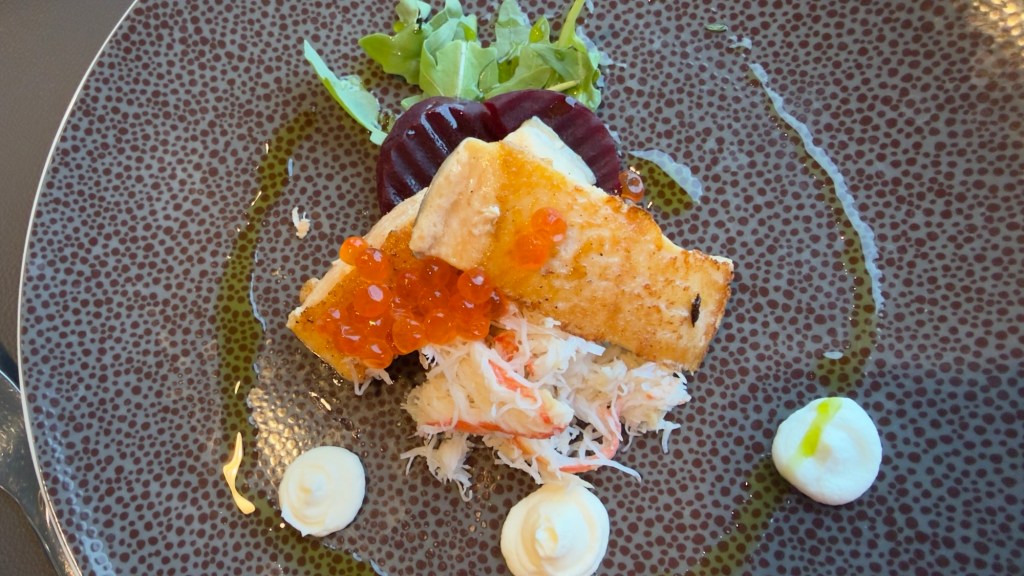
We weren’t out late as tomorrow calls for an early 8:30 am tender departure for our next destination – Saint Anthony.


Leave a Reply