After leaving Qaqortoq on Thursday, we headed out across the Davis Strait and Labrador Sea, bound for Nain in Newfoundland and Labrador.
The sea was definitely making its presence felt, with gale-force winds and waves of more than four metres. It was a pretty rough crossing, so we spent most of the time in the cabin, taking it easy. I didn’t feel much like eating either!
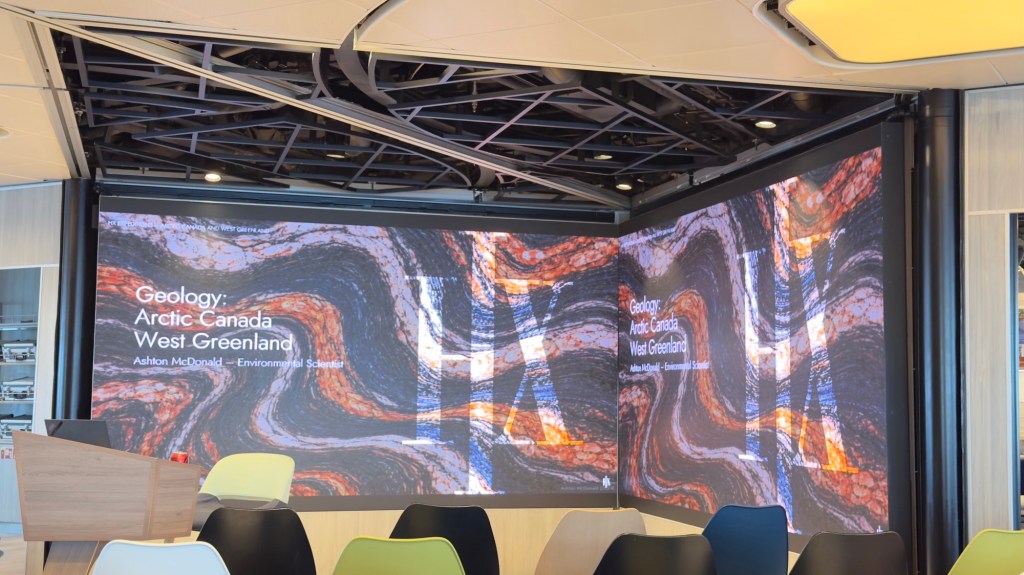
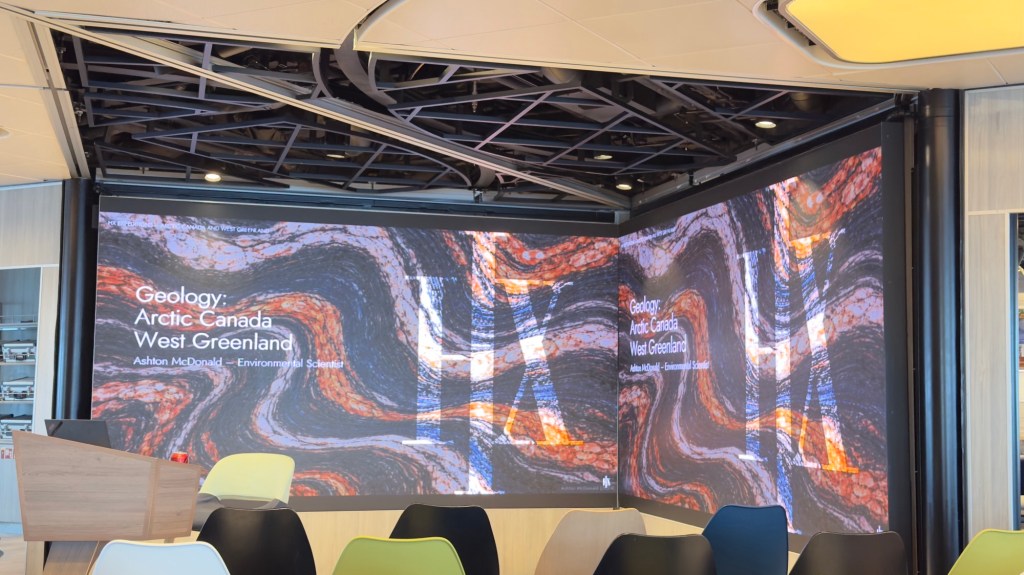
In the afternoon, though, I ventured down to Deck 6 for a 4pm lecture about the geology of the areas we are travelling through. It was fascinating, especially as I could actually relate it to the places we’d already seen.
We started with the basics: igneous rocks form from cooling magma, sedimentary rocks build up from layers of material, and metamorphic rocks are changed by heat and pressure.
We then travelled through billions of years of geological history, learning about Laurentia, the ancient landmass that eventually became part of Greenland and North America, and the incredible Snowball Earth periods when huge areas of the planet were covered in ice.
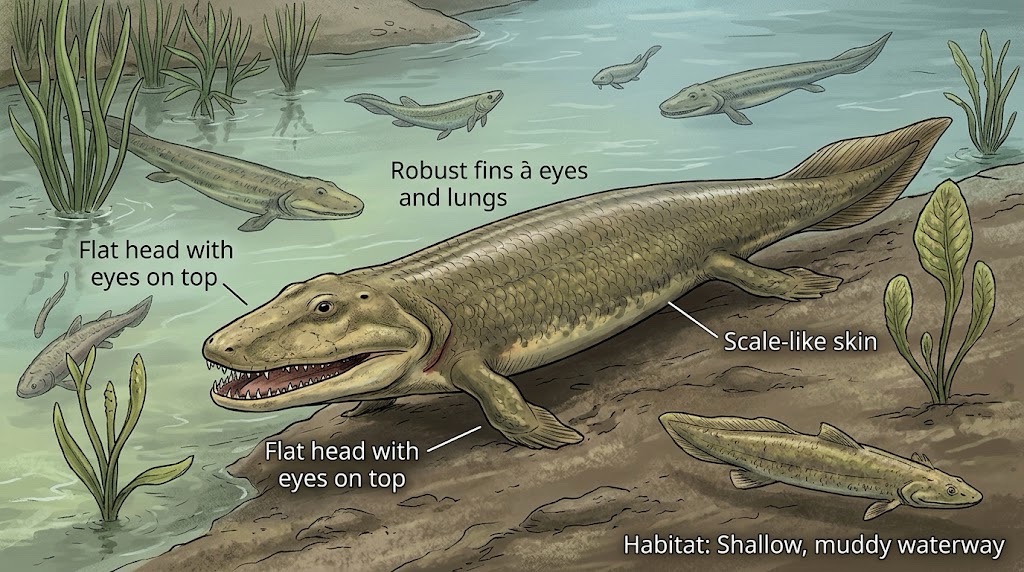
One of the most interesting stories was Tiktaalik Roseae, a fish-like creature recently discovered in Arctic Canada that had features suggesting it could support itself in shallow water — an important step in the story of life moving towards land.
We also learned how the Labrador Sea and Baffin Bay were formed as Greenland and North America gradually pulled apart. So, as we bounced across the Labrador Sea, we were actually sailing over an ocean created by continental movement.
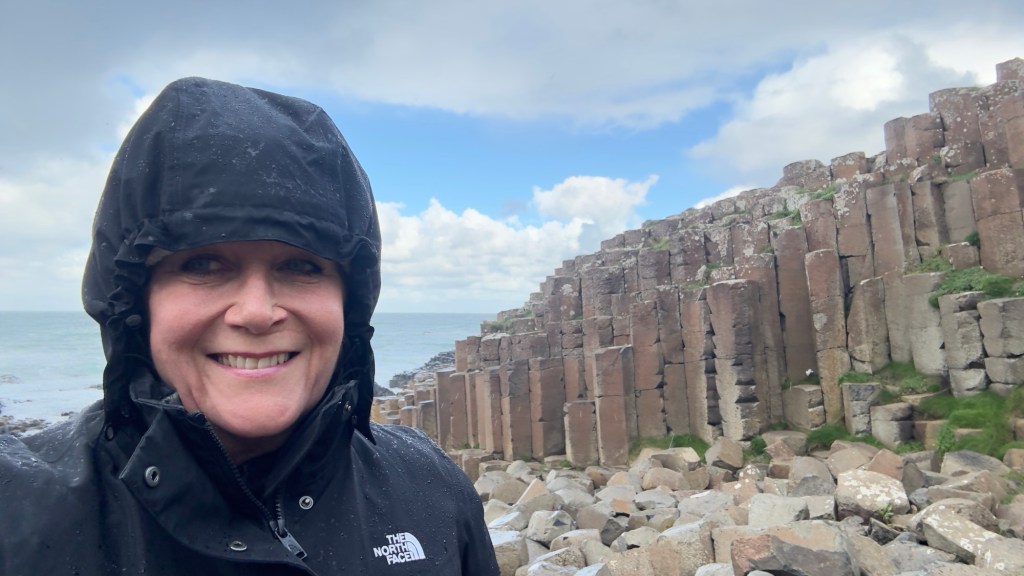
Greenland has a volcanic story too. Around 62–61 million years ago, enormous volcanic eruptions covered parts of Disko Island and Nuussuaq in thick layers of basalt. This was part of the same huge volcanic episode that also helped create landscapes such as Iceland’s basalt formations and Northern Ireland’s Giant’s Causeway and in Staffa, Scotland.
And then, of course, came the ice. Glaciers carved out the spectacular fjords we’ve been seeing and carried huge amounts of rock and sediment with them. It even explained the cloudy water we saw in Kvanefjord, where fine rock particles from the glaciers are washed into the sea.
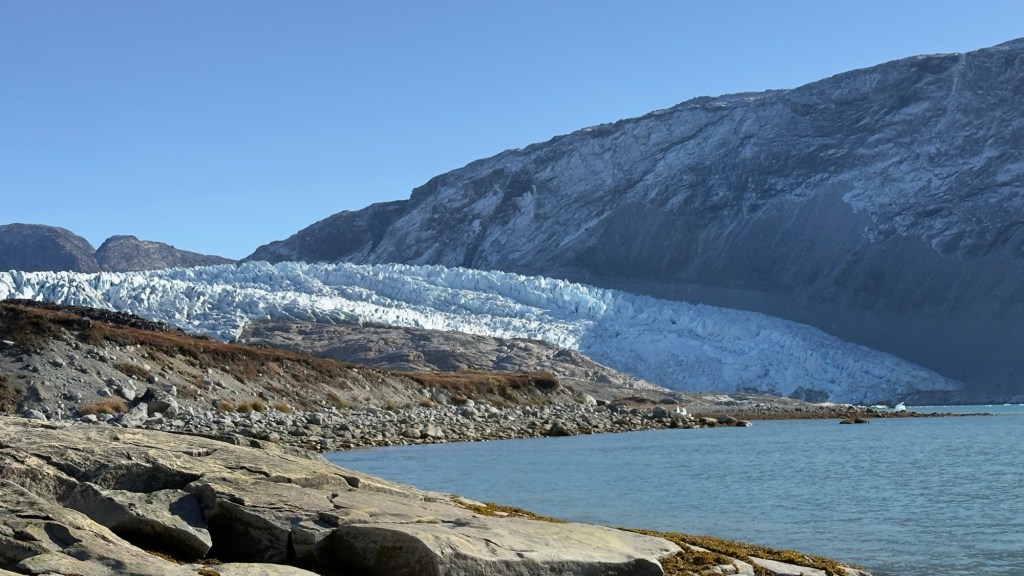
It was one of those lectures that made you look at the landscape differently. The mountains, fjords, ice and even the ocean beneath us are all part of an incredibly long geological story.
I will publish a more comprehensive version at a later date.
The captain announced later on that the waves would be calmer on the approach to Nain. I really hoped that I would be able to sleep!


Leave a comment