Ancient Ruins, Inuit Drums and a Taste of Greenland
After yesterday’s adventures, we allowed ourselves a slightly slower start this morning. We woke later, had breakfast and then prepared for another day of exploring Greenland — this time with a fascinating mixture of Norse history, Inuit culture and a little taste of local life.
Hvalsey Church – a link to Greenland’s Norse past
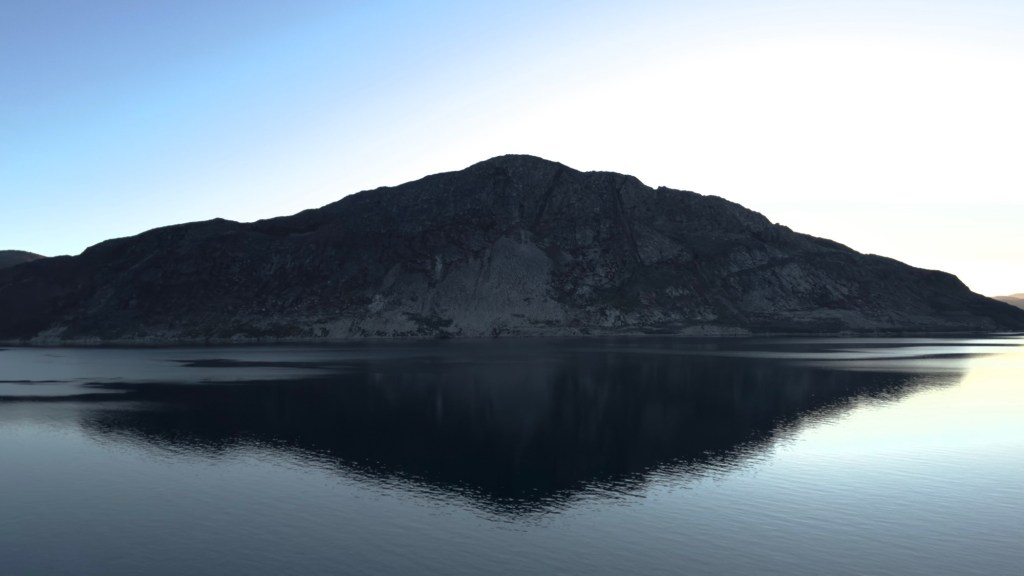
Our ship took us towards Hvalsey, one of the most important archaeological sites in Greenland and home to the remains of a Norse settlement.
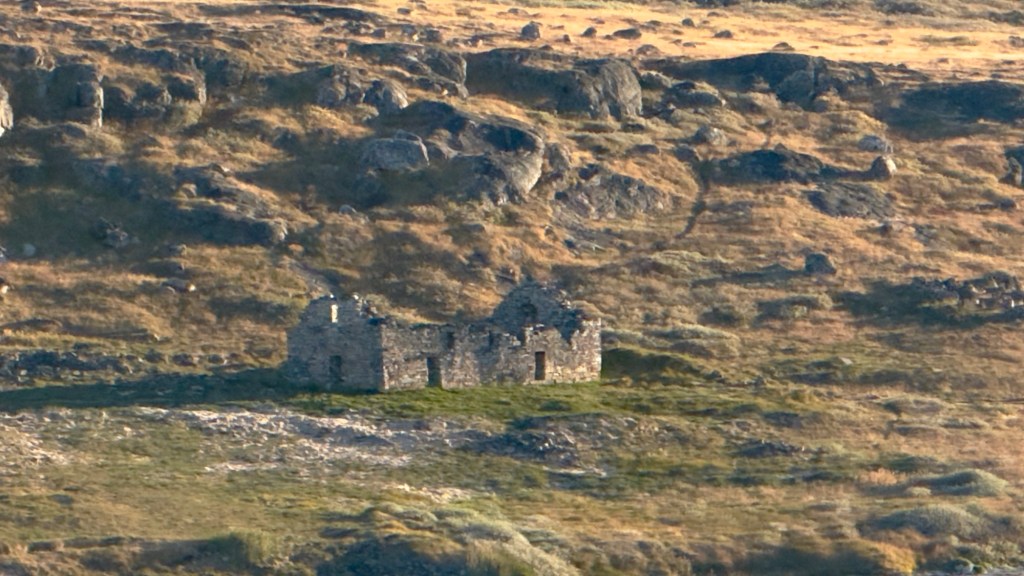
Standing among the ruins of the old farm is Hvalsey Church, thought to date from around 1300. Built from carefully fitted stone, the church is remarkably well preserved considering its remote location and the harsh Greenlandic climate. Around the site are also graves believed to date back as far as the 11th century, providing evidence of the Christian Norse community that once lived here.
Nearby are the remains of a substantial farm and longhouse. It wasn’t simply a home; this was a working settlement, with around eleven rooms and areas that would have been used for livestock. Looking at the foundations today, it is fascinating to imagine how different this landscape must have looked when Norse families were living here.
Hvalsey also has a special place in the history books because of a wedding.
A letter written in September 1408 by a bishop records a marriage that took place here. It is generally regarded as the last known written record of the Norse Greenlanders, making the event particularly significant. The story is even more fascinating because we were told that the Icelandic groom had been shipwrecked in Greenland, where he met the woman who would become his wife.
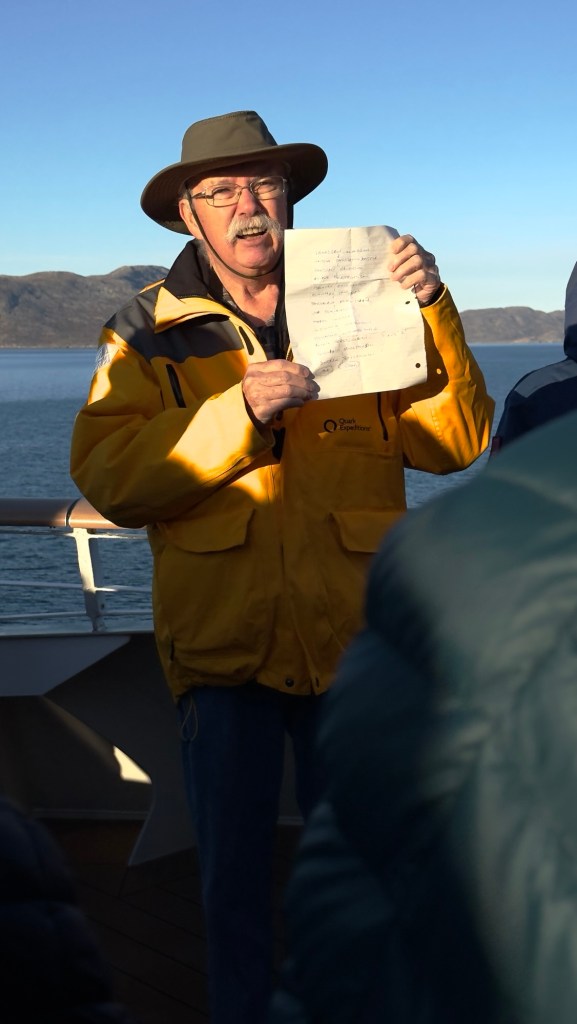
One of the people on the boat had brought along a list showing the descendants of the couple. He explained that they were his 15th great-grandparents. Suddenly, the history felt much more personal. This wasn’t just a ruin connected with people who disappeared centuries ago — there are descendants who can still trace their family back to those who lived here.
Ashore at Qaqortoq
We returned to the cabin and relaxed in the room until around 10.30am, when it was time to head down to Deck 3 to board the tender for Qaqortoq.
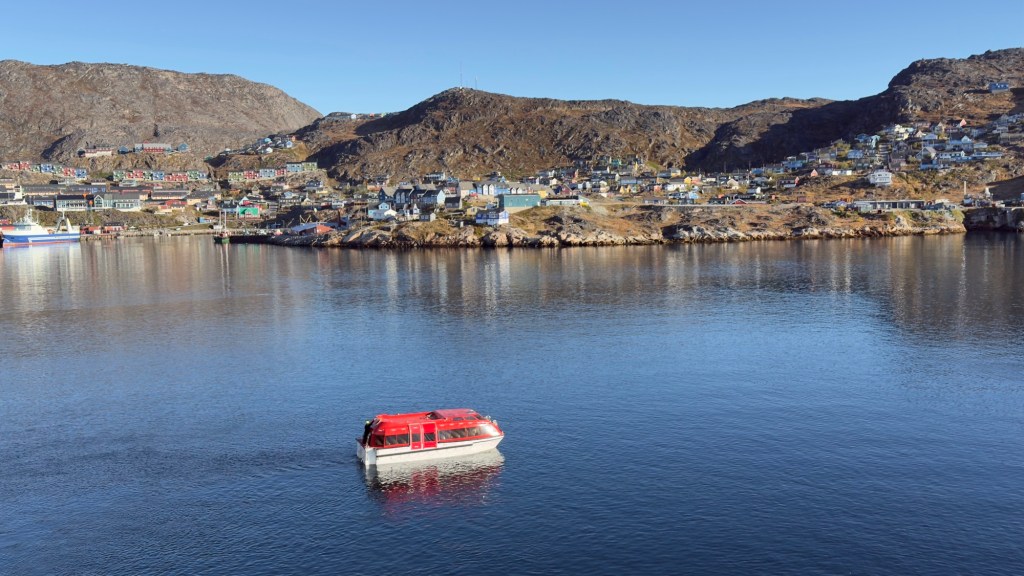
There was a slight change of plan when we discovered that containers were being moved close to the jetty, meaning we had to use another landing point further along. It was all part of expedition life — plans change and everyone simply adapts.
Qaqortoq is the largest town in southern Greenland, with around 3,000 inhabitants, and after the quiet isolation of Hvalsey, it was lovely to wander around and get a glimpse of everyday life.
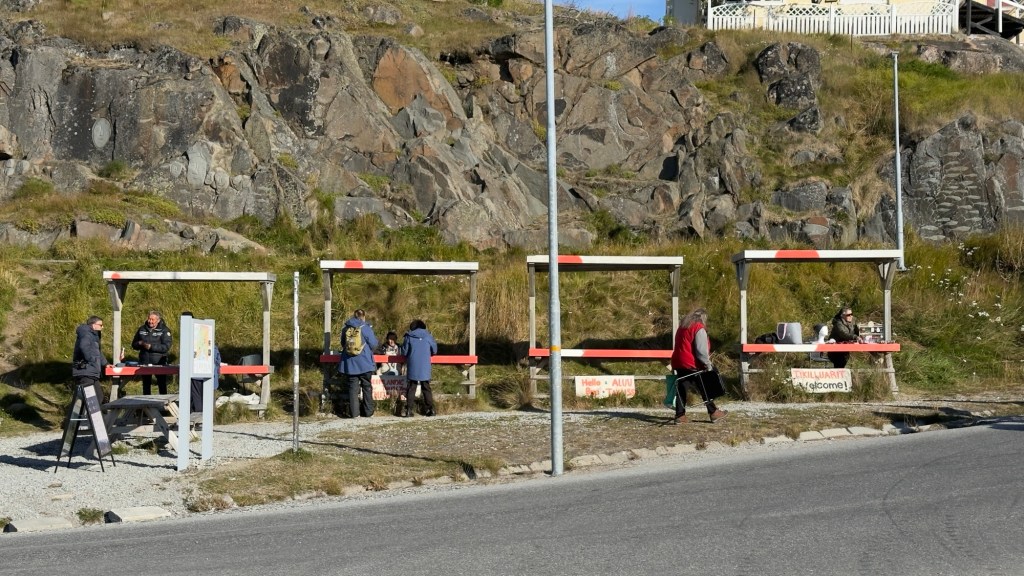
There were a few stalls at the top of the jetty – people selling traditional handmade goods. There was nothing that took our fancy so we carried on.
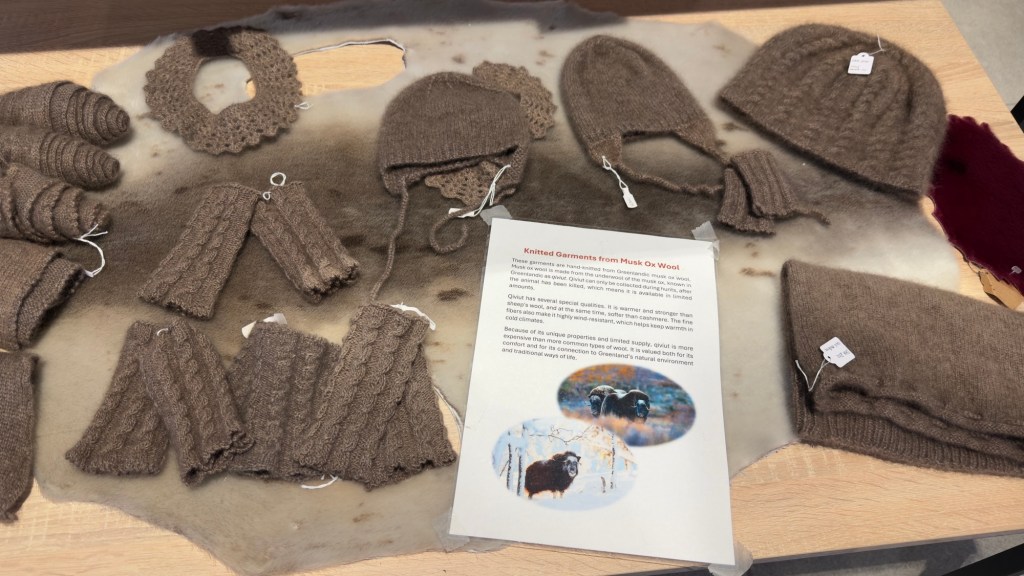
We browsed the souvenir shop, and made a few purchases, before heading towards the fish market on the harbour.
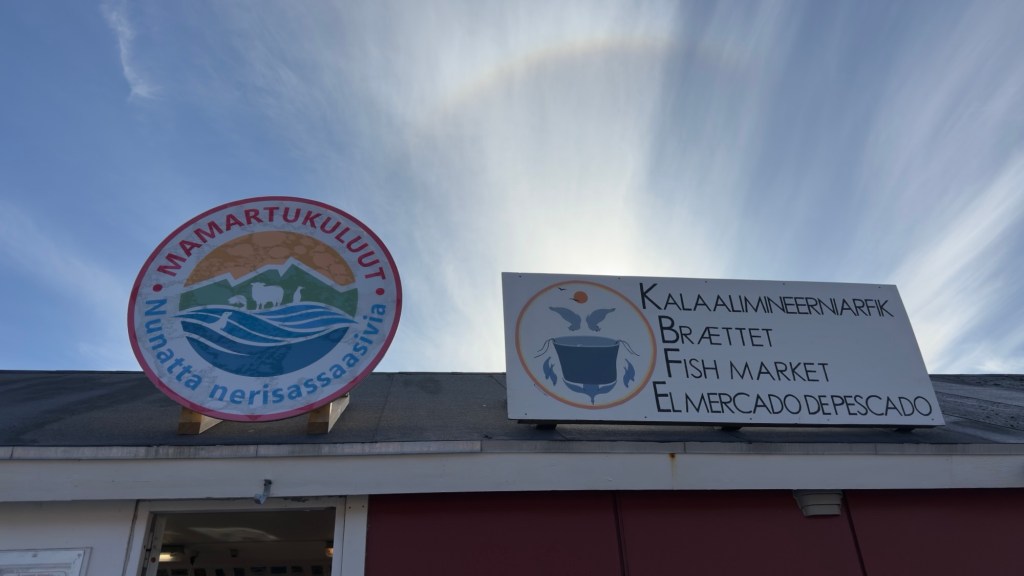
🐟 A Taste of the Arctic: Visiting the Qaqortoq Fish Market
One of our stops in Qaqortoq was the local fish market, known as the Brættet. It was a fascinating place to visit because it gave us a glimpse of the food that is actually caught and hunted locally, rather than the sort of produce you might expect to see in a tourist-focussed shop.
There were plenty of fish on display, from whole freshly caught fish to neatly prepared pieces, with trays and refrigerated counters packed with the day’s produce. Some of the fish were beautifully coloured, while others looked much more familiar.
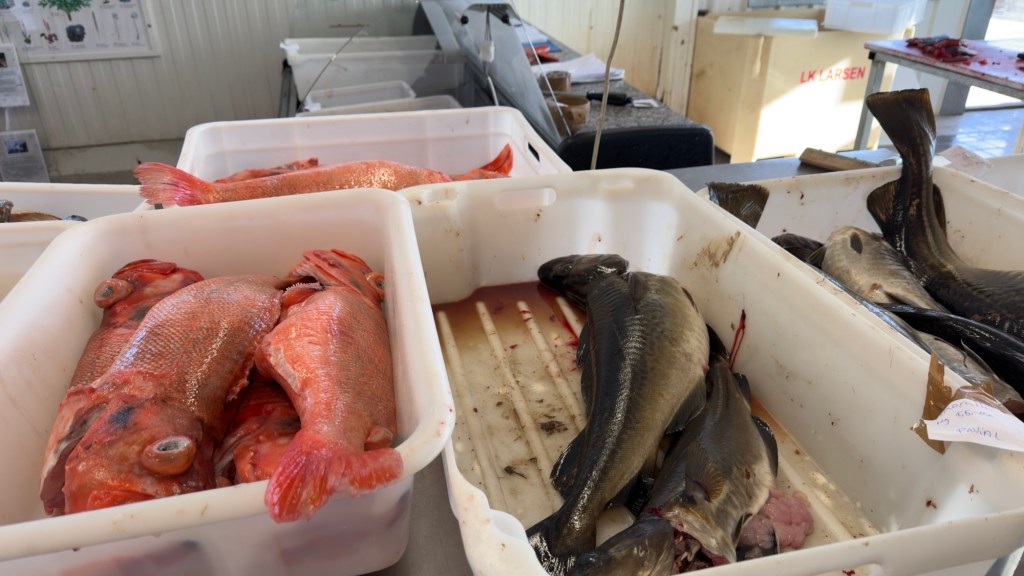
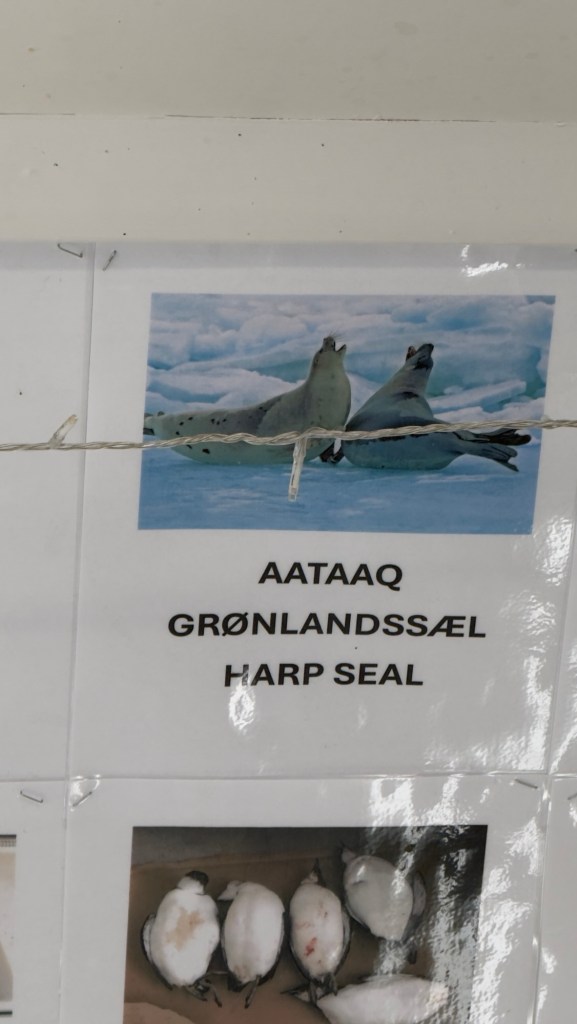
It was the meat that really caught our attention, though. We spotted several trays of unfamiliar cuts and were fortunate enough to meet a fisherman/fishmonger who was happy to explain what we were looking at. He spoke Greenlandic, Danish, English and German, which made him an excellent guide for two curious visitors!
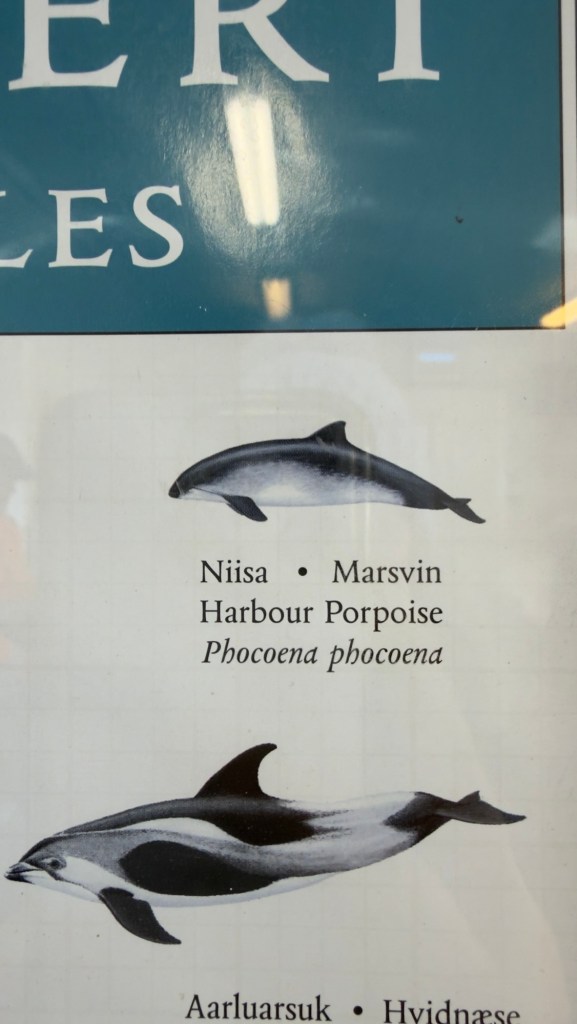
He identified harp seal, labelled Aataaq – Grønlandssæl – Harp Seal. There were also pieces of harbour porpoise, shown on the market’s information board as Niisa – Marsvin – Harbour Porpoise (Phocoena phocoena).
Seeing these foods for sale was quite an eye-opener. Hunting and fishing have long been central to life in Greenland, and locally caught and hunted food remains an important part of the diet. The market made that connection very tangible: this wasn’t food presented for tourists to admire, but produce being sold as part of everyday life in the community.
We also spotted other unusual cuts and fish products that we couldn’t identify ourselves, which made our multilingual fishmonger even more useful!
It was one of those unexpected travel experiences that gave us a much better insight into Greenlandic life — and certainly provided some memorable photographs along the way.
Qaqortoq Pottery
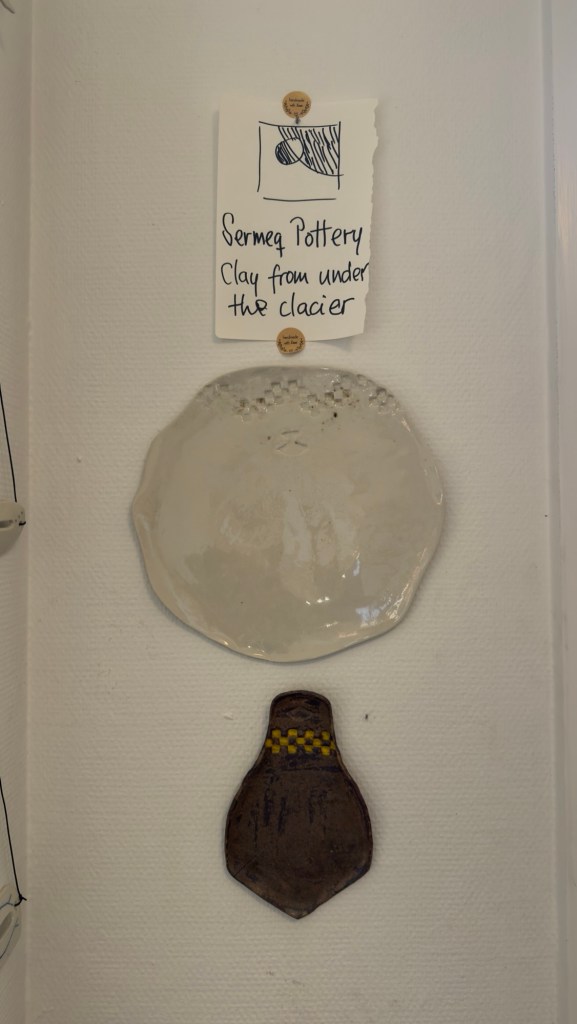
Opposite the Fish Market is Sermeq Pottery which gave us a glimpse into South Greenland’s artistic scene. Each handcrafted stoneware piece draws directly from the Arctic landscape, with glazes and clay often mixed with local glacial silt and sands. The potter was working whilst we browsed the store. All unique, the pieces also carry a premium price tag reflecting the labour and high cost of remote living. Taking home a bespoke cup or bowl is far more than an ordinary souvenir (we didn’t).
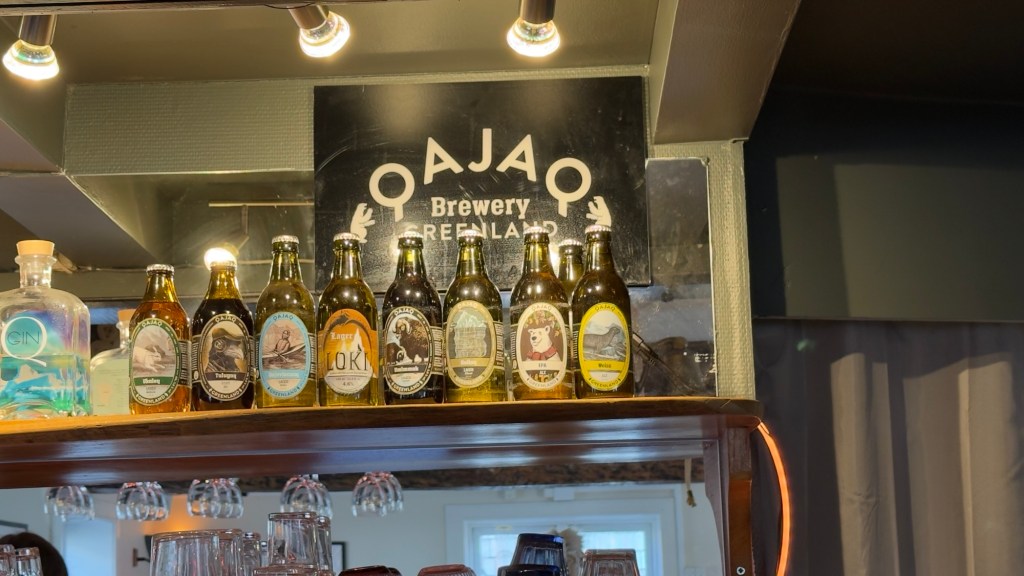
Locally brewed beer
We also stopped at Tamassa Bar, where we tried a local IPA brewed by Greenland’s Qajaq brewery. It was becoming rather easy to get into the habit of sampling the local beer!
The sound of the Greenlandic drum
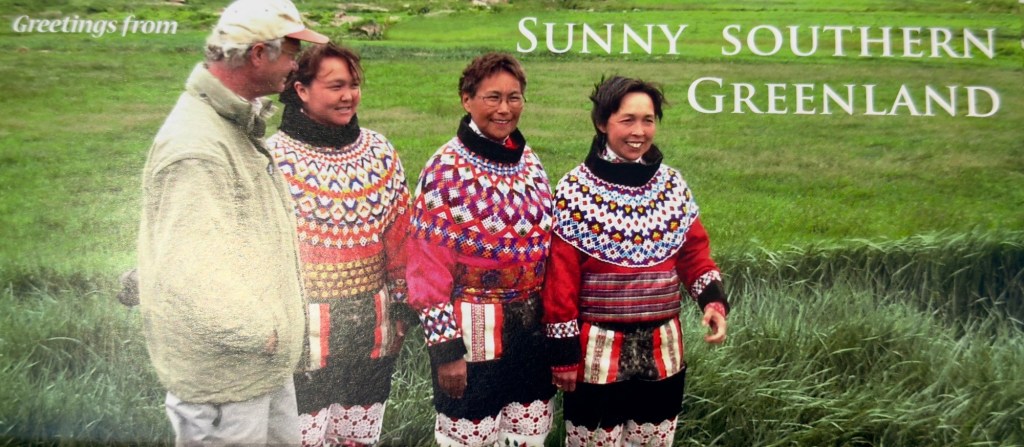
One of the highlights of our visit was a cultural presentation at a local church, where we were treated to singing, dancing and stories about Greenlandic traditions, as well as a fascinating Viking lecture.
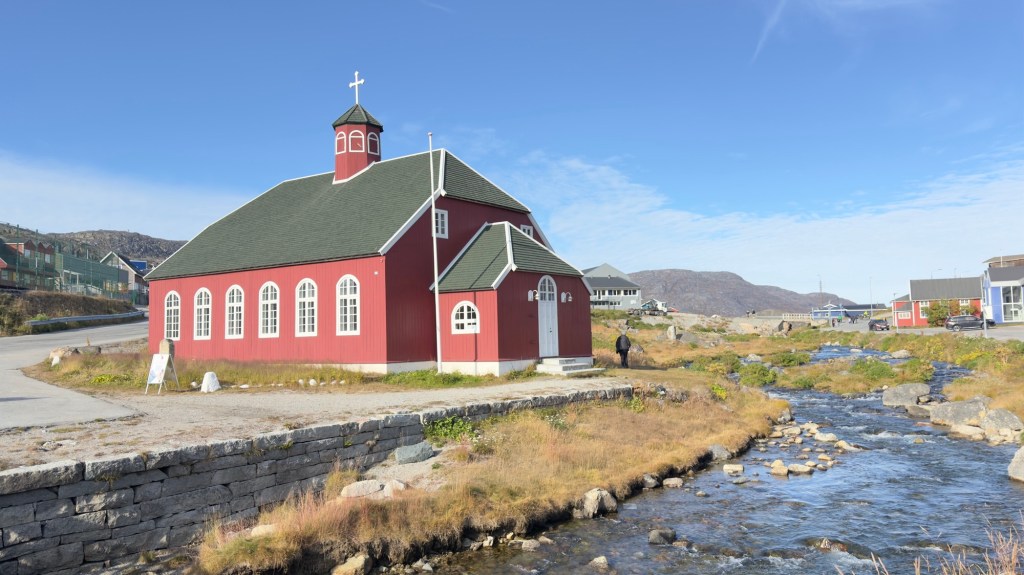
The history of Christianity in Greenland is complicated, with different periods of Norse Christianity and later missionary activity. We heard about the arrival of missionaries in 1721, and how traditional practices, including drum dancing, were subsequently suppressed.
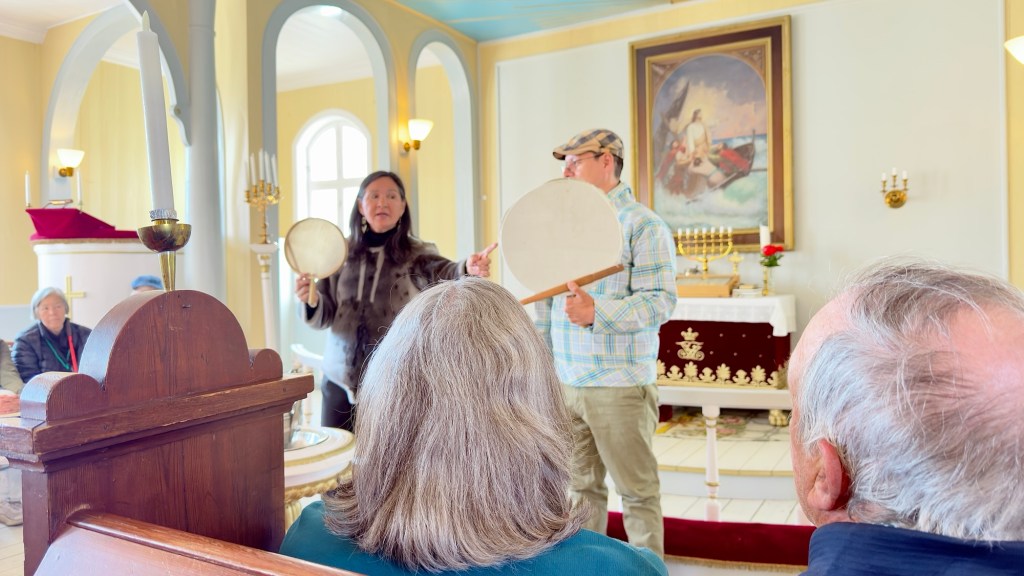
The drum demonstration was particularly memorable, with a local lady translating into English what the drummer spoke in Greenlandic.
Our 50 year old drummer explained that he had been playing since 2018. He had taught himself partly from a book and by listening to music on YouTube. He is also a shaman, and told us that women can be shamans too.
The traditional Greenlandic drum is far more than a musical instrument. It has a deep cultural and spiritual significance and was historically used in ceremonies and storytelling. The size of the drum can vary depending on the availability of suitable wood. We were told that larger drums are associated with East Greenland, where driftwood could arrive from places as distant as Russia or Siberia.
The circular centre, or “eye”, can be made using animal skin, including seal and other materials. We even learned that if a hole develops in it, it can be repaired using fish stomach.
There is archaeological evidence that drums have a very long history in Greenland. A fragment discovered in the Disko Bay area has been dated to around 4,500 years ago, giving an extraordinary glimpse into just how ancient this tradition may be.
A drum as a symbol of peace
Perhaps the most touching part of the story was learning what the drum represents today.
The drummer explained that the drum can be seen as a symbol of peace — a way of playing troubles out of the house rather than allowing them to remain inside. Drums can be displayed on walls as symbols of peace, and we were told that an official blessing of the drum took place in 2009.
He has also worked hard to make sure the tradition is passed on to younger generations. After receiving funding, he made numerous drums and provided them to schools, allowing children to learn and play without feeling that the instrument was something forbidden or too sacred to touch – this is something he was told when he was young.
That seemed particularly important given the history of the drum and the attempts to suppress traditional practices.
He also spoke about music as a way of travelling through the imagination. We heard a song associated with a female shaman, describing a journey in her mind — flying over mountains, crossing above the ice cap and visiting beautiful villages.
Our drummer certainly wasn’t short of musical talent either. He leads two choirs and plays several different instruments. He has five daughters, and apparently they all play music too, so there is clearly plenty of musical talent in that family!
During our visit we heard several more stories and songs. There was even a Christmas song, which felt slightly surreal while sitting in Greenland surrounded by such an extraordinary landscape.
Vikings, Greenland and Erik the Red
A lady dressed in a red cape, who was the Viking expert, took over at this point. She talked about the Vikings and the origins of Greenland’s name.
According to the well-known story, Erik the Red was exiled from Iceland and sailed west, eventually settling in an area he called Greenland. The name was thought to be an attractive one for encouraging other settlers to follow him.
His son, Leif Erikson, later became famous for his voyages even further west, reaching North America centuries before Columbus.
Standing in Greenland while listening to these stories made the history particularly vivid. These weren’t just distant places mentioned in a history book — we were actually standing in the landscape where the Norse once established their settlements.
A very Greenlandic piece of cake
After the cultural presentation, we returned to Tamassa Bar for another local IPA and hopefully something to eat. They had stopped serving lunch but I was hungry so got a piece of carrot cake that was absolutely delicious.
We decided to stay for a while to take in the surroundings, because some people were setting up in the bar and told us they were serving a traditional Greenlandic cake. We were told that the company behind it had won a National Tourist Award in Greenland, so there was probably a little bit of promotion involved, but we were more than happy to take part!
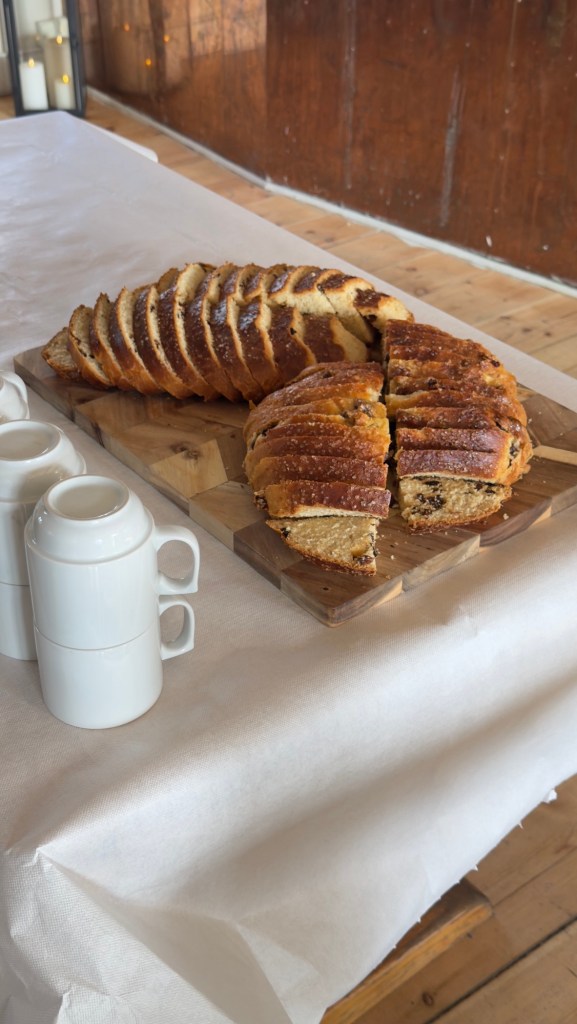
The cake was a moist white sponge containing raisins, topped with a mixture of sugar and salt. It was being offered free with tea and coffee, and it felt like another lovely example of the way food can bring people together and share something from the local community.
By this point, we noticed that the bar was filling with locals and we were very much in the minority. That actually made the experience feel even more authentic.
Back to the ship
At around 4pm we made our way back to the tender landing point and our boat was waiting to take us back to the ship.
Before boarding, our souvenir bags were scanned — presumably to make sure we hadn’t accidentally brought any banned bi-products, made from polar bear or whale, aboard with us.
Back in our cabin, we washed and changed before heading to dinner. Once again, we had a lovely meal and then enjoyed a cheeky drink in the bar before finally retreating to our cabin.
Another day had brought an extraordinary mixture of Norse ruins, ancient traditions, Inuit music, Viking stories, local beer and Greenlandic cake.
And that is what makes this expedition so special. Every day seems to uncover another layer of Greenland — not just its spectacular scenery, but the people, stories and traditions that have survived here for generations.
The ship’s course has now changed – instead of continuing down the west coast of Greenland, it is heading across the lively Davis Strait towards the east coast of Canada.


Leave a comment