Overview
The Battle of Neretva, fought between February and March 1943, is often referred to as the “Battle for the Wounded.” It was a pivotal World War II clash in Bosnia in which Yugoslav Partisans, led by Josip Broz Tito, managed to escape a large-scale Axis encirclement. Despite being heavily outnumbered, cut off, and responsible for around 4,500 wounded fighters, they carried out a bold and deceptive manoeuvre to survive.
Axis Offensive (Case White)
During the operation known as Case White, more than 150,000 Axis troops—including German, Italian, and Ustaše forces—were deployed with the aim of crushing the main Partisan resistance. The scale and coordination of the offensive made it one of the most dangerous threats the Partisans faced during the war.
Strategy and Deception
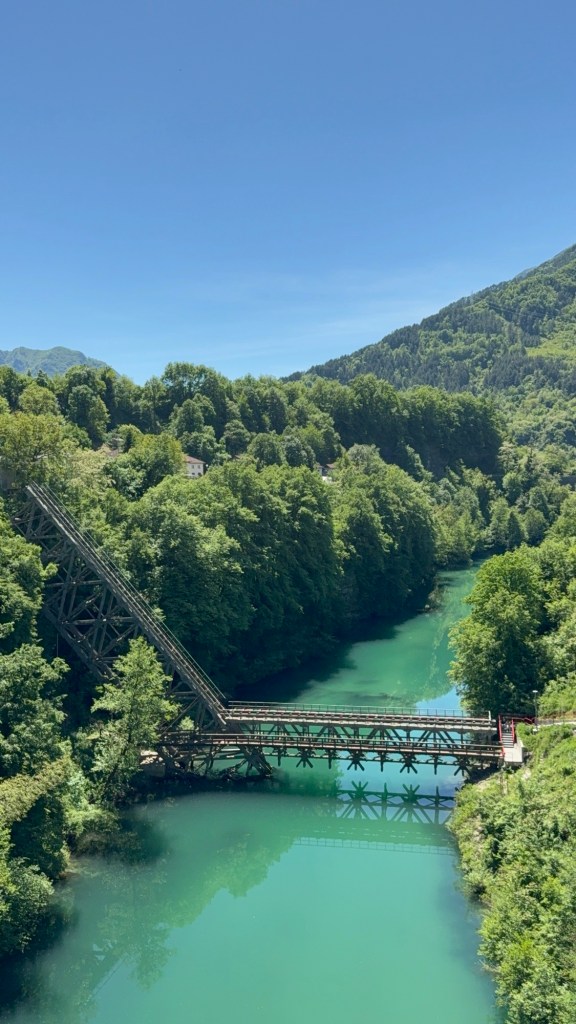
To counter this, Tito ordered the destruction of bridges across the Neretva River, creating the illusion that his forces intended to retreat north. In reality, this was a calculated ruse. After misleading the enemy, the Partisans quickly constructed a temporary crossing and launched a breakout to the east, catching Axis forces off guard.
The “Battle for the Wounded”
A defining feature of the battle was the determination to save injured fighters. Despite harsh winter conditions, the spread of disease such as typhus, and severe shortages of food and medical supplies, the Partisans evacuated thousands of wounded soldiers. This act became a powerful symbol of unity and resilience under extreme pressure.
Outcome
Although the Partisans suffered significant losses, they avoided annihilation and successfully broke through enemy lines. In the process, they also overcame nearby Chetnik forces, securing their survival as an effective resistance movement.
Historical Significance
The battle stands out not only for its military importance but also for its humanitarian dimension. The successful evacuation of the wounded under such dire circumstances makes the Battle of Neretva one of the most distinctive and remarkable episodes of the Second World War.
What you see today
- The twisted remains of the blown-up bridge are left in place as a memorial.
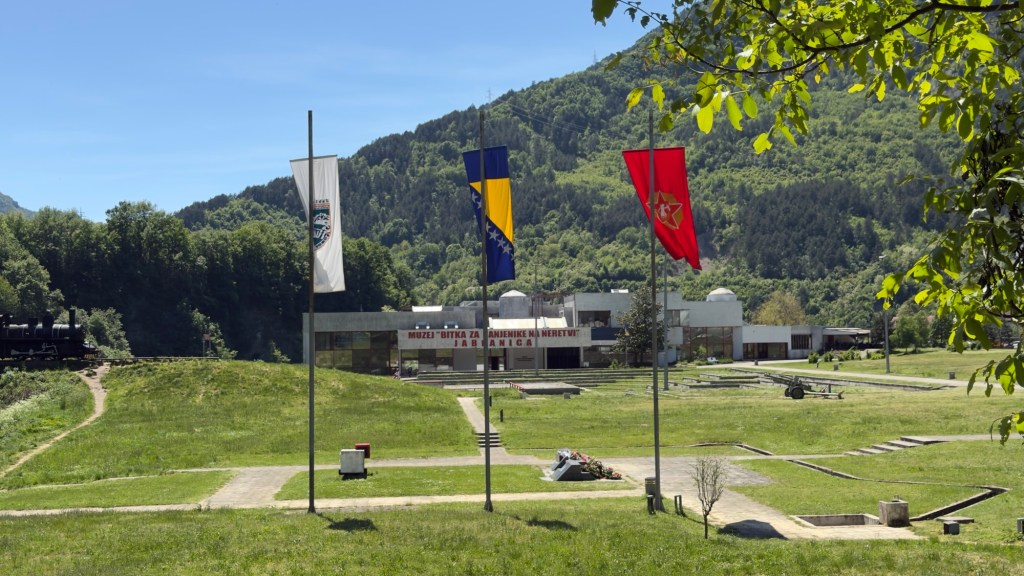
- It’s now part of a museum complex commemorating the battle and the lives saved.
Who were the Axis?
In the Battle of the Neretva, the Axis forces pursuing the Partisans were made up of several groups:
- Nazi Germany – the main coordinating force (Wehrmacht units)
- Fascist Italy – troops stationed in the region
- Local collaborators, including forces from the Independent State of Croatia (NDH), such as the Ustaše and Home Guard units
So, the Axis side wasn’t just one country—it was a combined force led by Germany, with Italy and regional allied units supporting them.


Leave a Reply