A Slow Start to the Day
Breakfast at the hotel was a simple but satisfying spread of cold meats, cheeses, fresh salad, bread, olives, fruit, yogurt and drinks, a very Balkan start to the morning and a nice change from breakfasts back home. Outside, however, the weather had turned. Rain drifted steadily across the city while low cloud wrapped itself around the surrounding hills, giving Mostar a very different atmosphere from the bright sunshine of previous days.
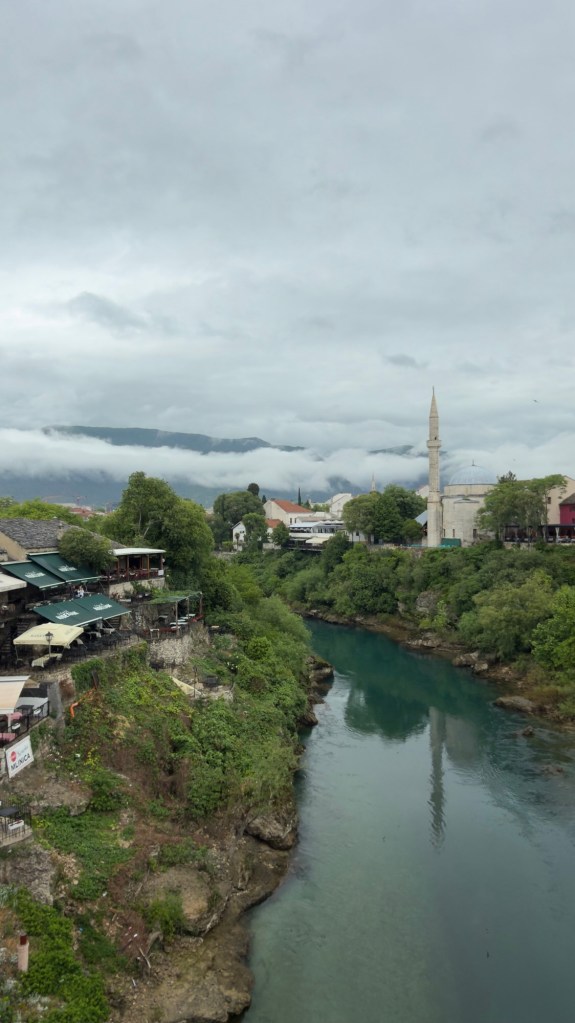
Rather than head into the busy heart of the Old Town again, we decided to explore the quieter northern side of the city to see another face of Mostar.
Scars of War Still Visible
Walking along Oneščukova, we came across two adjoining buildings that had clearly suffered terribly during the Bosnian War of the 1990s. Their façades still stood, but only just. Bullet holes had peppered the stonework and behind the fronts there was simply… nothing. The rear sections of the buildings had long since disappeared.
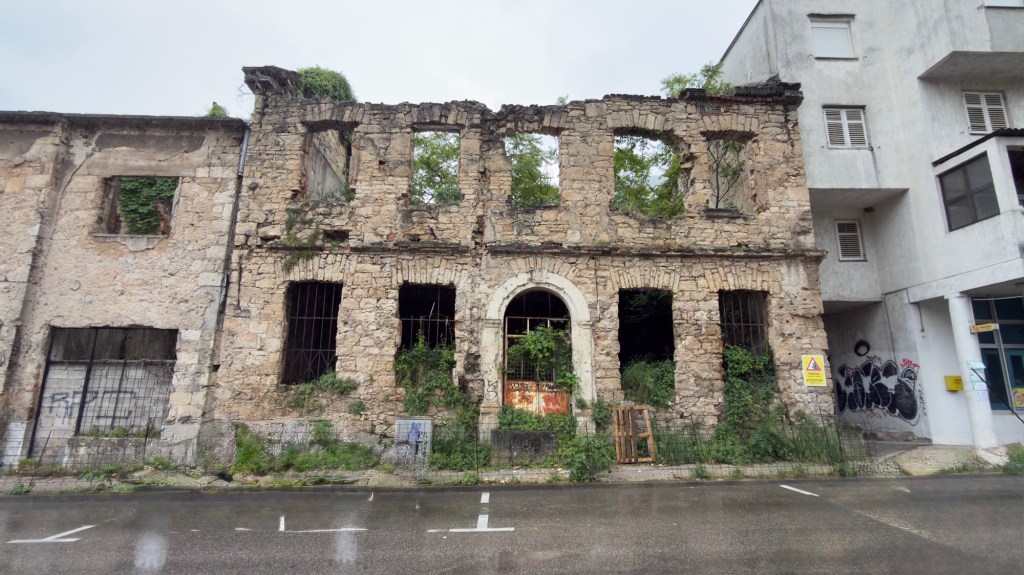
It was another reminder that although Mostar is now full of tourists, cafés and market stalls, the scars of conflict remain impossible to ignore. During the Croat–Bosniak conflict of 1993–94, Mostar became one of the most heavily damaged cities in Bosnia and Herzegovina. The city was divided, families separated and entire neighbourhoods destroyed.
Continuing south-east, we passed a grassed area where some of the original cobblestones from the famous Stari Most were displayed. The original bridge, built in 1566 during the Ottoman period by architect Mimar Hayruddin, stood for more than 400 years before being destroyed during shelling in November 1993. Its destruction became one of the defining images of the war. The bridge seen today is a painstaking reconstruction, reopened in 2004 using many traditional building techniques and recovered original stones from the riverbed below.
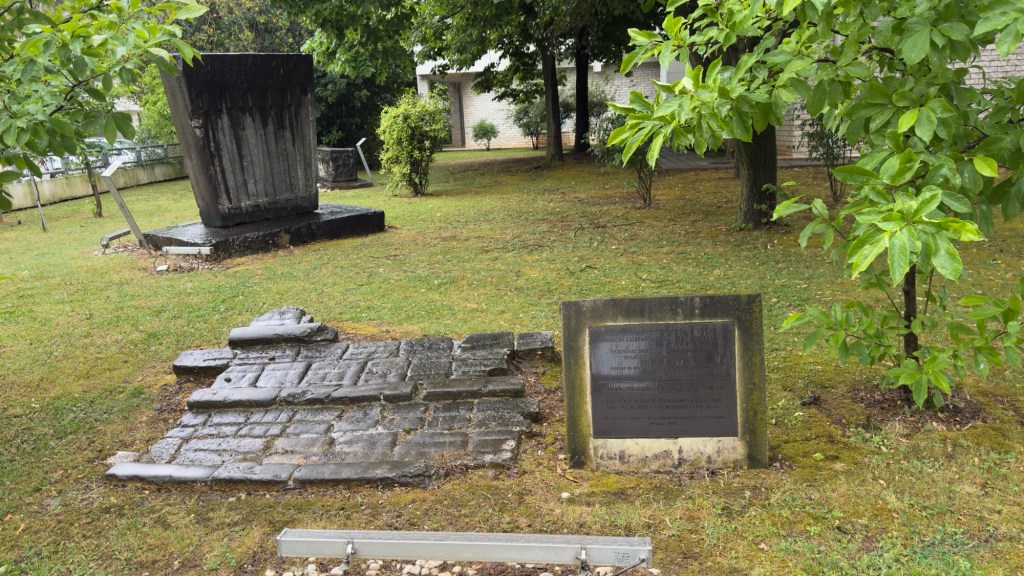
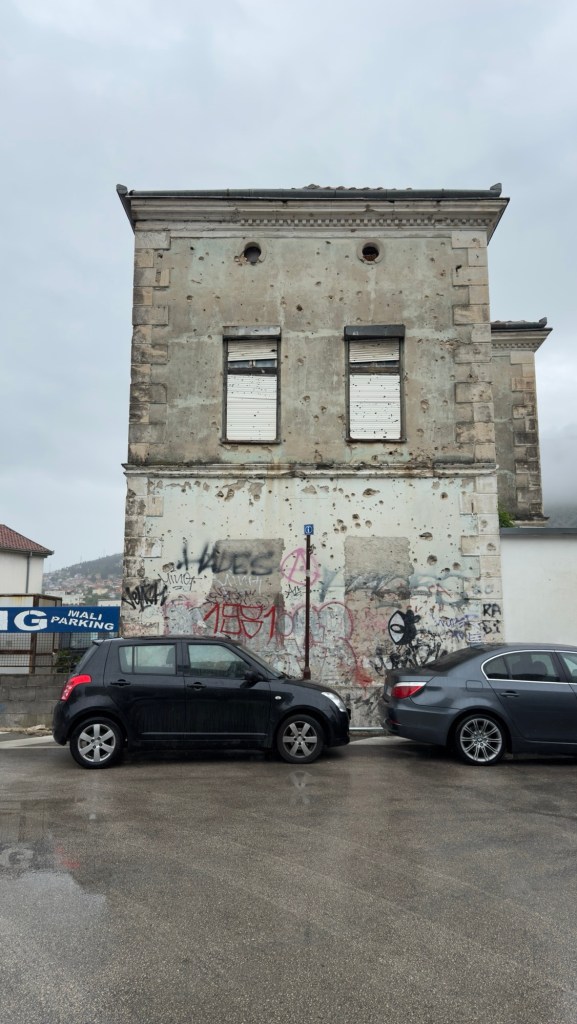
Nearby, more bullet-ridden buildings stood quietly among everyday life — apartments, shops and passing traffic continuing around them.
Churches, Graffiti and Contrasts
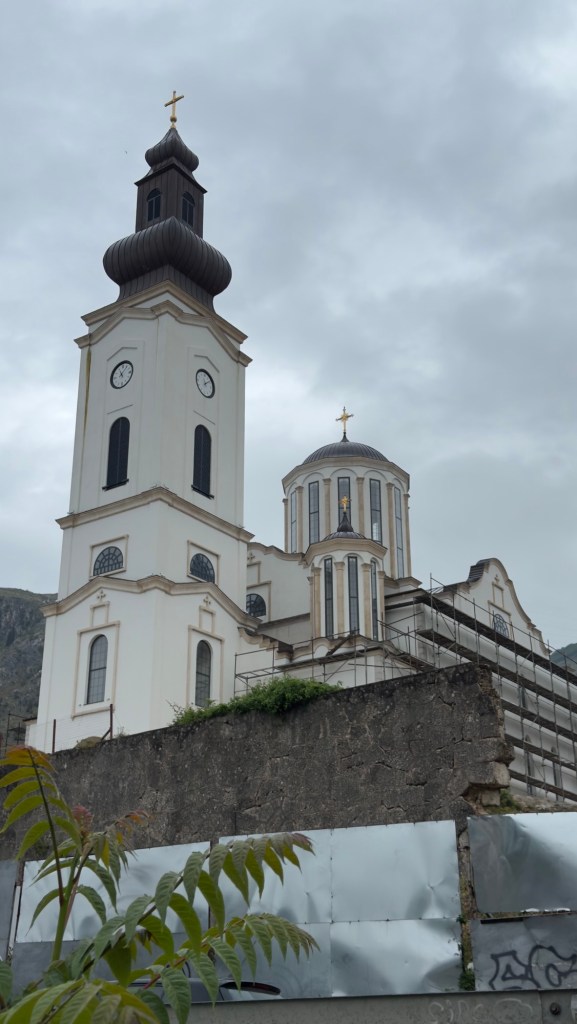
From there we took in views of the magnificent Crkva Svete Trojice, the Serbian Orthodox Cathedral of the Holy Trinity. Originally built in the 19th century, it was once considered one of the largest Orthodox churches in the Balkans. Like much of Mostar, it suffered severe damage during the war but reconstruction efforts continue, symbolising both loss and resilience.
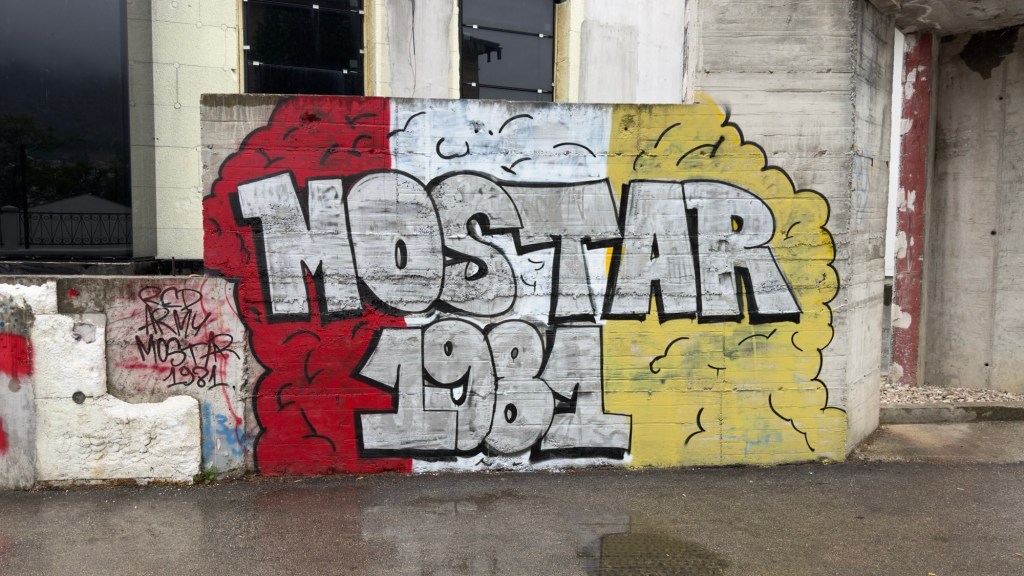
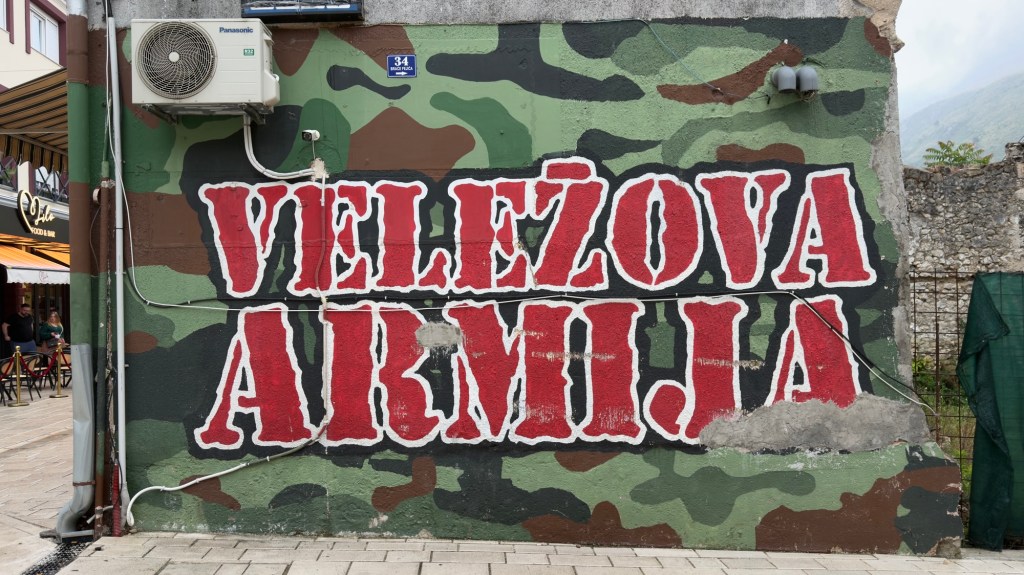
Walking further south along Maršala Tita, graffiti covered many walls. One striking piece simply read “1922” at one side of the wall, and “1981” on the other, as well as references to the Red Army. Below explains the significance of these dates:
Founded in 1922, FK Velež Mostar is one of Mostar’s most historic football clubs and has long been an important part of the city’s identity. Originally created as a workers’ sports club, Velež became known across former Yugoslavia for its strong multi-ethnic character and passionate support.
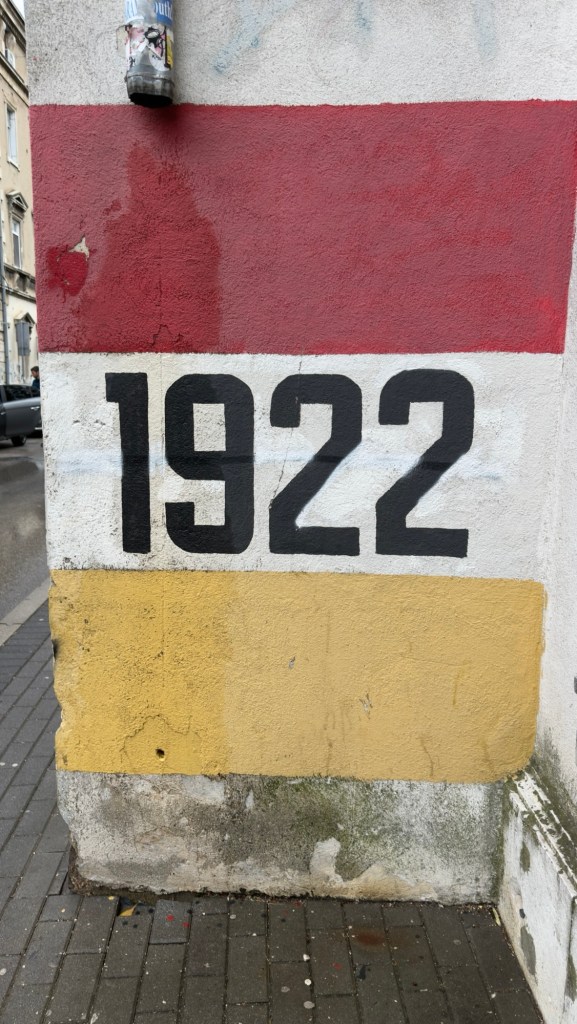
The club’s fan group, the Red Army (Crveni šejtani), was formed in 1981 after Velež won the Yugoslav Cup with a memorable 3–2 victory over Željezničar in Belgrade. The dates “1922” and “1981” still appear frequently in graffiti and murals around Mostar, especially on the eastern side of the city, reflecting the lasting loyalty of supporters.
Nicknamed “Rođeni” (“The Born”), Velež won the Yugoslav Cup twice, in 1981 and 1986, and today the Red Army continues to support the club from the eastern stand of the Rođeni Stadium.
Šehitluci — A Place of Reflection
One of the most moving places we visited was Šehitluci Memorial Cemetery, the martyrs’ cemetery where soldiers of the Army of Bosnia and Herzegovina and defenders of Mostar are buried following the 1992–1995 war.
The cemetery was peaceful, quiet and deeply sad. Row upon row of graves served as a stark reminder of just how many young lives were lost. Some gravestones showed the names of young soldiers, with their year of birth, but no year of death. We can only presume they were missing in action.
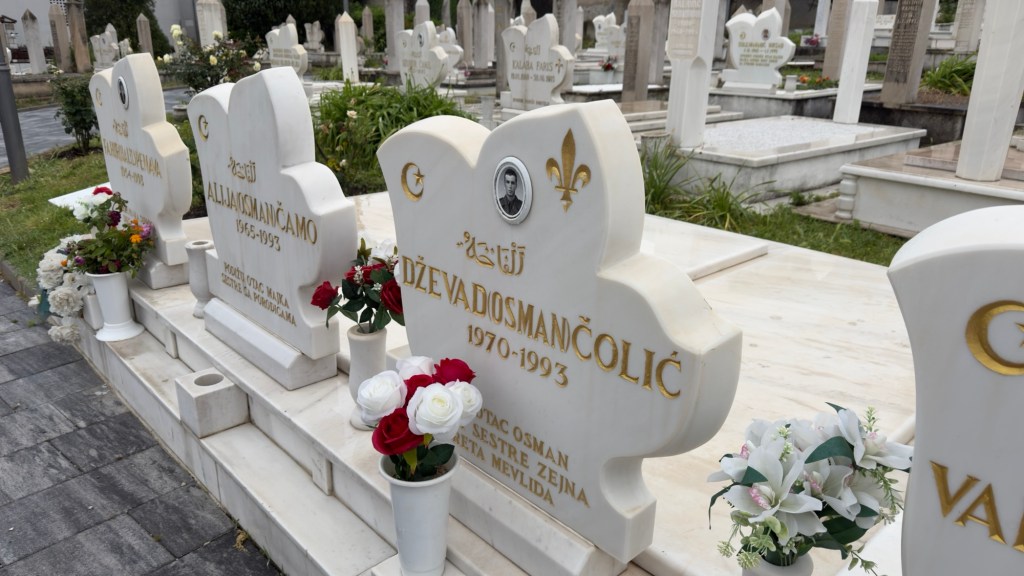
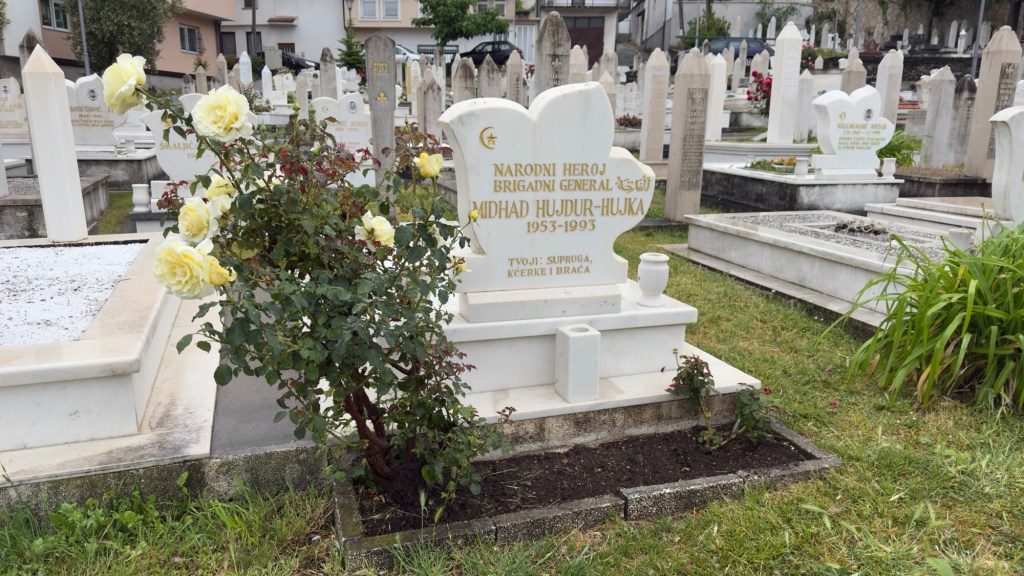
Here we also came across the grave of Midhad Hujdur-Hujka, whose face we had recognised from a mural seen the previous day. Hujka became one of the key commanders defending Mostar during the war and is remembered as a local hero. Seeing his grave after seeing his image painted proudly on the city walls made the history feel incredibly immediate and personal.
Karadozbeg Mosque
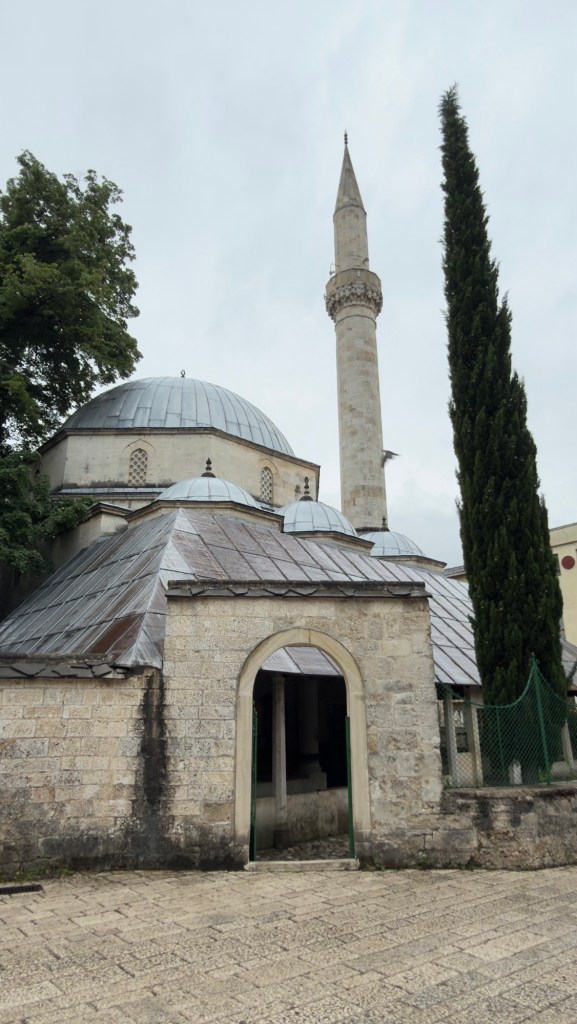
Not far away stood the beautiful Karadozbegova džamija, dating from 1557. Built during the Ottoman era, it is regarded as one of the most important Islamic monuments in Herzegovina. Despite suffering damage during conflict, it has been carefully restored and remains an active place of worship today.
Its elegant minaret rose into the grey skies, standing calmly above the city that has endured so much.
Back Towards the Old Bridge
Eventually we wandered back towards the Old Bridge area. The contrast from the quiet cemeteries and damaged buildings to the crowds of tourists was striking. Coach parties filled the narrow streets and umbrellas made navigating the cobbled lanes something of a challenge.
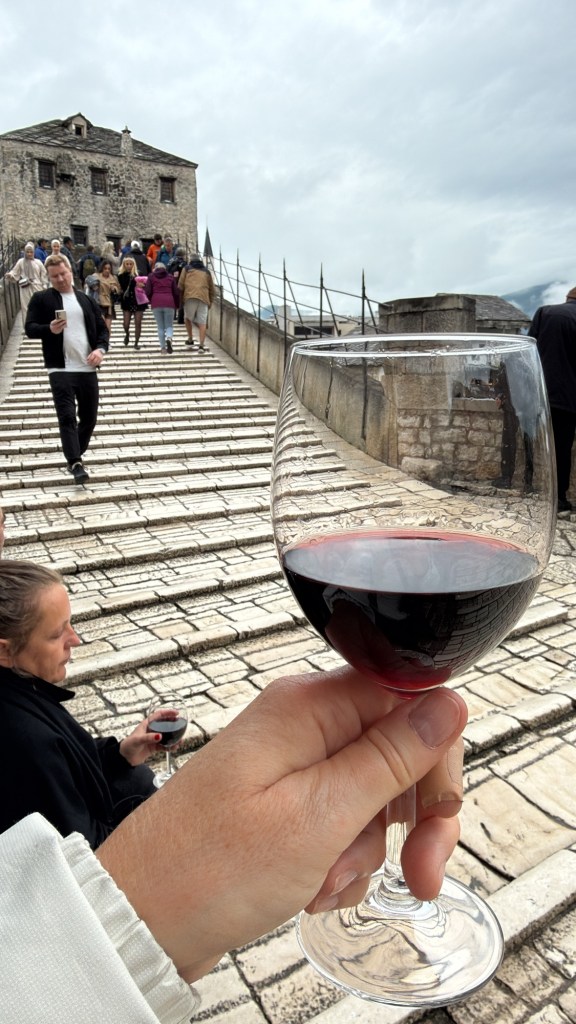
After a rather disappointing lunch, we decided to recover by returning to Spirit of Herzegovina, the wine bar we had discovered the day before. Sitting there with a drink, simply watching the world go by, felt wonderfully relaxing. No plans, no rushing — just taking in the atmosphere of the city.
Lavender Ice Cream and Riverside Views
Later we wandered through the bazaar and stopped to try a lavender ice cream. Delicious, unusual and very enjoyable — although sadly the service itself was far less memorable for the wrong reasons.
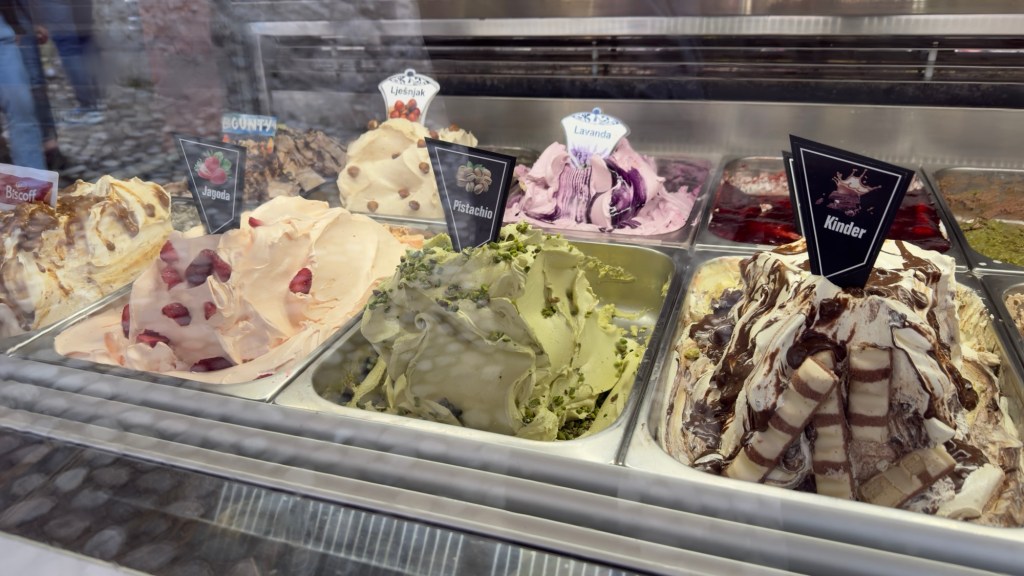
Lavender ice cream has become one of the more unusual and memorable flavours to try in Mostar, especially during the warmer months. The flavour reflects the strong Mediterranean influence in Herzegovina, where lavender grows well in the hot, dry climate and is often used in local oils, soaps and desserts.
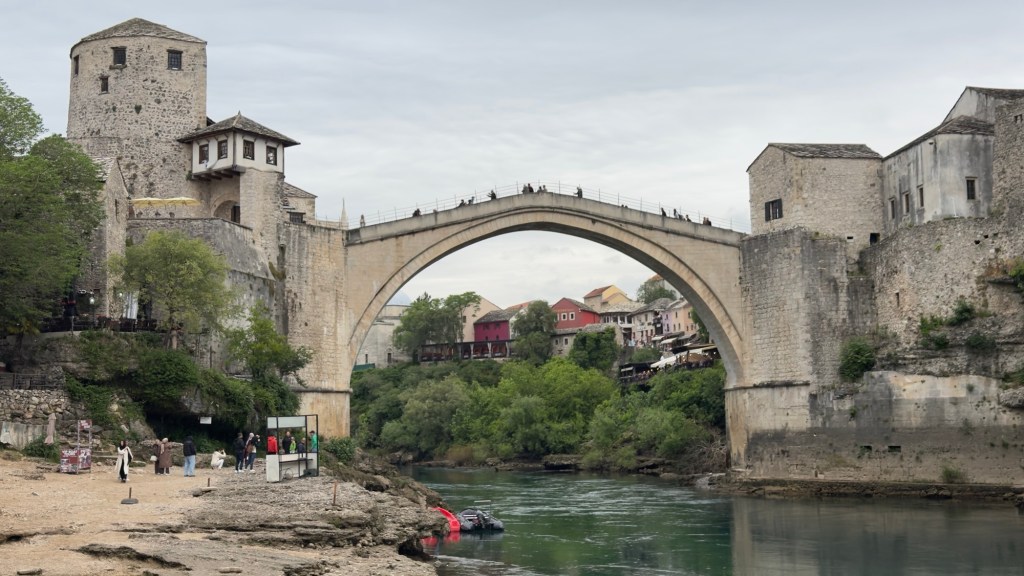
From there we headed down towards the banks of the Neretva River to see the Old Bridge from a different angle. The river’s extraordinary turquoise colour never really looks real, especially against the pale stone of the bridge and the dark clouds overhead.
We continued wandering through the streets, eventually clocking up around 15,000 steps across the day.
A Different Kind of Dinner
By evening, JC decided it was finally time to look for a restaurant serving a light meal. After quite a search we came across Urban, tucked slightly away from the busiest parts of Stari Grad.
It made a refreshing change from some of the more traditional menus we had encountered during the trip. A lovely salmon meal rounded off the evening perfectly with stunning views of the Old Bridge in the distance.
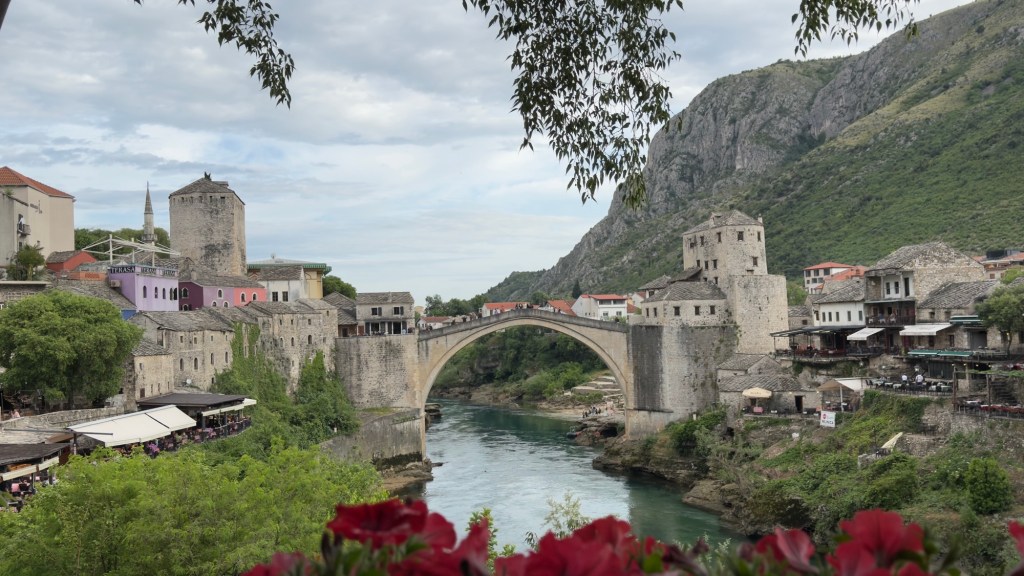
Afterwards, we made the final walk back to the hotel to pack — our time in Mostar slowly coming to an end.
 jctraveller
Leave a comment