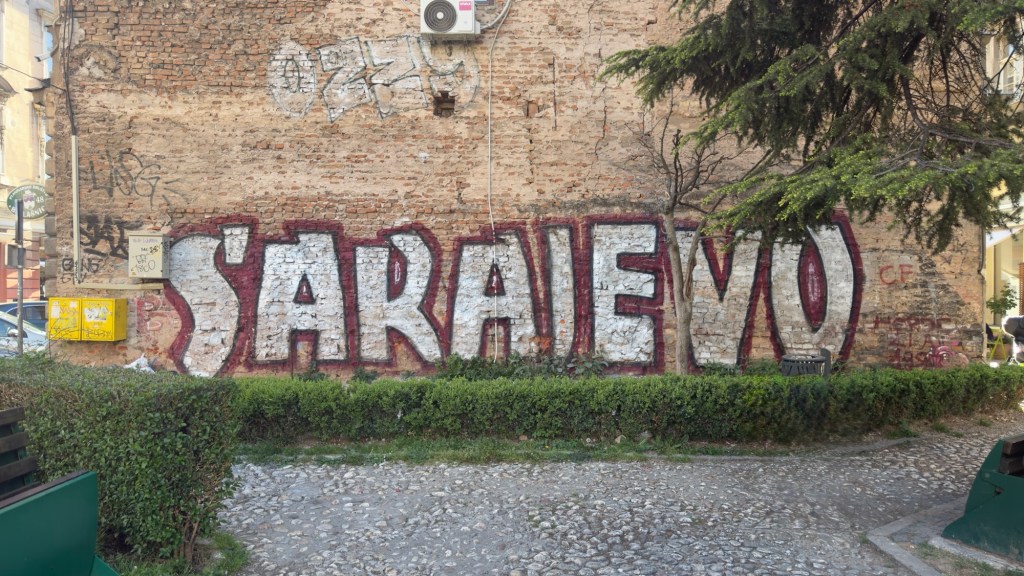
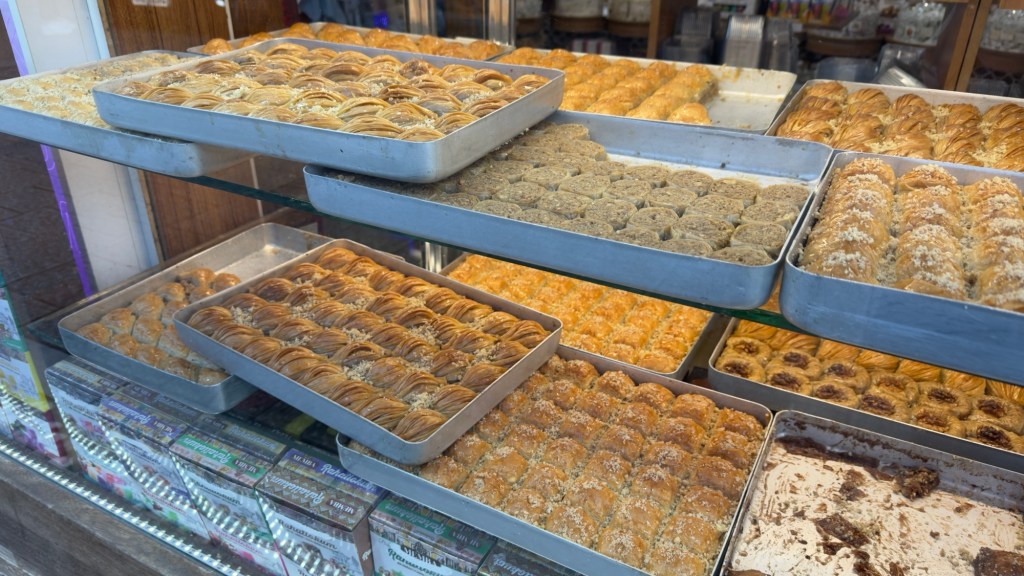
A Sweet Start to the Journey
The day began a little differently than usual—with sweet pancakes and Nutella for breakfast. Not my typical choice, but somehow it felt right. We sat out on the terrace, soaking up a warm, sunny morning, the kind that quietly promises a memorable day ahead.
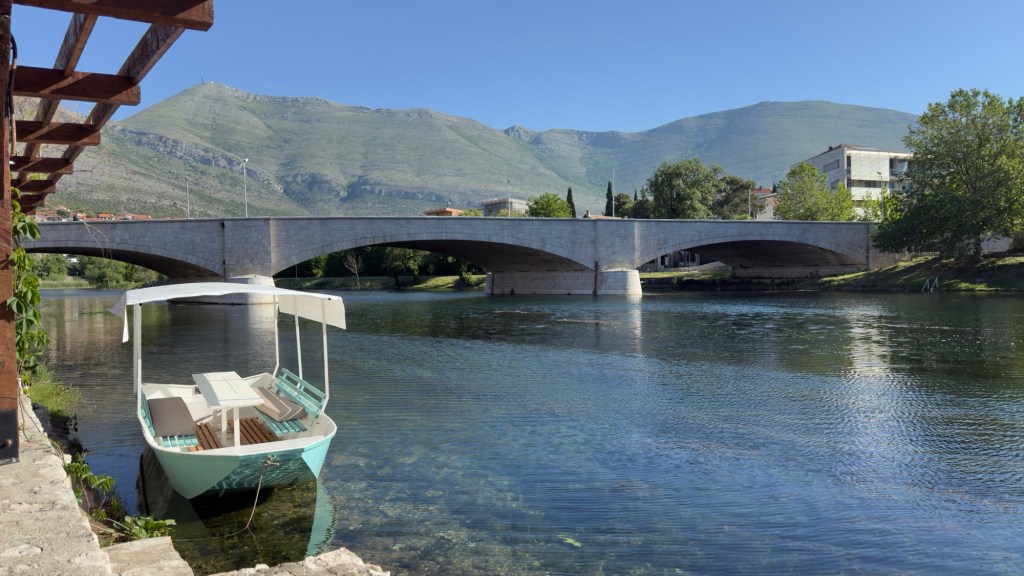
On the Road to Sarajevo
Our taxi driver collected us at the South Gate, and we set off for Sarajevo. With few buses running, travelling by car was the quickest and most convenient option—and as it turned out, one of the most insightful.
Our driver was a storyteller. As we wound through the landscape, he shared local knowledge, his own experiences in the army of the former Yugoslavia, and history that brought the journey to life. One of the first places he mentioned was Vjetrenica Cave, believed to stretch for around 20 kilometres, possibly even reaching the Adriatic Sea. Visitors can only explore about 5 kilometres inside due to powerful winds deeper within—too strong for the human body to endure.
We passed through Popovo Polje, where he pointed out the former waterline of an ancient lake. It’s now fertile land, used to its fullest in a region where arable space is scarce.
A Sobering Stop: Rani Do Memorial
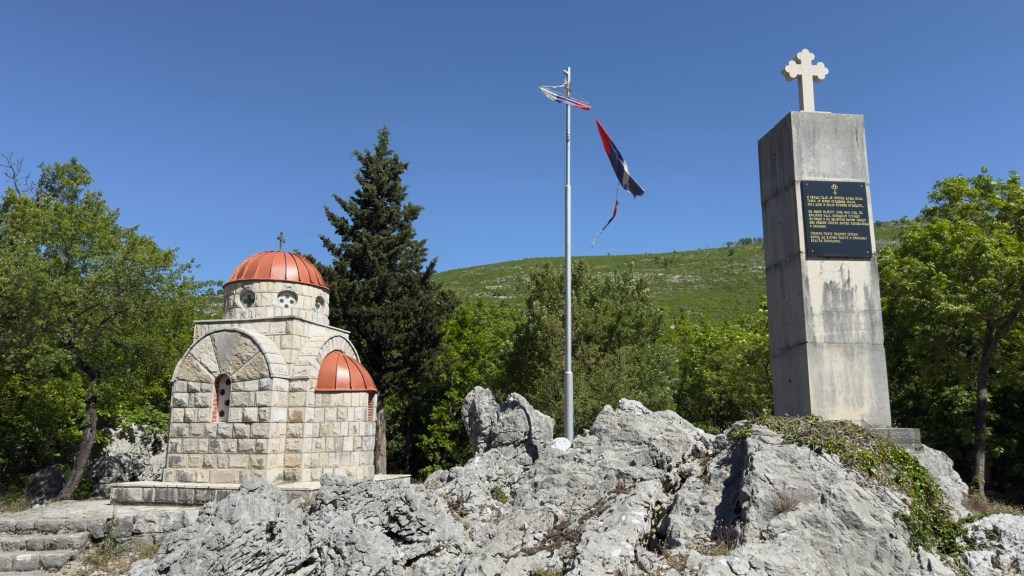
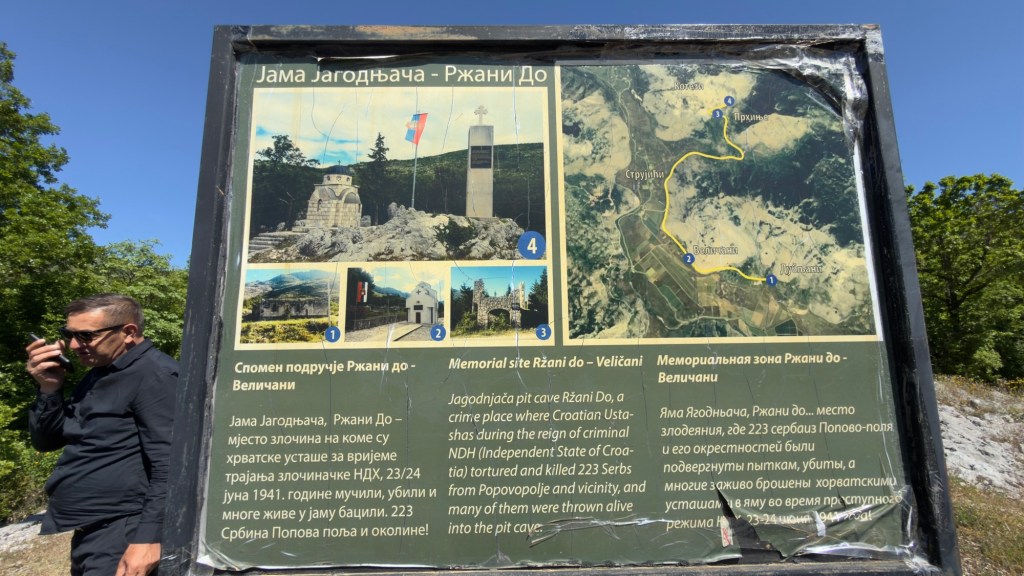
One of the most moving stops of the journey was at the memorial at Rani Do Memorial Site.
Here lies the Jagodnjača pit cave, a place of horrific wartime atrocities during the rule of the Independent State of Croatia. In this location, 223 Serbs from the surrounding area were tortured and killed—many thrown alive into a pit estimated to be 150–200 metres deep. The memorial also references other nearby sites, including a school where further massacres occurred.
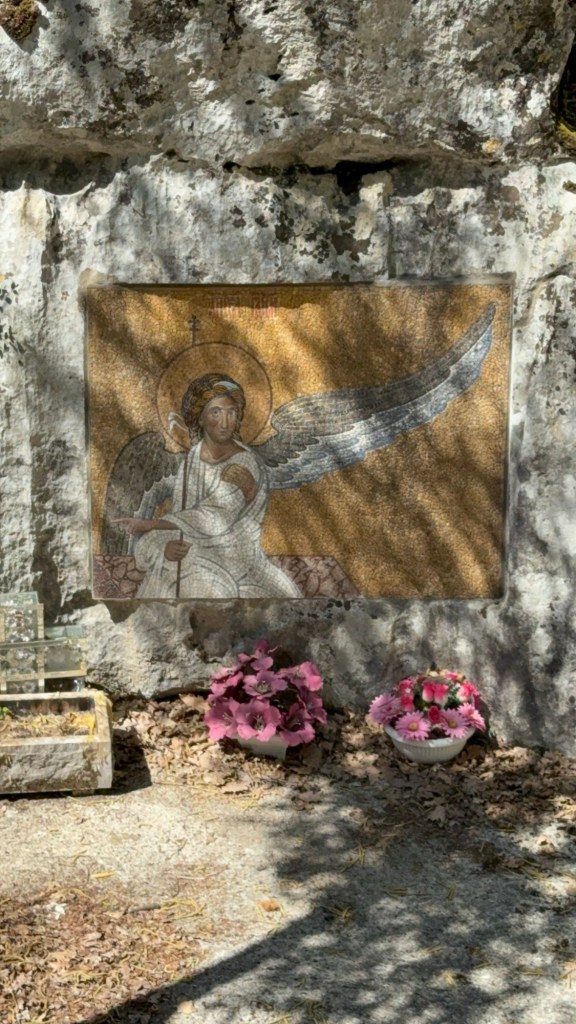
A small chapel built in the 1990s now stands there. Visitors stop to pray and leave contributions. For 45 years, people were forbidden from speaking about what happened here—a silence that adds another layer of weight to the place.
One particularly haunting detail shared by our driver: a member of the Ustaše who objected to the killings was himself thrown into the pit.
Through Ljubinje and Stolac
We continued into Ljubinje, a rural town where life revolves around tobacco farming, garlic cultivation, and small-scale agriculture. Tobacco leaves were drying in the sun, hens wandered freely, and every patch of usable land was carefully tended.
After a brief police stop—more of a wave-through than anything—we carried on toward Stolac. Before the war, our driver explained, Serbs, Croats, and Bosniaks lived here together. Today, the demographic has shifted, and the divisions remain visible.
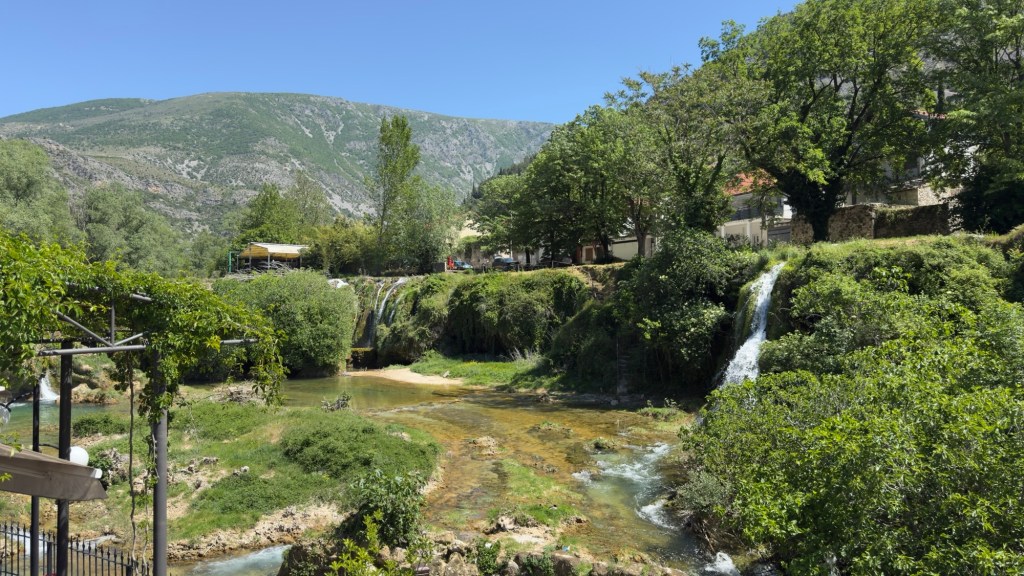
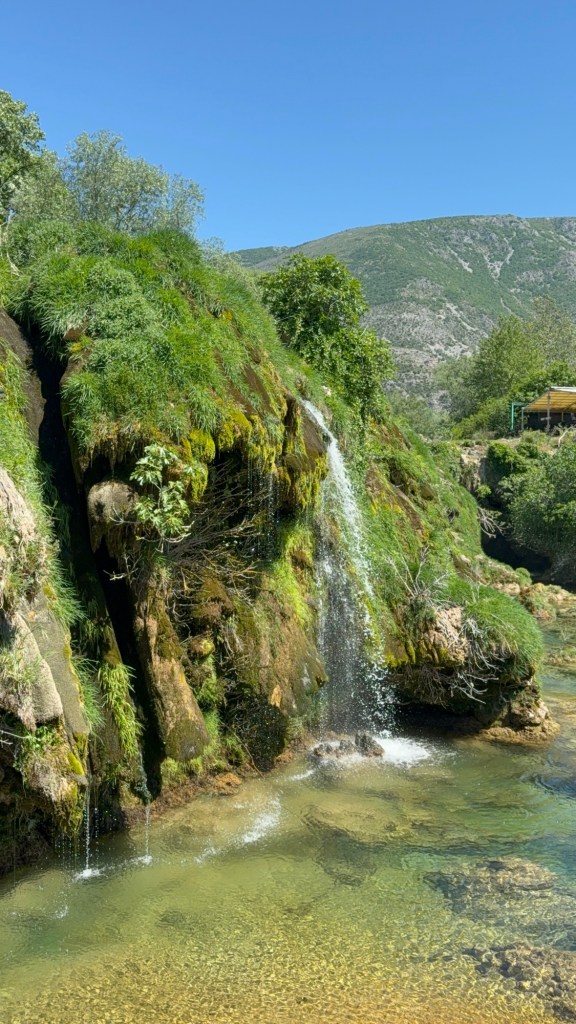
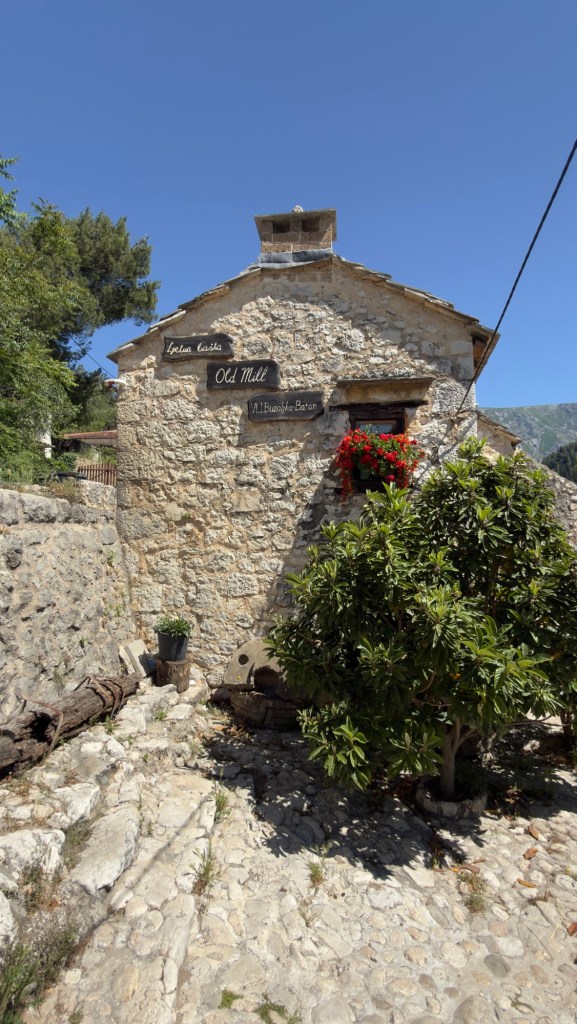
In Stolac, we paused at a former mill, now transformed into a café beside gently flowing waterfalls. It was peaceful and unexpectedly calming—a place where time seemed to slow. Our driver once lived nearby, adding a personal layer to the stop. We had a drink, and our driver yet another cigarette, before moving on.
Along the way, we also learned how to distinguish cemeteries: Orthodox graves bear a cross with three leaves, Catholic ones a simple cross, and Muslim graves are marked by two pillars.
Blossoms, Borders, and Divides
As we approached Mostar—the administrative centre of Herzegovina—the climate warmed noticeably. Cherry trees were in bloom, and roadside stalls overflowed with fresh fruit. Our driver offered to stop, but we carried on.
He explained how the nearby river Buna River marks an ethnic divide in parts of the region: Croats on one side, Bosniaks on the other. It’s a reminder of how geography and identity are often intertwined here.
Signs of Recent Tragedy
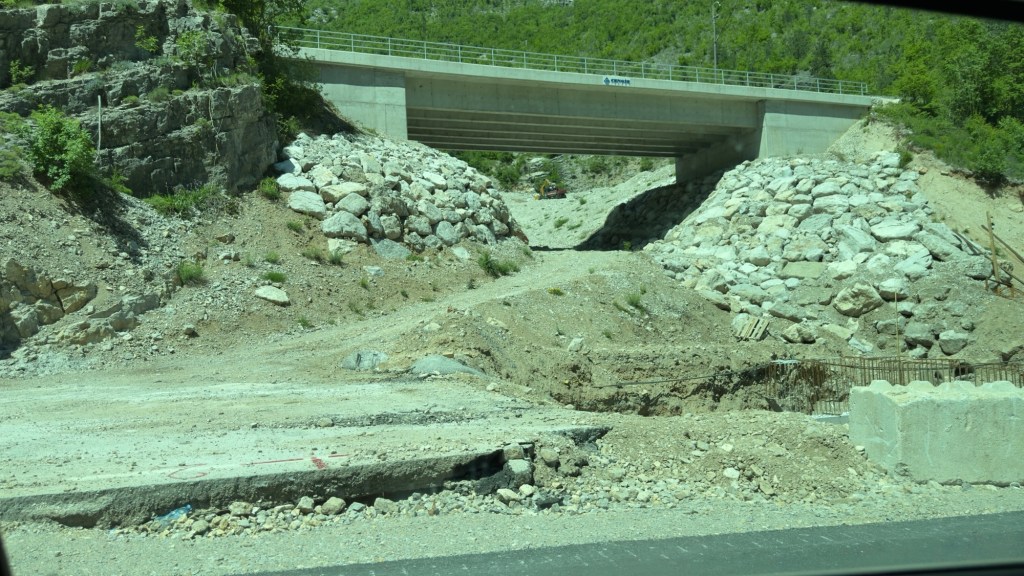
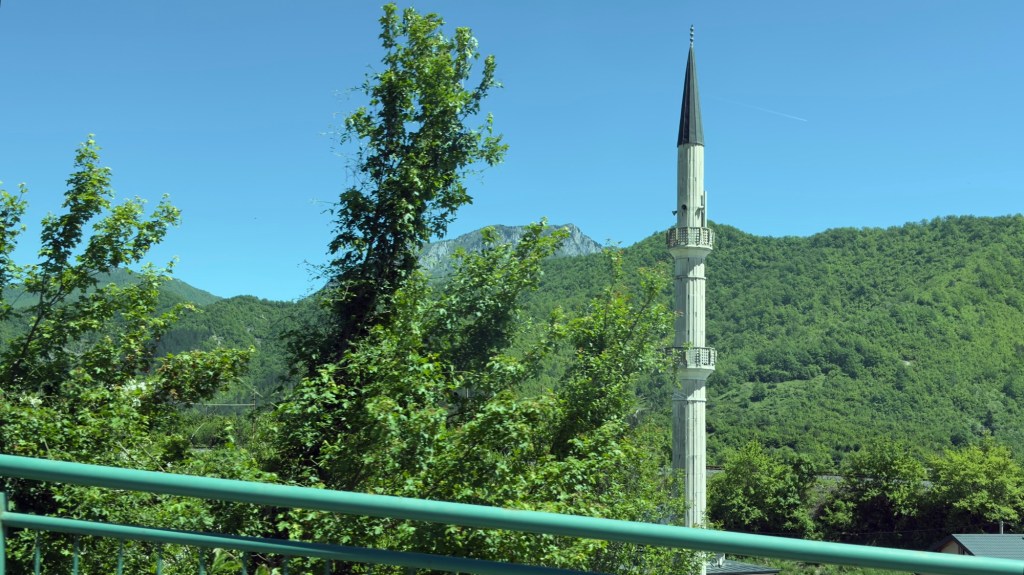
The journey wasn’t only about distant history. We passed through an area recently devastated by severe flooding and landslides (4th October 2024). Hillsides had collapsed, crushing homes, railway lines, and even a mosque—only its top still visible above the debris. Twisted cars had been pulled from the rubble.
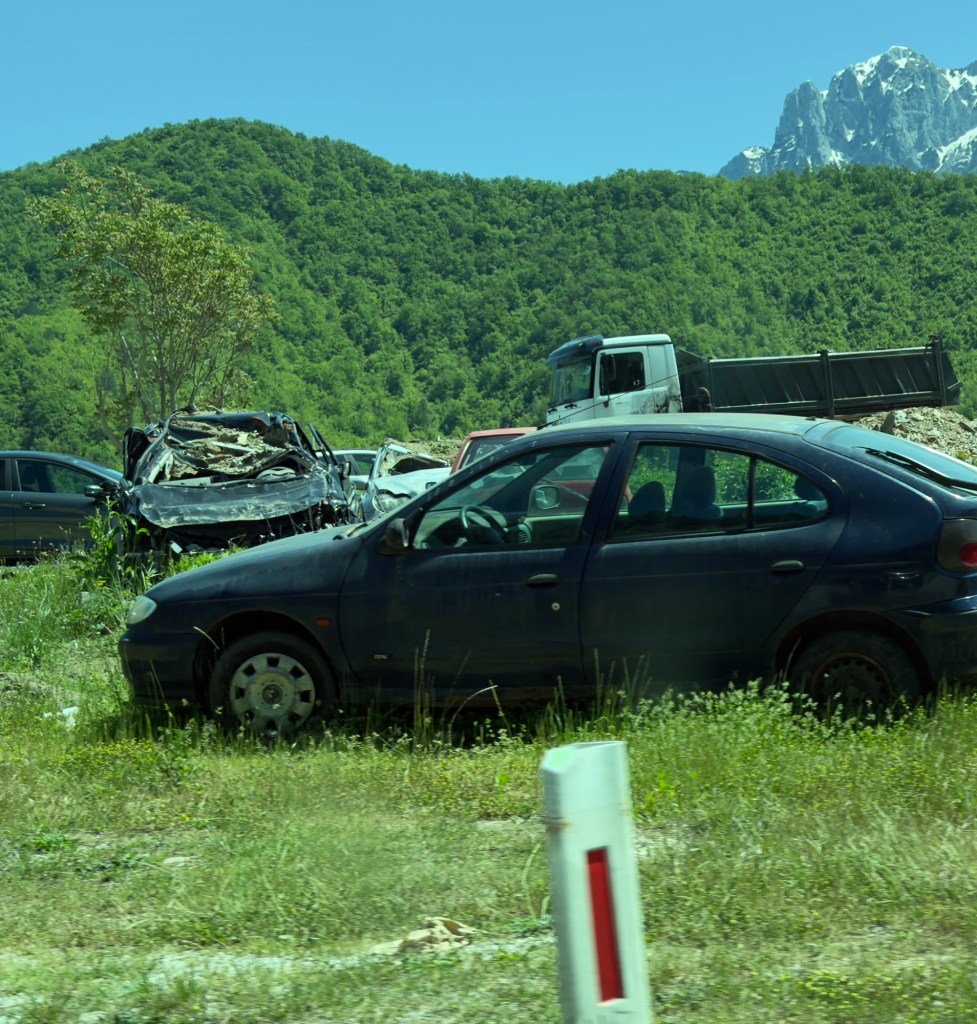
Our driver told us he had been there earlier that same day, just hours before the disaster struck.
Jablanica and the Bridge on the Neretva
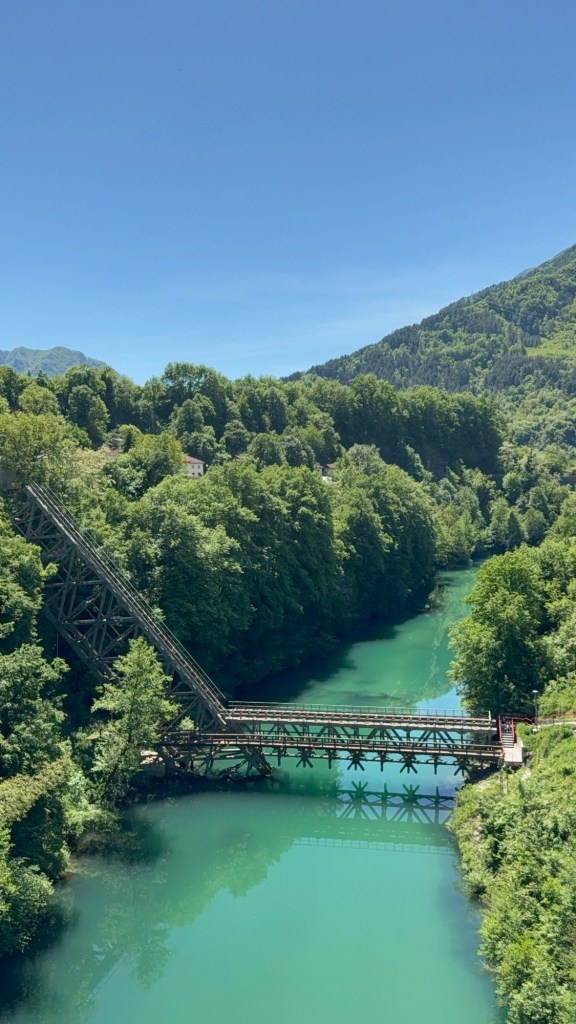
In Jablanica, we encountered one of the most fascinating historical sites of the journey: the Bridge on the Neretva.
During the Battle of the Neretva, Yugoslav Partisans led by Josip Broz Tito were retreating with thousands of wounded soldiers and civilians. To deceive pursuing Axis forces—comprising Nazi Germany, Fascist Italy, and local collaborators—they destroyed the bridge themselves, making it seem impassable.
Then, in a remarkable act of ingenuity, they quickly constructed a temporary bridge and crossed the river anyway, escaping encirclement. The remains of the destroyed bridge still stand today as a powerful memorial to that moment of strategy and survival.
A Fast-Paced Final Stretch
Back on the road, the driving became… spirited. JC’s palms were sweating as our driver navigated the winding roads at speed. Reassurances were given, but I suspect they didn’t entirely help.
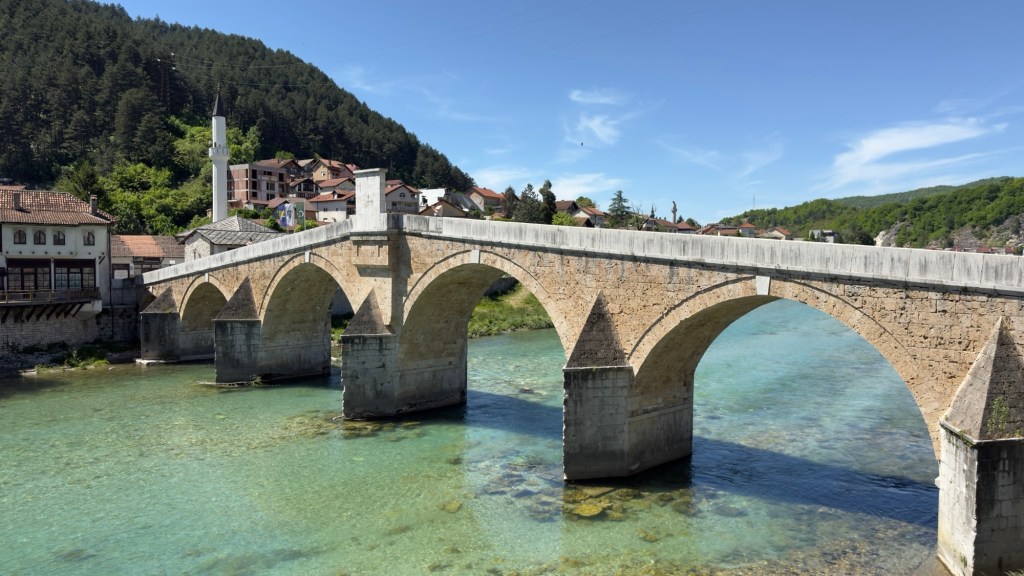
We stopped briefly in Konjic to photograph its rebuilt bridge before continuing on. Once we reached the motorway, the journey smoothed out—light traffic and a straightforward run into Sarajevo.
First Impressions of Sarajevo
Entering Sarajevo, the scars of the 1990s conflict were still visible in damaged buildings scattered among newer developments. Bullet holes were still visible in the walls of many buildings.
We eventually arrived at our hotel where we said our goodbyes to our taxi driver.
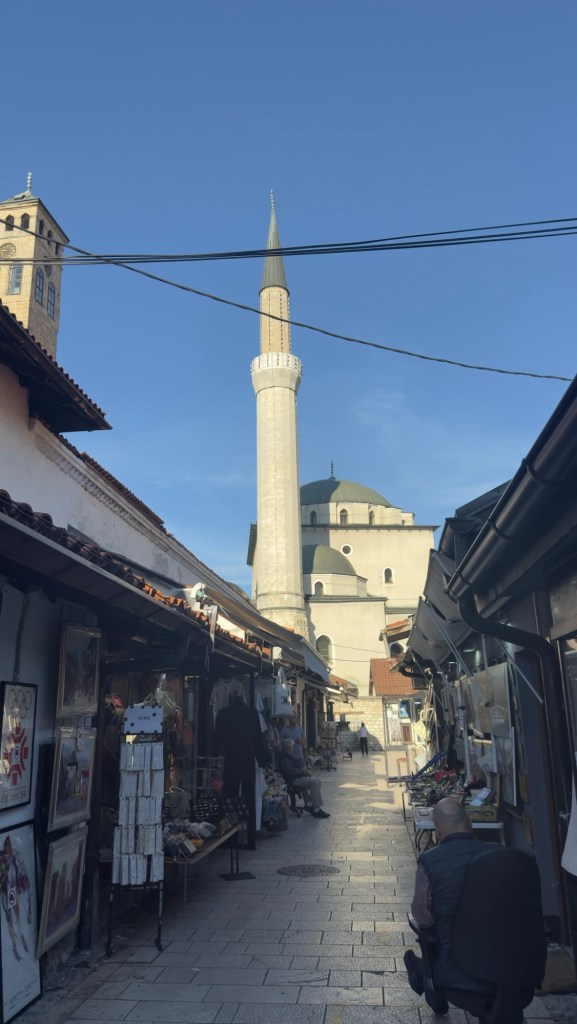
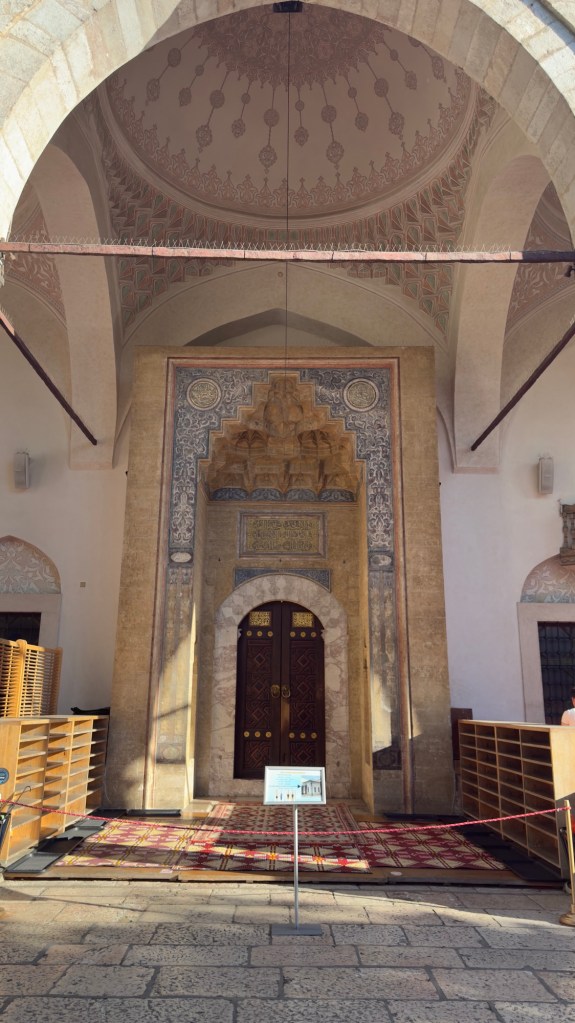
After checking in, we headed straight to the old town, Baščaršija. The atmosphere was lively—mosques, bustling market stalls, and the hum of daily life blending together.
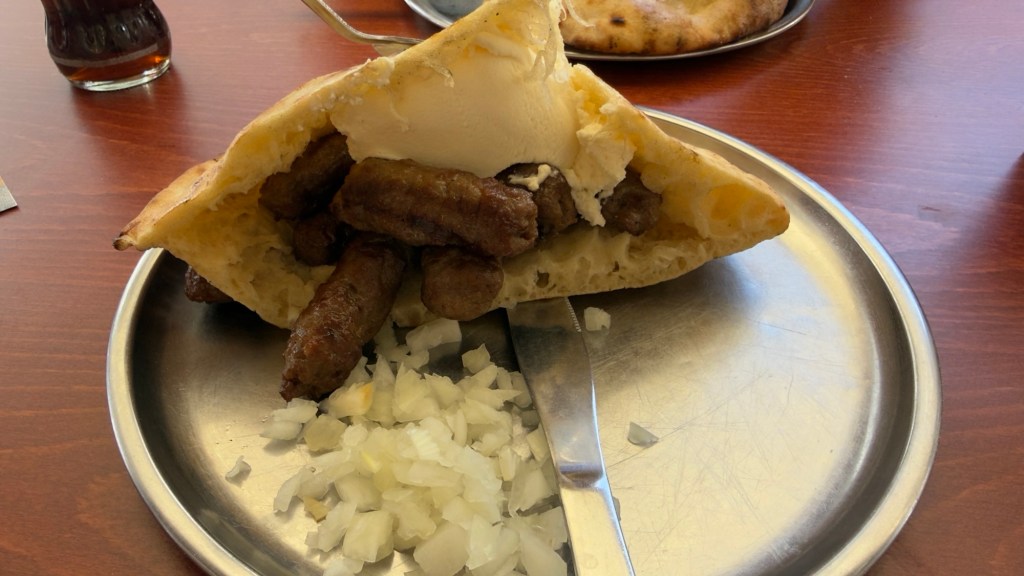
We stopped for ćevapi at Ćevabdžinica Željo—a perfect late lunch/early dinner—before wandering through the market, picking up a few souvenirs along the way.
Wine, Wandering, and a Perfect End
The evening unfolded leisurely. We enjoyed local wine at El Kasbah, then discovered another spot, Wine Not?, for another glass.
Finally, we ended the night at Birtija, raising one last glass to a day that had taken us through beauty, history, tragedy, and resilience.
A journey that was far more than just getting from A to B.


Leave a Reply