Post-Wedding: From Sorrento to Rome – A Roman Holiday on Foot
Farewell to Sorrento
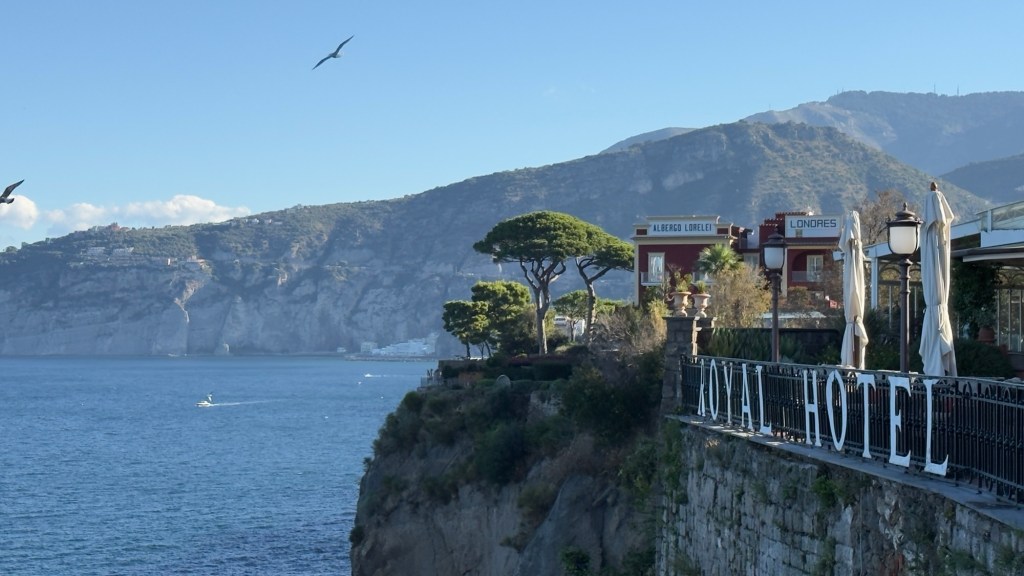
After the excitement and emotion of Josh and Angel’s wedding, it was time to pack up and move on to the next chapter of our Italian adventure. We enjoyed breakfast before heading out for one last walk into Sorrento. The town was lovely and quiet, a welcome contrast to the busier atmosphere we’d experienced over the previous few days.
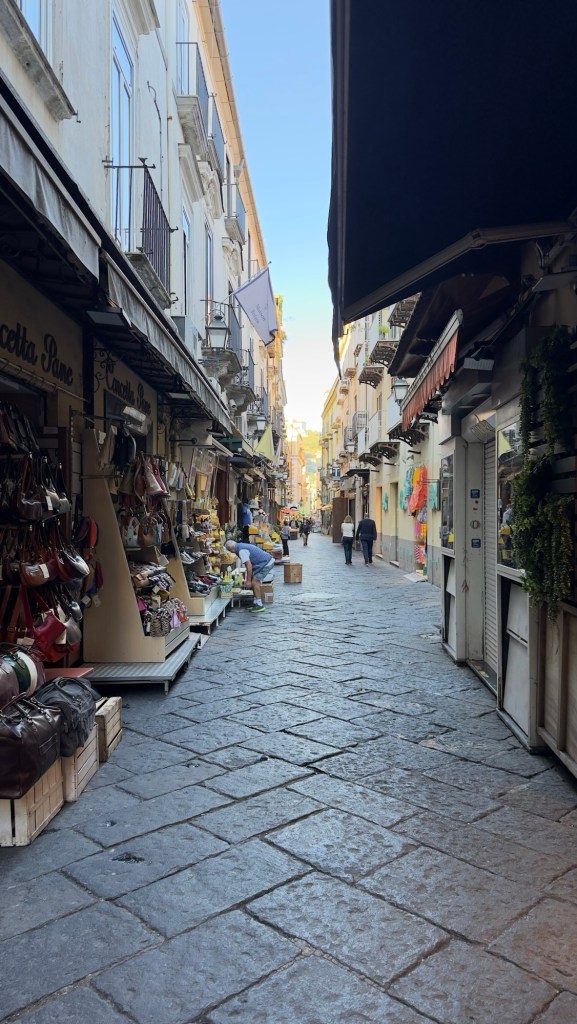
There was something quite special about seeing Sorrento at this quieter time, with its narrow streets and traditional buildings gradually coming to life. It was a chance to reflect on what had been a wonderful few days celebrating the wedding, surrounded by family and friends from different corners of the world.
Back at the hotel, we packed the last of our belongings, loaded everything into our cases and checked out. We had a train to catch in Naples, with our departure from the station scheduled for 12.55 pm. According to Google, the taxi journey should take around an hour and a half, so we’d allowed what we thought was plenty of time.
How wrong we were!
The Great Taxi Chase
We’d arranged a taxi for 10.30 am, but 10.50 came and went without any sign of it. The hotel concierge had been calling the taxi company, who repeatedly assured us that the driver would arrive in five minutes. Those five minutes seemed to last an eternity!
With traffic, possible diversions and the threat of lingering delays caused by landslides in the area, we were beginning to wonder whether we’d make our train at all.
Eventually, the hotel took matters into its own hands and commandeered a taxi that had just dropped off another guest. At last, we were on our way!
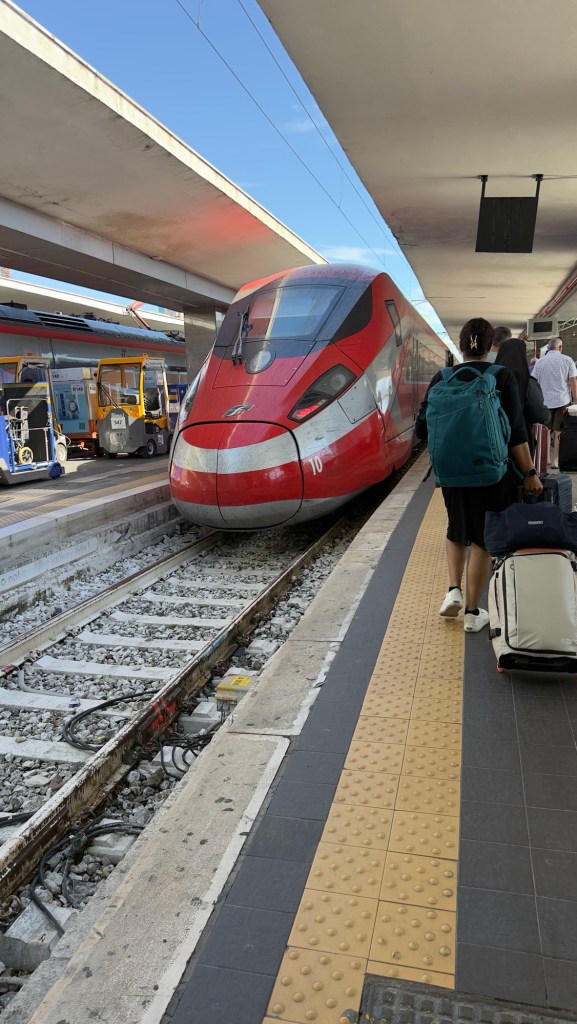
The journey to Naples was a little tense, but we arrived at Naples railway station at 12.10 pm, giving us just enough time to find our train and board. The departure time had been brought forward so I was glad we’d allowed extra time to get there. It was a relief to settle into our seats, knowing we’d avoided the prospect of a frantic search for alternative transport.
Our train departed as planned, and we arrived in Rome at 2.05 pm. After the morning’s drama, we were more than ready to get on with our day.
Back in the Eternal City
We ordered an Uber to our hotel, completed the self-check-in and dropped off our luggage. Then, with the sun shining and Rome waiting to be explored, we headed straight back out.
We’ve visited Rome several times before, but there’s always something new to discover. We decided to follow our own mini walking tour, revisiting familiar landmarks and exploring a few places along the way.
Rome is one of those cities where history seems to be around every corner. Ancient temples sit alongside medieval churches, Renaissance palaces and modern shops, while everyday life carries on against a backdrop that spans thousands of years.
Our afternoon was going to be a mixture of ancient history, grand architecture, busy piazzas and, naturally, Italian food.
Forum Boarium: Rome’s Ancient Cattle Market
Our first stop was the Forum Boarium, an area close to the River Tiber that once served as Rome’s cattle market.
In ancient Rome, this was an important commercial centre, strategically positioned near the river crossing. Livestock, goods and people would have passed through here, making it a lively trading area long before Rome became the vast imperial city we know today.
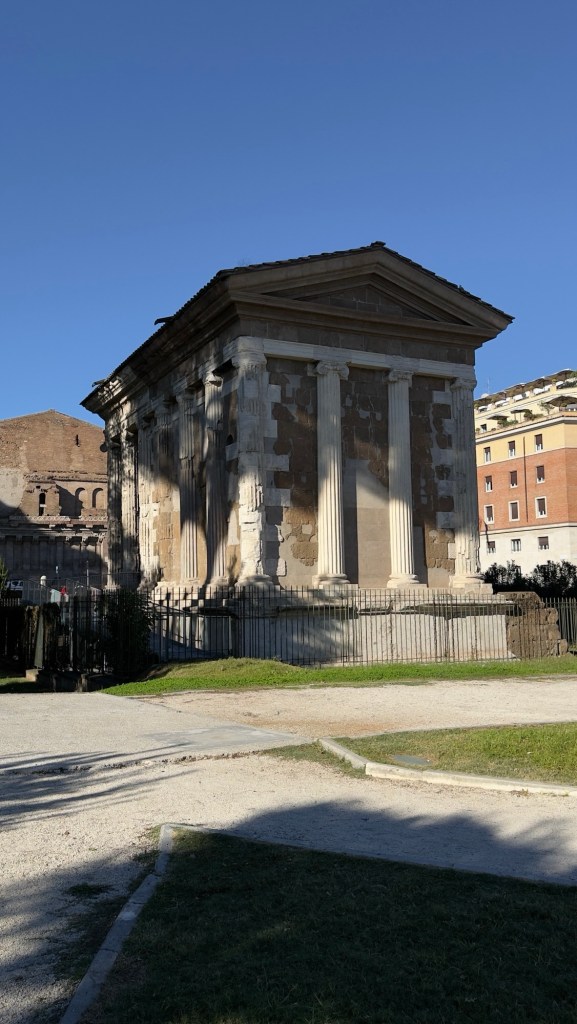
Two particularly interesting ancient temples survive in the area. The Temple of Portunus, traditionally associated with the god of harbours and river ports, is a fine example of a Roman temple with Ionic columns.
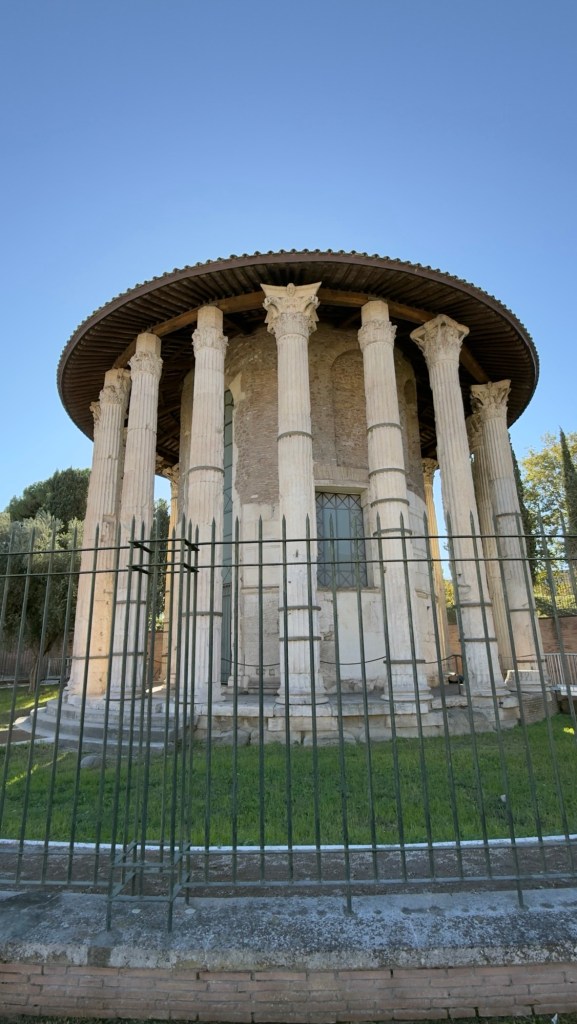
Nearby is the round Temple of Hercules Victor, often referred to as the Temple of Vesta or The Round House because of its circular design.
These buildings are remarkable reminders of just how much ancient Rome has left behind. Surrounded by the modern city, they give us a glimpse of the religious and commercial life that once flourished beside the Tiber.
The Mouth of Truth – Bocca della Verità
We continued to the area around the famous Bocca della Verità, or Mouth of Truth, housed in the portico of the medieval church of Santa Maria in Cosmedin.
This enormous marble disc, carved with a face, is thought to date from ancient Rome. Its original purpose is uncertain, although it may have formed part of a drain cover or served some other practical function.
Its fame today comes from the medieval legend that it would bite off the hand of anyone who told a lie while placing their hand inside its open mouth. It became even more widely known after appearing in the 1953 film Roman Holiday, starring Audrey Hepburn and Gregory Peck.
We didn’t have tine to queue up to appreciate its appeal, but it’s easy to understand why visitors have been fascinated by it for generations!
The Arch of Janus
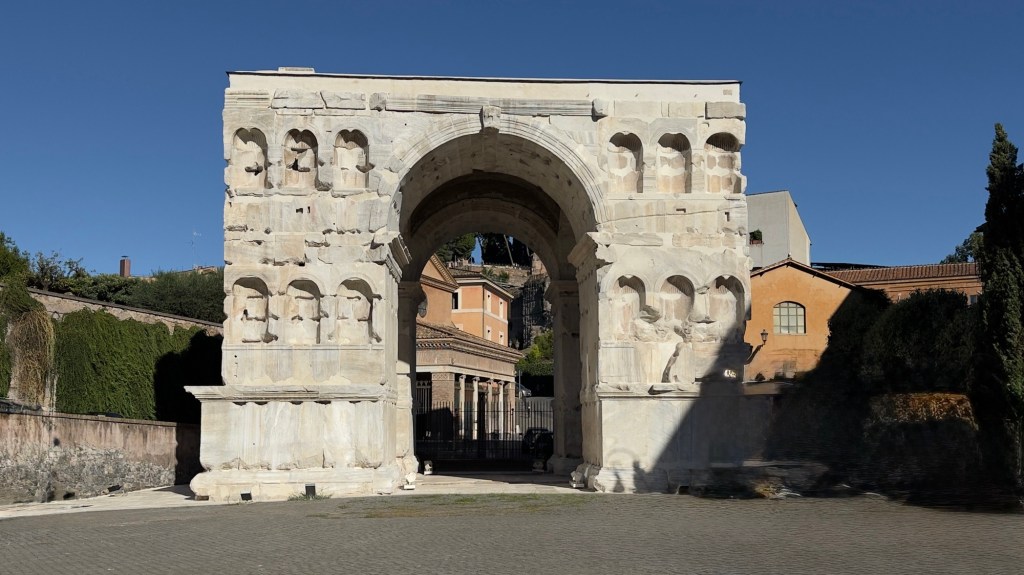
Nearby stands the Arch of Janus, an unusual four-sided structure dating from late antiquity. Unlike a conventional triumphal arch, built to celebrate a military victory, this type of arch provided a covered crossing where several streets met.
Its name is associated with Janus, the Roman god of beginnings, endings, doorways and transitions, although the exact historical connection is uncertain.
The structure is a reminder that Roman monuments did not all serve the same purpose. Some celebrated emperors and victories, while others formed part of the practical infrastructure of the city.
Views of the Roman Forum and Colosseum
We continued our walk behind Palatine Hill, one of the most historically significant of Rome’s seven hills.
According to Roman tradition, this was where Romulus founded the city in 753 BC. Archaeological evidence shows that the hill was inhabited long before the traditional founding date, and it later became a fashionable residential area for Rome’s wealthiest citizens and emperors.
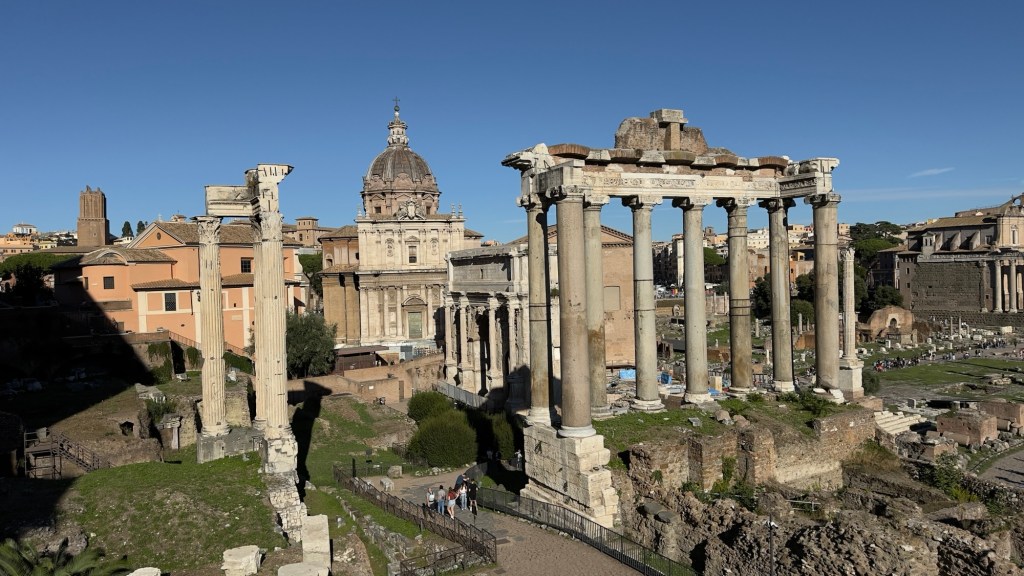
From a viewpoint overlooking the Roman Forum, we could see the remains of ancient temples, basilicas and public buildings, with the Colosseum visible in the distance.
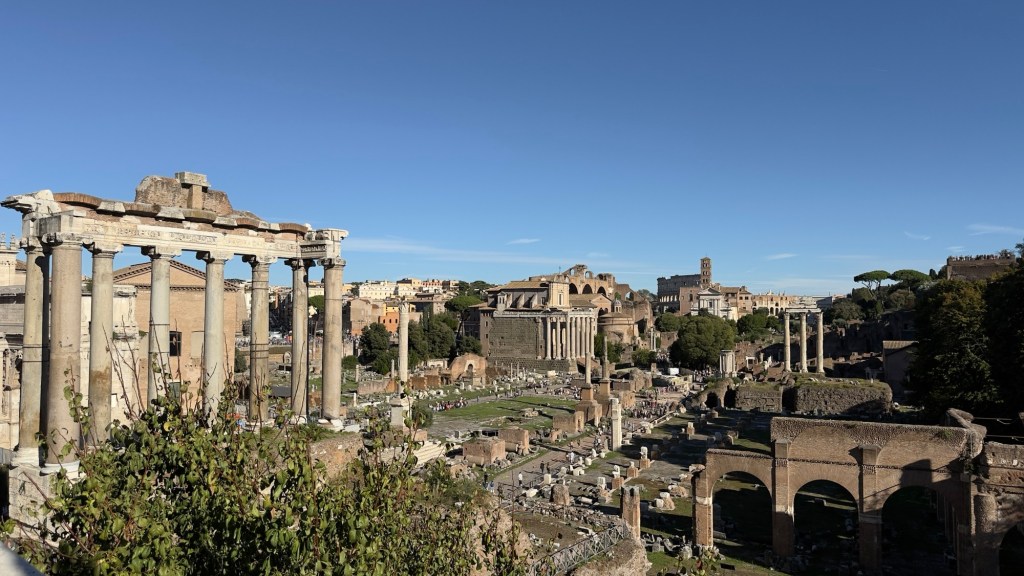
It’s difficult to imagine what this area must have looked like at the height of the Roman Empire. The Forum was the centre of political, religious and commercial life, where speeches were delivered, laws debated, ceremonies held and public business conducted.
Today, its weathered columns and scattered ruins tell a different story, but the scale of the ancient city is still impressive.
With the Colosseum in the distance, it was one of those views that makes you stop for a moment and appreciate just how much history is concentrated in Rome.
The Colossus of Constantine
We continued towards the remains associated with the Colossus of Constantine, the enormous statue of the emperor Constantine the Great that once stood in the Basilica of Maxentius and Constantine in the Roman Forum.
The original seated statue is believed to have stood around 12 metres tall, with its head, arms and other surviving fragments demonstrating its extraordinary scale.
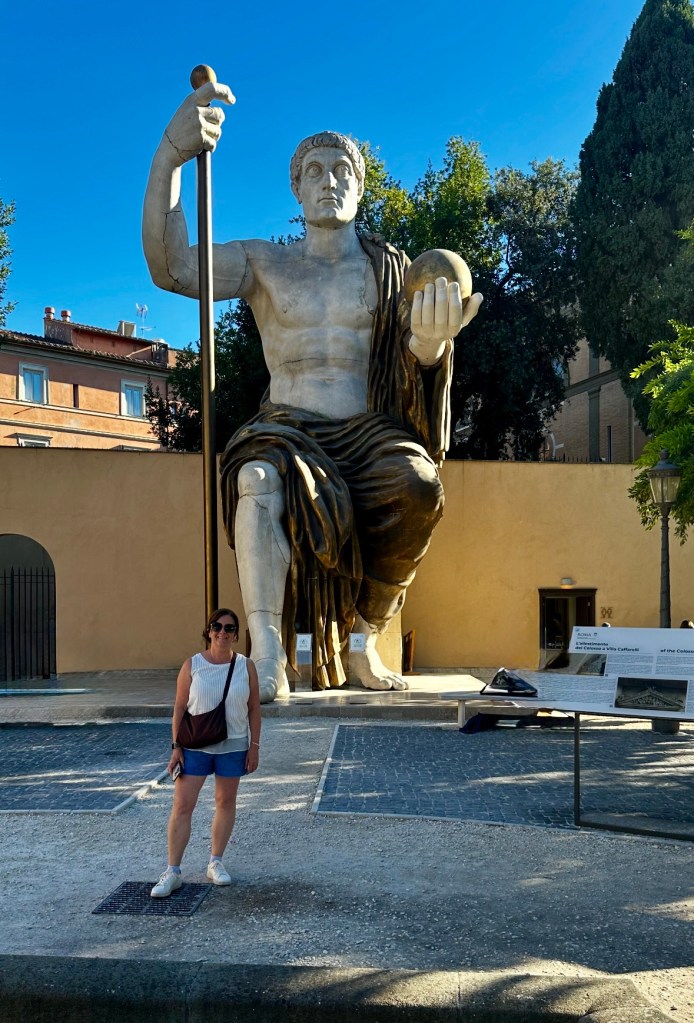
Constantine is one of the most significant figures in Roman history. He became sole ruler of the Roman Empire in AD 324 and is remembered for his role in the acceptance and eventual dominance of Christianity within the empire.
The statue’s surviving fragments offer a fascinating glimpse of imperial propaganda and the monumental scale on which Roman emperors presented themselves to the public.
Capitoline Hill and the Monument to Victor Emmanuel II
From the ancient centre, we walked towards Capitoline Hill, another of Rome’s legendary seven hills.
The hill has been an important religious and political centre since antiquity. Its summit is home to the Piazza del Campidoglio, redesigned by Michelangelo in the sixteenth century, and the Capitoline Museums, which house an extraordinary collection of classical sculpture and Roman artefacts.
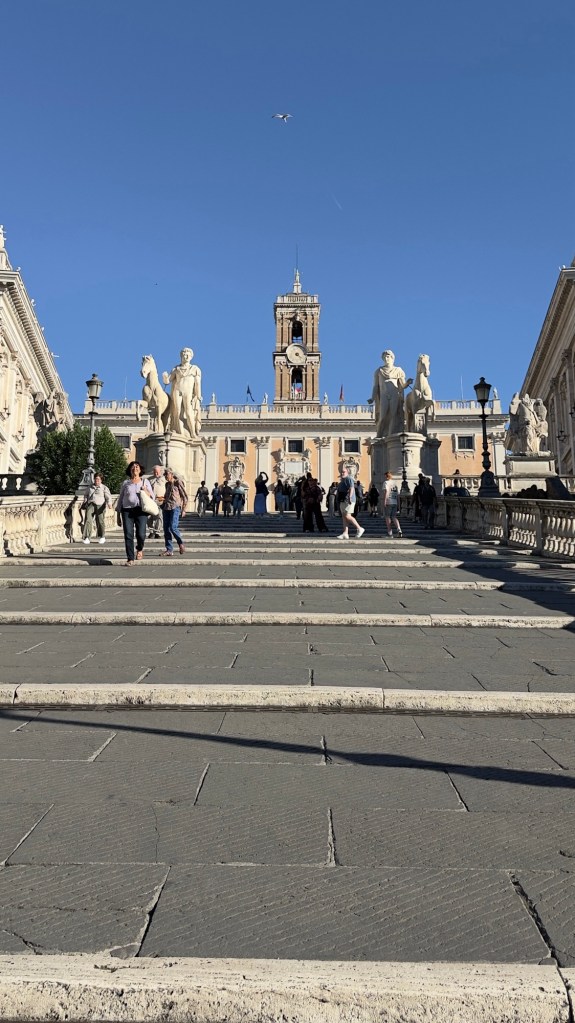
We continued downhill towards the imposing Monument to Victor Emmanuel II, also known as the Vittoriano.
This enormous white marble monument dominates Piazza Venezia. It was built to honour Victor Emmanuel II, the first king of a united Italy, and inaugurated in 1911, although work continued afterwards.
Its grand staircases, towering columns and statues make it impossible to miss. The monument also contains the Tomb of the Unknown Soldier, commemorating Italy’s fallen servicemen and women.
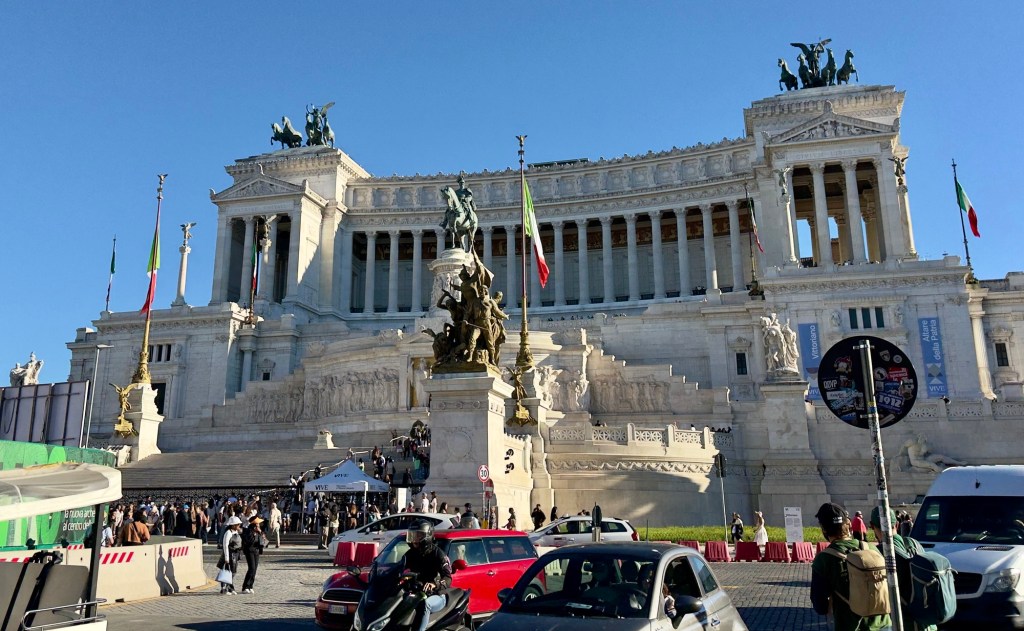
Romans sometimes affectionately refer to it as the “wedding cake” because of its tiered white appearance. Whatever you think of its architectural style, it certainly makes a statement against the surrounding historic buildings.
Via del Corso and the Trevi Fountain
We continued along Via del Corso, one of Rome’s main shopping streets, heading towards the Trevi district.
The street runs through the heart of the city, linking Piazza Venezia with Piazza del Popolo. Its origins go back to the ancient Via Lata, and today it combines historic architecture with shops, cafés and the constant flow of Roman city life.
As we approached the Trevi Fountain, we found it just as busy as ever.
Completed in 1762 and designed by Nicola Salvi, the fountain is a magnificent example of Baroque architecture. Its central figure is Oceanus, representing the vast waters of the world, standing above a dramatic arrangement of rocks, water and sculpted sea creatures.
The fountain forms the grand finale of the ancient Aqua Virgo aqueduct, which has supplied water to Rome since 19 BC. The present fountain was built at the point where the aqueduct terminates.
Tradition dictates that visitors throw a coin into the water over their shoulder to ensure a return to Rome. The custom has become so popular that the coins collected are used to support charitable work. This is where Angel threw her coins in 2018 and wished for magic a few days before she met my son Josh.
We admired the fountain amid the crowds before deciding that, after all the walking and with no lunch to speak of, it was definitely time to find something to eat.
By now, it was around 5 pm!
A Late Lunch, Italian Style
We found a restaurant serving pizza and pasta, finally giving ourselves a chance to sit down and refuel.
It was a rather late lunch, but when in Italy….After the morning’s taxi troubles and several hours exploring the city on foot, we were ready for a break before continuing our sightseeing.
Once we’d eaten, we set off again, making our way towards the Spanish Steps.
The Spanish Steps and the Italian Parliament
The Spanish Steps are among Rome’s best-known landmarks. The sweeping staircase of 135 steps was completed in 1725 and connects Piazza di Spagna below with the church of Trinità dei Monti above.
Despite their name, the steps were commissioned by a French diplomat, while the name comes from the Spanish Embassy to the Holy See, which was once located in the piazza below.
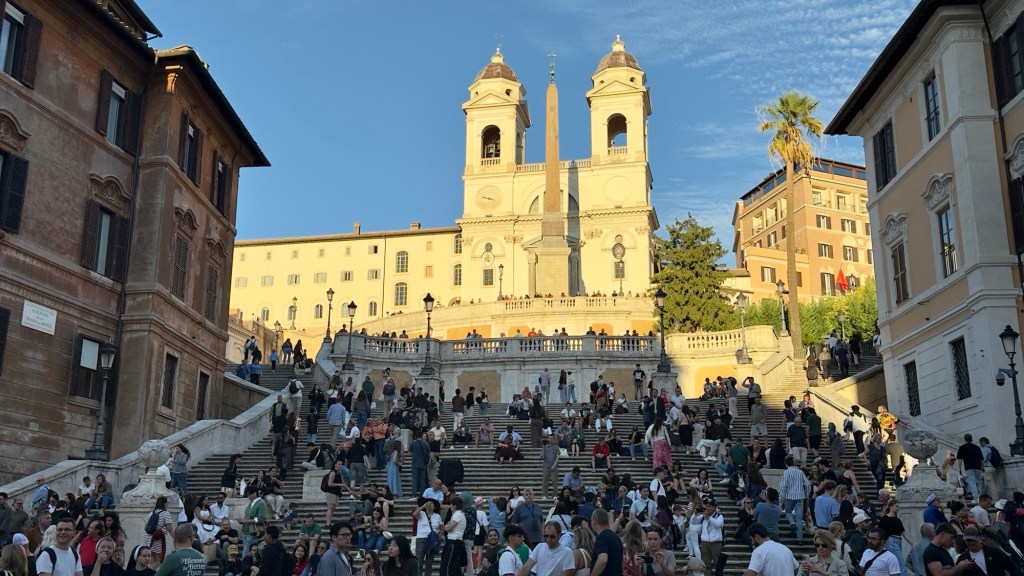
Scalinata di Trinità dei Monti
The elegant staircase has long been a meeting place for visitors, artists and locals. The surrounding streets are famous for their designer shops, cafés and historic buildings.
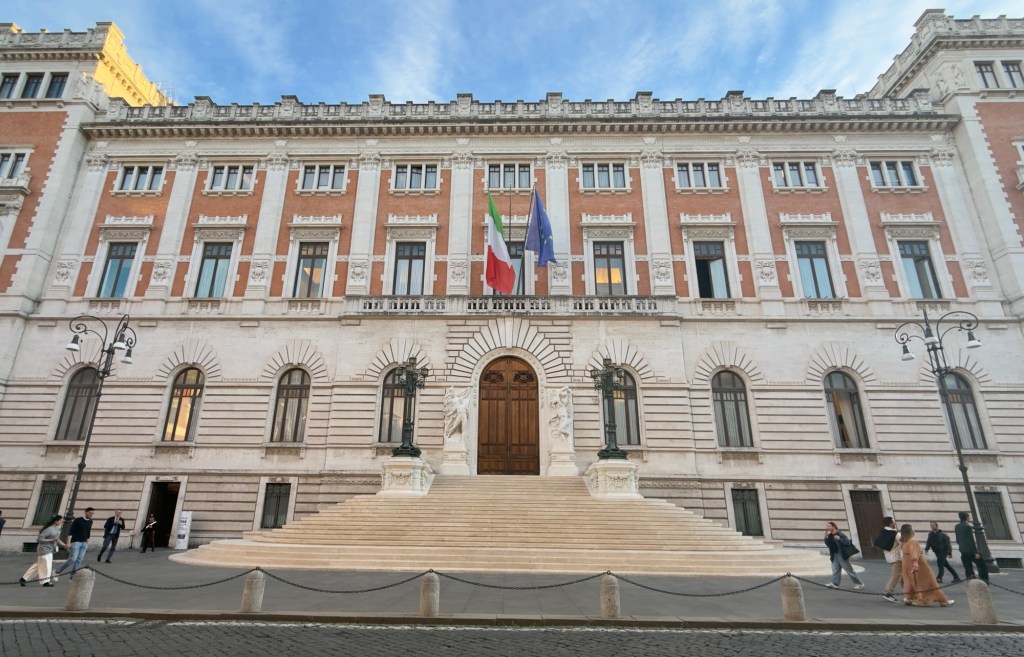
We continued through the city, passing the Italian Parliament area. The Chamber of Deputies meets in Palazzo Montecitorio, a grand building originally commissioned by Pope Innocent X in the seventeenth century and later adapted for parliamentary use.
It’s another example of Rome’s ability to blend centuries of history with the workings of a modern capital.
Piazza Navona: A Baroque Masterpiece
Our next stop was Piazza Navona, one of the most beautiful squares in Rome.
The piazza follows the elongated shape of the Stadium of Domitian, built in the first century AD for athletic contests and other public spectacles. The stadium could accommodate tens of thousands of spectators, and its outline still shapes the square today.
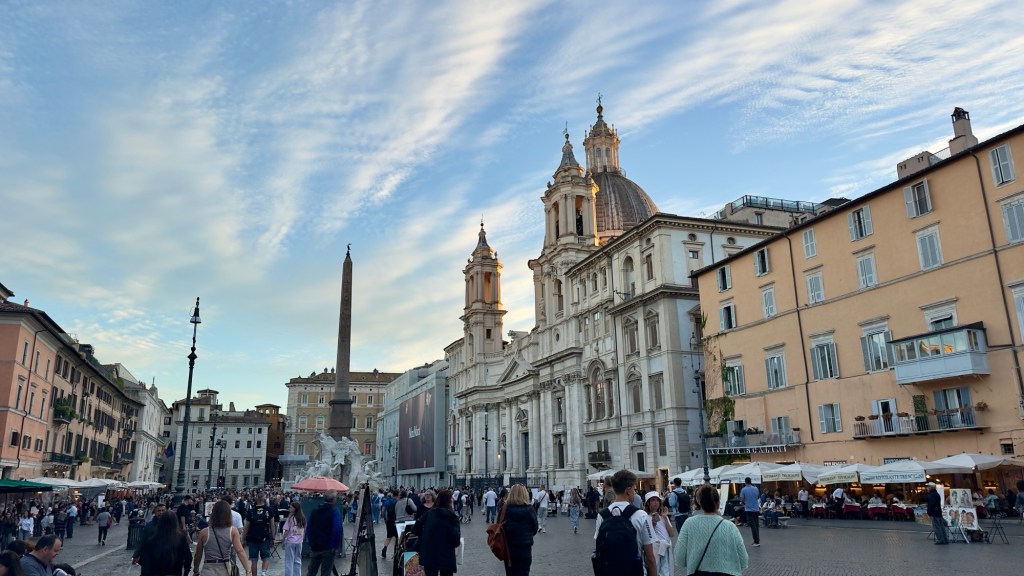
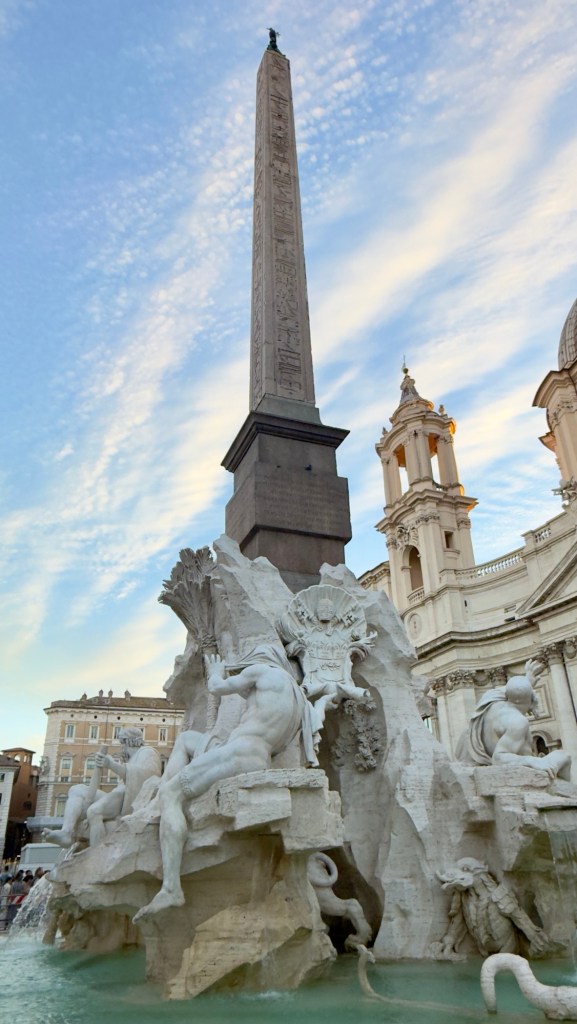
Piazza Navona is particularly famous for its three fountains, especially Bernini’s Fountain of the Four Rivers, completed in 1651. Its central structure features a dramatic arrangement of rock, water and sculpture representing four major rivers: the Nile, the Danube, the Ganges and the Río de la Plata.
The square is surrounded by elegant Baroque buildings, restaurants and cafés, making it a wonderful place to linger and people-watch.
On our previous visit, several of the landmarks had been undergoing renovation work ahead of an event, so it was lovely to see the area again and take in its architectural beauty.
By now, we’d covered a fair amount of ground, and our feet were beginning to remind us of the distance we’d walked.
A Rest Before the Evening
We made our way back to the hotel for a little downtime before heading out again.
It had been a busy day, starting in Sorrento with the uncertainty of whether we’d reach Naples in time for our train, followed by a full afternoon of sightseeing in Rome.
A short rest was well deserved, but the evening wasn’t over yet.
Across the Tiber to Trastevere
Later, we crossed Ponte Garibaldi over the River Tiber and headed into Trastevere, one of Rome’s most atmospheric neighbourhoods.
The name comes from the Latin trans Tiberim, meaning “beyond the Tiber”. Historically, the area developed as a diverse district of artisans, merchants and working-class communities, with a character distinct from the ancient city centre.
Today, Trastevere is famous for its cobbled lanes, ivy-covered buildings, small piazzas, trattorias and lively nightlife. It has a village-like feel despite being right in the heart of Rome.
By the time we arrived, the neighbourhood was buzzing. Restaurants were filling up, people were wandering between the narrow streets, and the warm evening air made it a lovely place to explore.
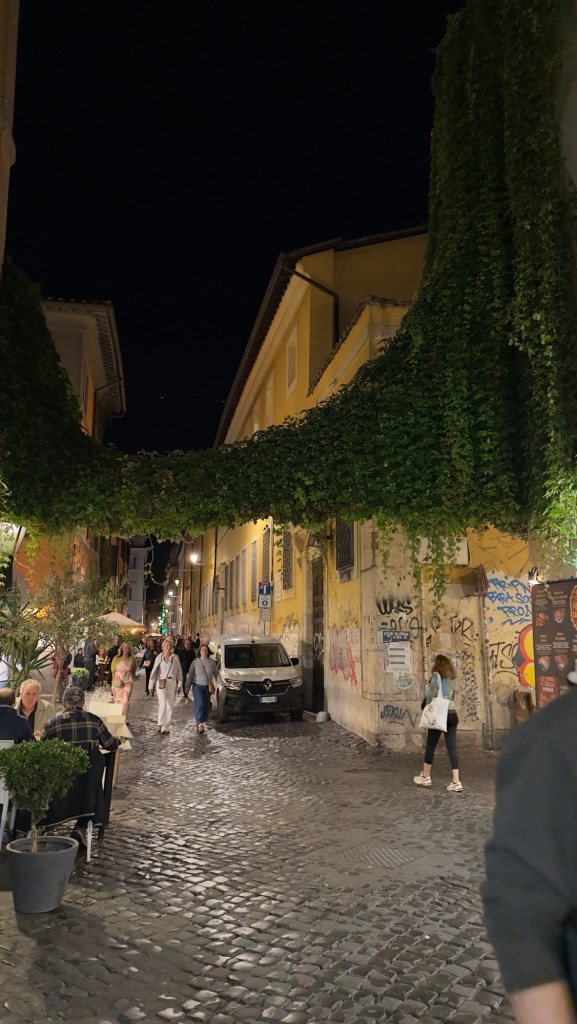
We spent some time wandering without a particular destination in mind, enjoying the atmosphere before choosing somewhere to eat.
Dinner at La Conica
We eventually settled on La Conica restaurant. Unfortunately, the service got off to a slow start, as we waited quite a while for someone to take our order.
John ordered pizza and was happy with his choice. I opted for lasagne, but when it arrived, it was cold, so I sent it back and ordered a pizza instead.
Replacement pizza secured—hot, straightforward, and satisfying enough after a 20,000-step day.
Once we’d finished, we headed back through the lively streets of Trastevere and crossed the bridge over the Tiber towards our hotel.
One Wedding Over, Another Roman Adventure
It had been a day of contrasts: the emotion of leaving Sorrento after Josh and Angel’s wedding, the stress of the missing taxi, the relief of catching our train, and then a wonderful afternoon walking through thousands of years of Roman history.
Although we’ve visited Rome before, exploring on foot gave us the freedom to discover the city at our own pace, stopping at ancient temples, legendary landmarks, grand monuments and beautiful piazzas along the way.
We’d covered an impressive distance, enjoyed the sunshine and finished the evening in one of Rome’s liveliest neighbourhoods.
The taxi drama and disappointing dinner were soon forgotten. We were back in Rome, surrounded by history, and preparing to head back to the UK the next day.


Leave a Reply