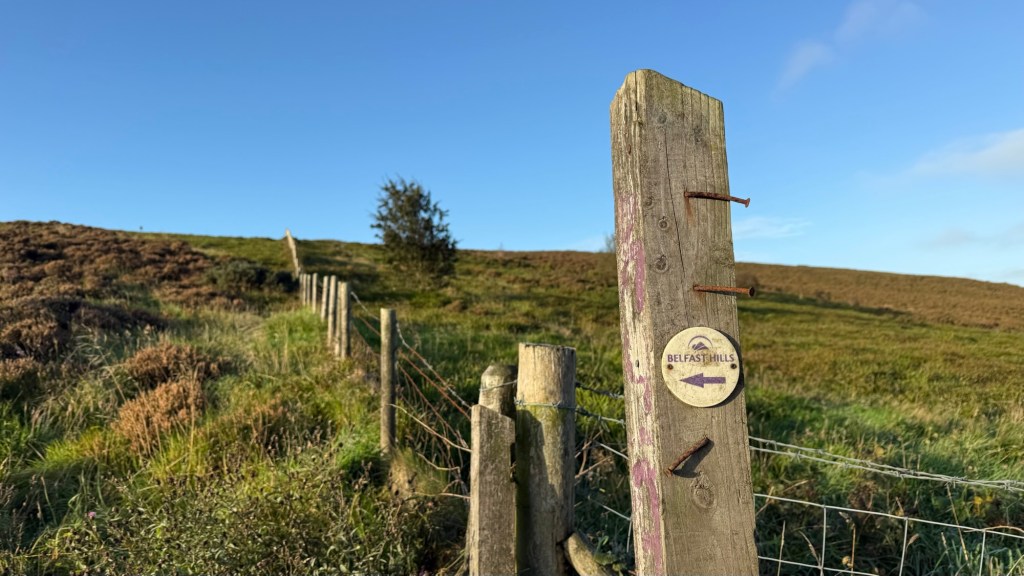
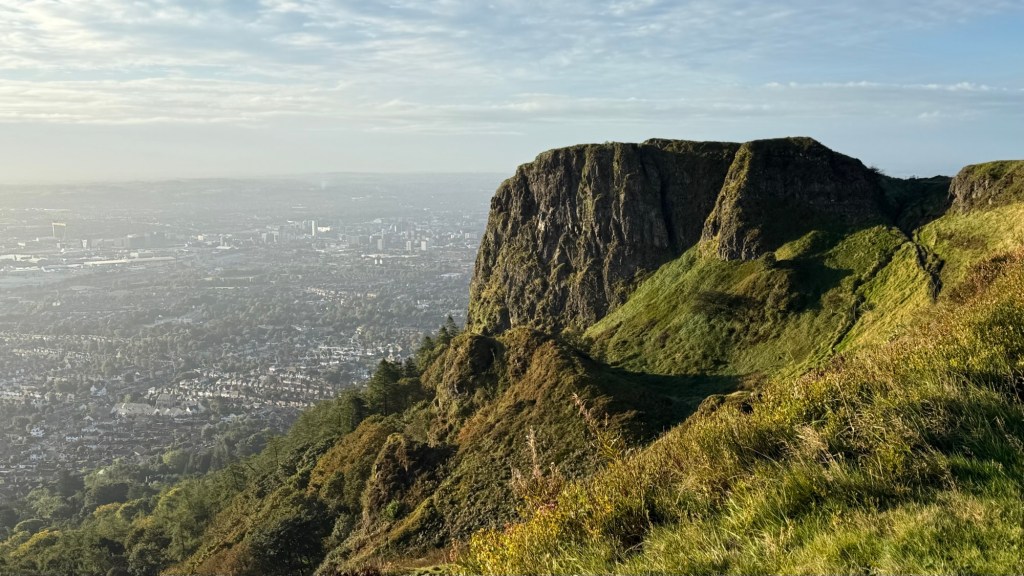
We drove off the Stena Line ferry at about 7am, the morning still fresh and quiet. We were relaxed after our smooth overnight crossing from Liverpool, but with the day ahead of us, we headed straight for our first adventure: Cave Hill Trail, just outside Belfast.
Morning on Cave Hill
The walk was about 4.33 miles in total, and we were back at the car before 10am — not bad for an early start. The weather was perfect, bright and clear, and while the trail had some challenging climbs, the views made every step worthwhile.
Cave Hill rises to 368 metres and gets its name from the series of caves visible in its basalt cliffs. The distinctive outline of the hill, known locally as Napoleon’s Nose, is said to have inspired Jonathan Swift’s depiction of the sleeping giant in Gulliver’s Travels.
Along the trail we stopped at McArt’s Fort, a prominent Iron Age fort that once served as a defensive stronghold. The name “McArt” is thought to come from Art O’Neill, a 16th-century Ulster chieftain. You can still trace the outline of the earthworks that once protected the fort.
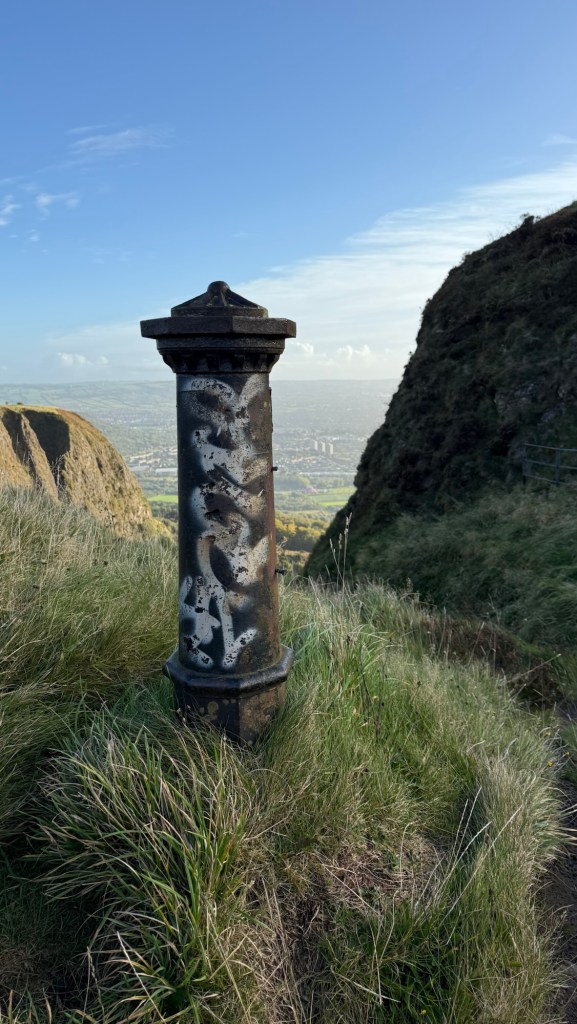
Nearby stands a Neolithic cairn, dating back some 5,000 years, a reminder that people have been climbing this hill since long before Belfast even existed. The trail also passes the dramatic hollow of the Devil’s Punchbowl, a natural amphitheatre carved into the hillside, its name a nod to local folklore.
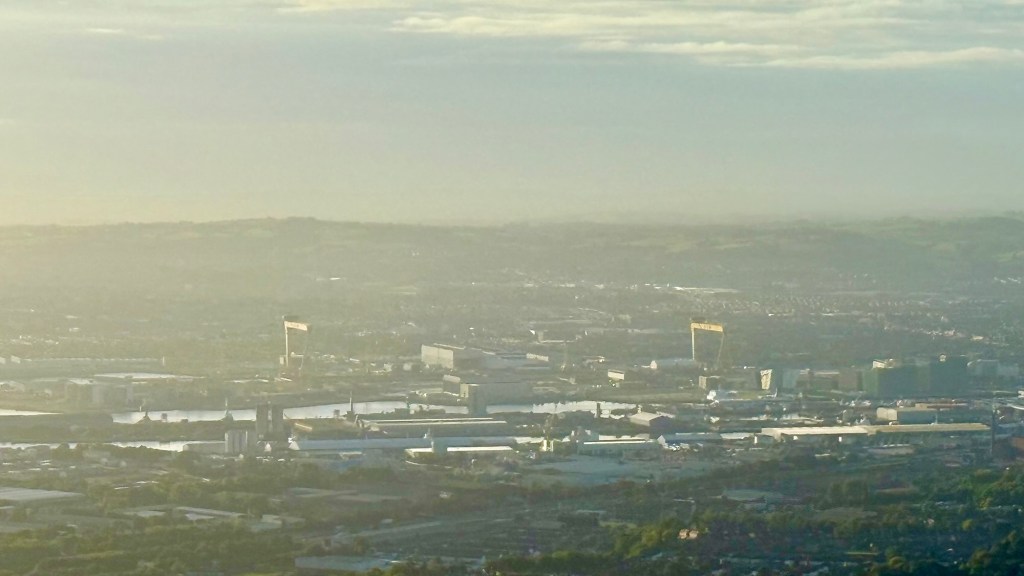
From the summit, we could see right over the city to the docks where the two giant Harland & Wolff cranes, Samson and Goliath, tower above the skyline. Built in 1969 and 1974, these cranes are Belfast’s most iconic industrial symbols. Though they post-date the Titanic, they are part of the shipyard’s legacy and the city’s shipbuilding might.
Descending, we walked past Belfast Castle, the grand 19th-century Scottish Baronial style building completed in 1870 by the Donegall family. The site had held castles since the 12th century, though earlier versions were destroyed by fire. The current castle was gifted to the city in the 1930s and is now a beloved landmark.

A Pause Before Bushmills
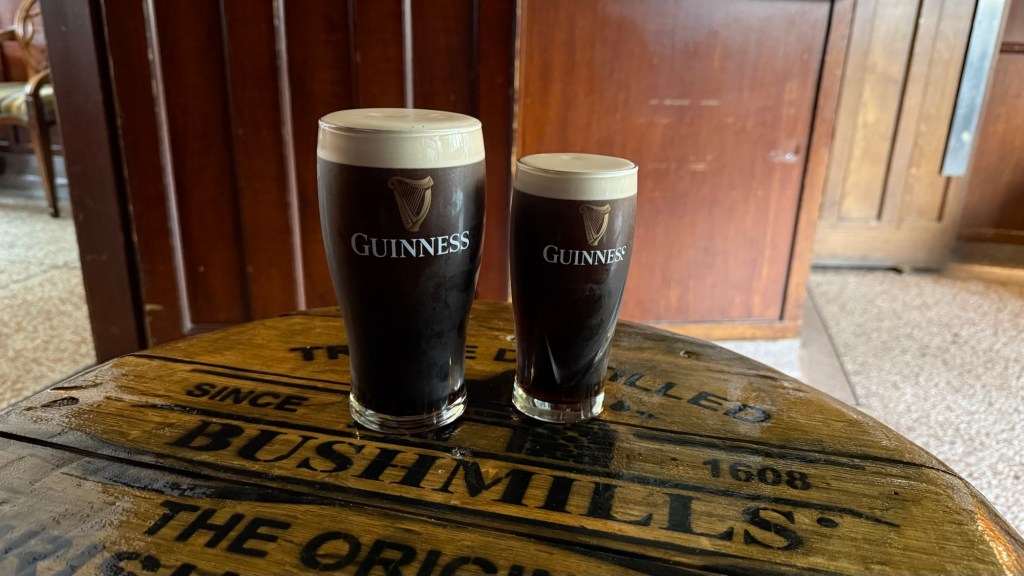
After our hike, we stopped to refuel the car, then drove north toward the village of Bushmills and the Causeway Coast. We reached the Bushmills Inn too early to check in, so we wandered to Bush House and enjoyed a pint of Guinness — the perfect late morning refresher.
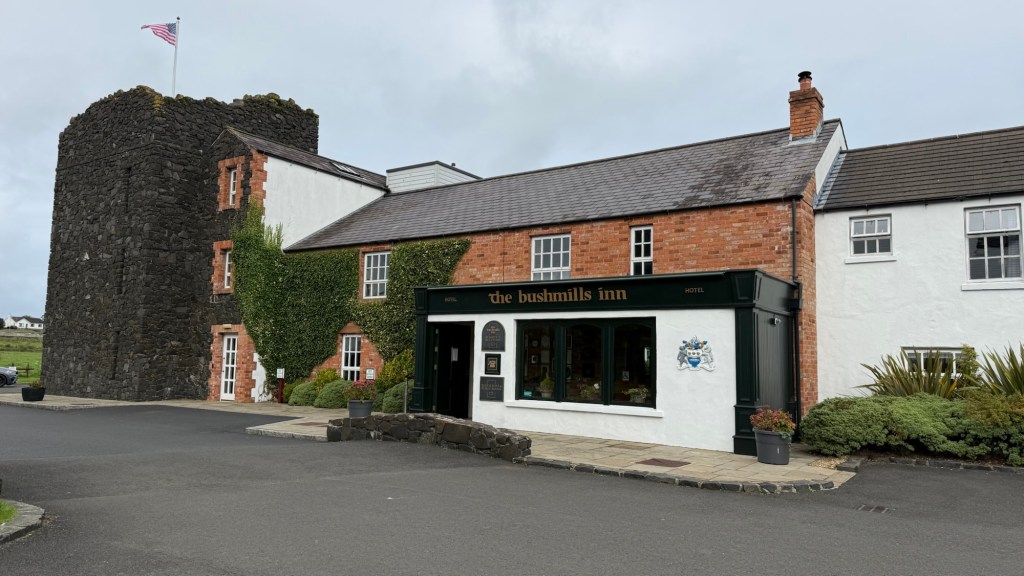
By lunchtime we were back at the Inn, where we tucked into hearty bowls of seafood chowder with toasted sourdough. The Inn itself has deep roots: parts of the building date back to the early 1600s, when it served as a coaching stop for travellers, while the main structure was built in the 1820s. It later fell into disrepair, even housing chickens in the attic at one point, before being lovingly restored in the 1980s. Today it’s one of Northern Ireland’s most atmospheric hotels and is a favourite with golfers who visit the nearby course at Royal Portrush.
Whiskey at Bushmills Distillery
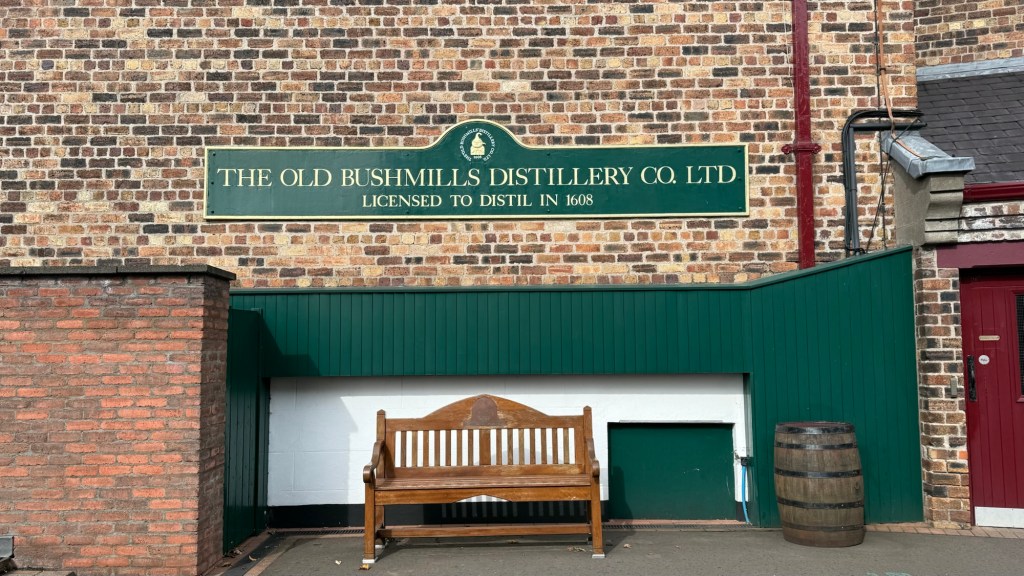
In the afternoon we walked down the road to the Old Bushmills Distillery, which proudly claims to be the oldest licensed whisky distillery in the world. Its licence to distil was granted in 1608, and although whisky was likely being made here long before, that royal licence gave Bushmills its enduring legacy.
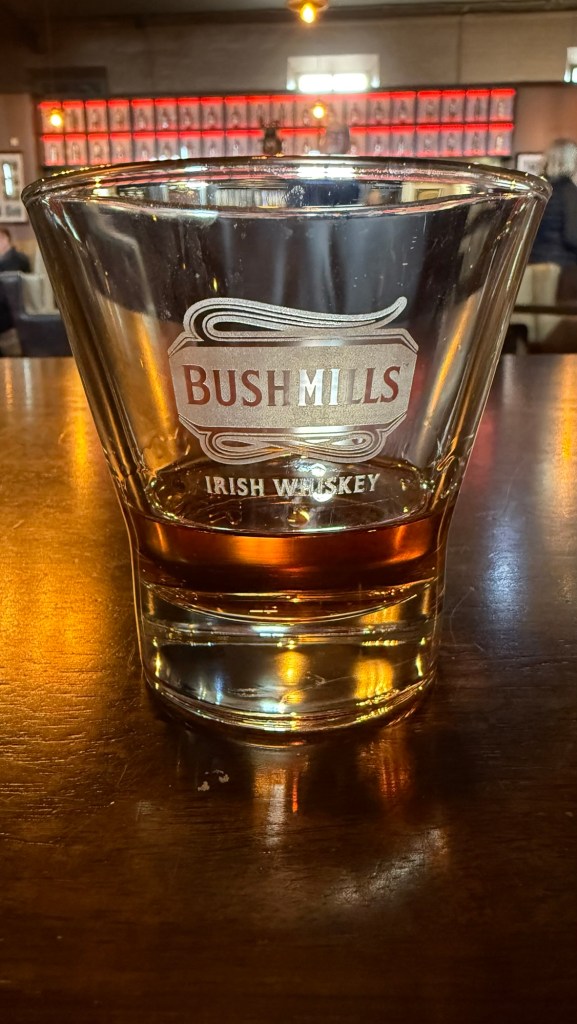
We settled into the 1608 Bar for a tasting: a 14-year-old limited edition matured in Bordeaux wine barrels, a 16-year-old, and finally a 21-year-old. Each sip was a journey through centuries of craft. JC picked up bottles of the 14 and 21 year olds to take home.
The distillery has seen its share of ups and downs. A fire in 1885 destroyed much of the site, but it was rebuilt. Exports were hit hard during U.S. Prohibition, yet Bushmills endured. Today, it remains a cornerstone of Irish whisky heritage, drawing visitors from around the globe.
Checking in at the Inn
Back at the Bushmills Inn, we finally checked in and were shown to Room 103, the “Royal Irish”, located in the tower part of the hotel. Spacious and full of character, it was the perfect base for our stay.
Later we had a glass of wine by the fire in the bar — almost too warm, with the flames roaring — before sneaking back to our room for forty winks. The early start was finally catching up with us.
Evening Dining
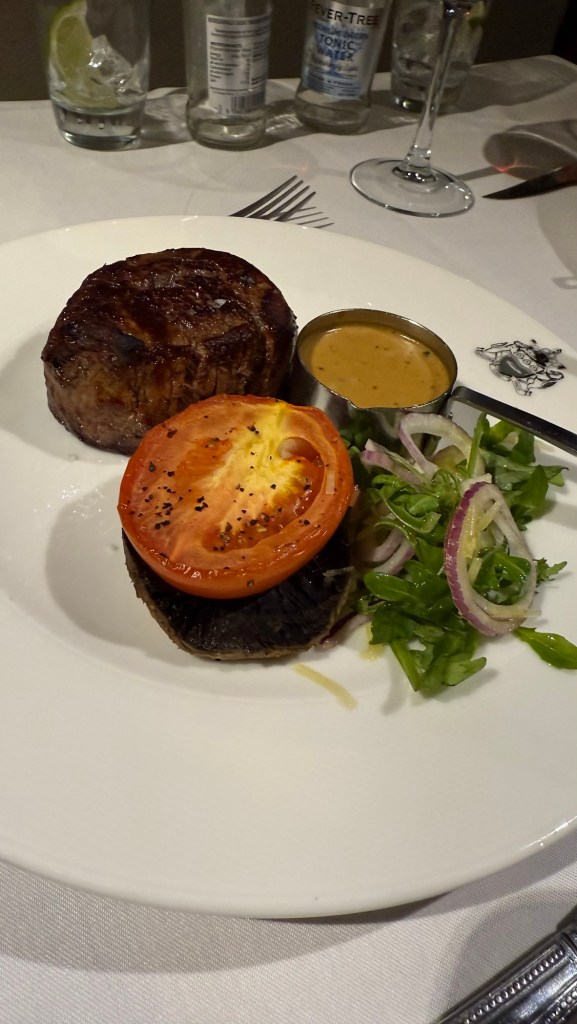
Dinner was booked for 7pm in the hotel restaurant. I started with a caprese salad and followed with an Irish beef fillet, cooked beautifully. The staff mentioned there would be a singer performing in the bar later, but the crowd was too much for us, so after our meal we slipped back to our room.
Reflections
From the prehistoric cairns of Cave Hill to the industrial cranes on Belfast’s skyline, from the centuries-old Bushmills Inn to whisky first licensed over 400 years ago, the day was a tapestry of Northern Ireland’s history. We had walked through thousands of years in a single morning and sipped centuries of craftsmanship by afternoon — a journey that was as much about stories as it was about sights and flavours.
 jctraveller
Leave a comment