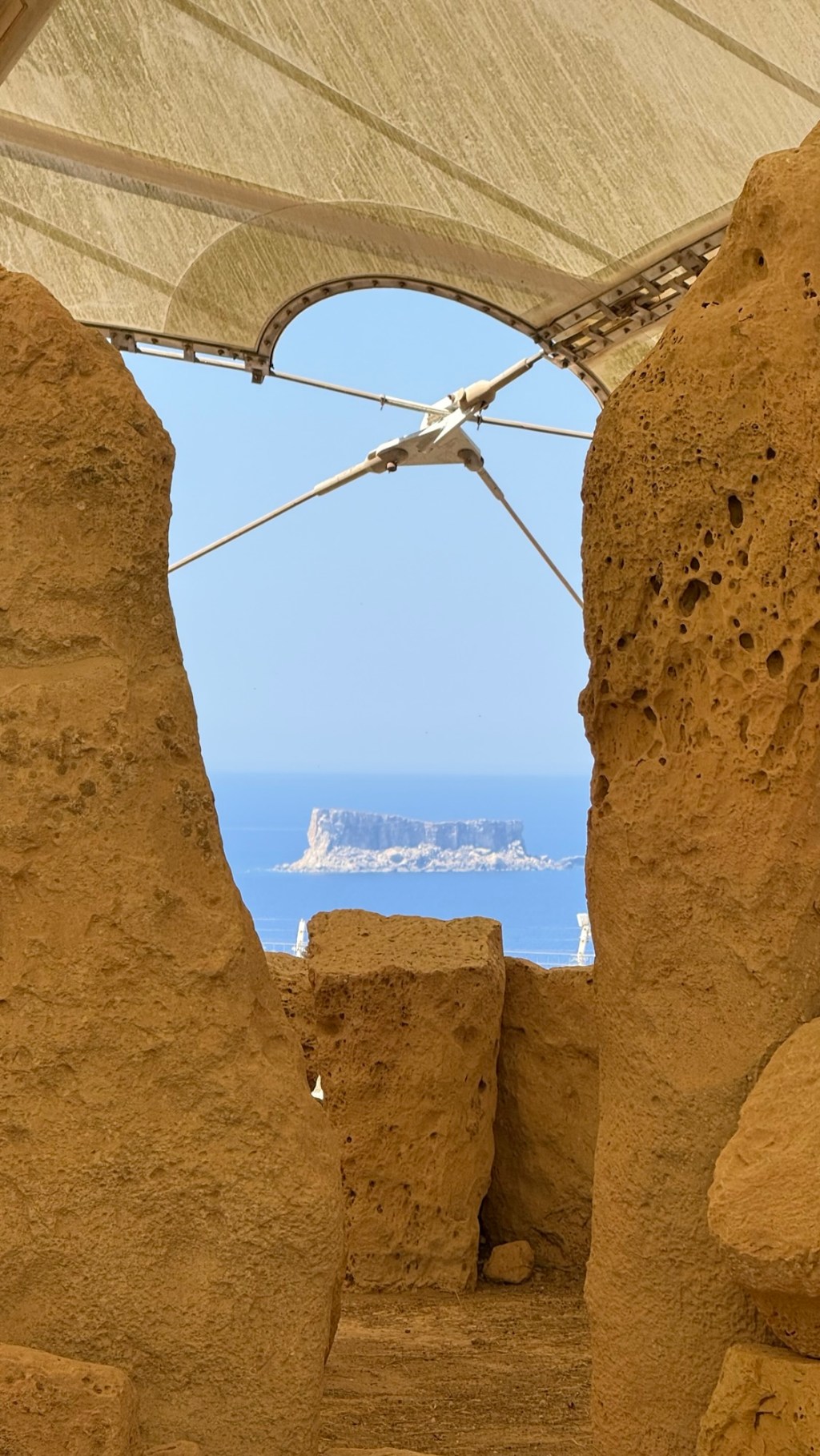
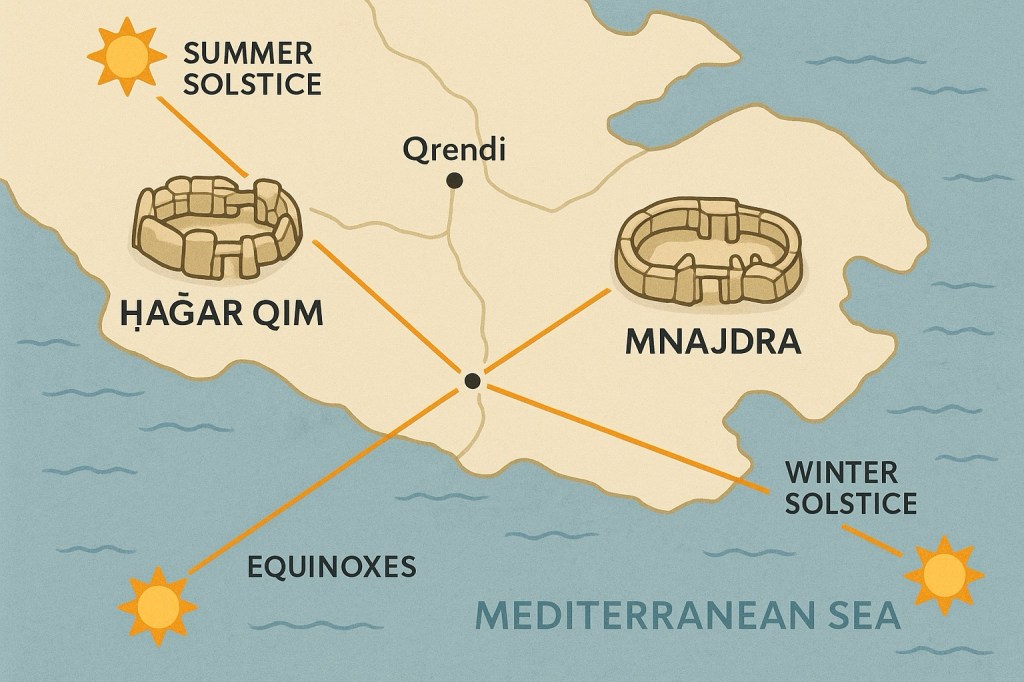
Day 4 and we had planned a bit of culture by visiting some ancient temples in Malta, which I learned about whilst doing research for this trip. Dated around 3600BC, they were built before Stonehenge and the Pyramids of Giza. They are located on the southern coast of Malta, near the village of Qrendi. It’s one of the most significant and well-preserved megalithic sites in the world and is part of the UNESCO World Heritage listing for the Megalithic Temples of Malta.
There is no direct public bus route to the temples – it would mean a 15 minute walk from the nearest stop. Not something we wanted to be doing with the temperatures nearing 30 degrees in the morning. We decided to go by taxi, which worked out at about £15 – much better than sweating it out on the bus!
We arrived at about 10:45am, at the same time as people on a guided tour. We bypassed them in the information centre and headed for the temples of Ħaġar Qim first, which is 100 metres away. The site is protected by a canopy installed in the 2000s to prevent erosion of the soft globigerina limestone.
“Ħaġar Qim” translates to “Worshipping Stones” or “Standing Stones” in Maltese. The construction is made up of large limestone blocks, some weighing several tonnes. The complex consists of a central building and a series of semi-circular apses, forming a trefoil layout typical of other Maltese temples.
The main doorway is aligned so that during the summer solstice, sunlight illuminates a stone inside the temple. Our taxi driver told us that he had taken people there before sunrise this year. Many stones are intricately carved with spirals, plant motifs, and animal figures. Figurines like the famous “Venus of Ħaġar Qim”, and various altars and pottery pieces, were discovered on site (now in the National Museum of Archaeology in Valletta).
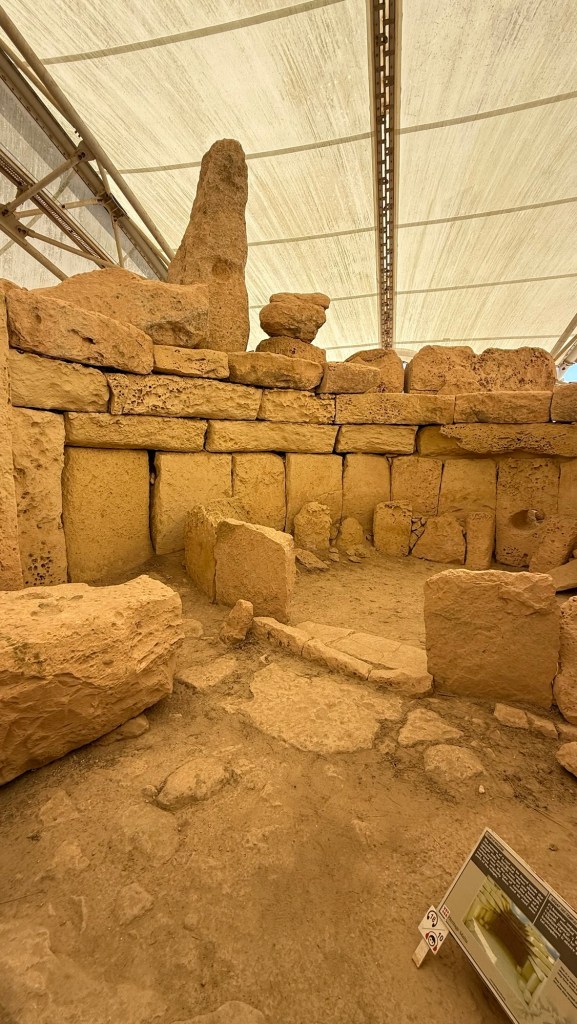
Once we’d been there, we had a 500 metre walk to Mnajdra, the site of another series of temples. Like Ħaġar Qim, it is covered by a canopy to reduce erosion. The temples were built between 3600 BCE and 2500 BCE, during the Ġgantija, Saflieni, and Tarxien phases of Maltese prehistory. They are set on a terraced cliff overlooking the Mediterranean Sea, and the small island of Filfla, offering stunning views. The temples are constructed primarily from coralline limestone, which is harder and more durable than the limestone used at Ħaġar Qim.
Mnajdra consists of three interconnected temples:
Upper Temple (the oldest): Built around 3600 BCE.
Middle Temple: Smaller and added later.
Lower Temple: The most architecturally advanced, dating to around 3000 BCE.
Each temple features curved apses, sone benches, intricately carved doorways and altar-like structures. Similarly to Ħaġar Qim, the lower temple is particularly famous for its astronomical alignment. During the equinoxes, sunlight passes through the main doorway and illuminates the central axis. During the solstices, light highlights the edges of specific megaliths in the temple. This suggests the site had a ritual calendar function tied to solar events. Tools, decorative stones and figurines were also found at the site.
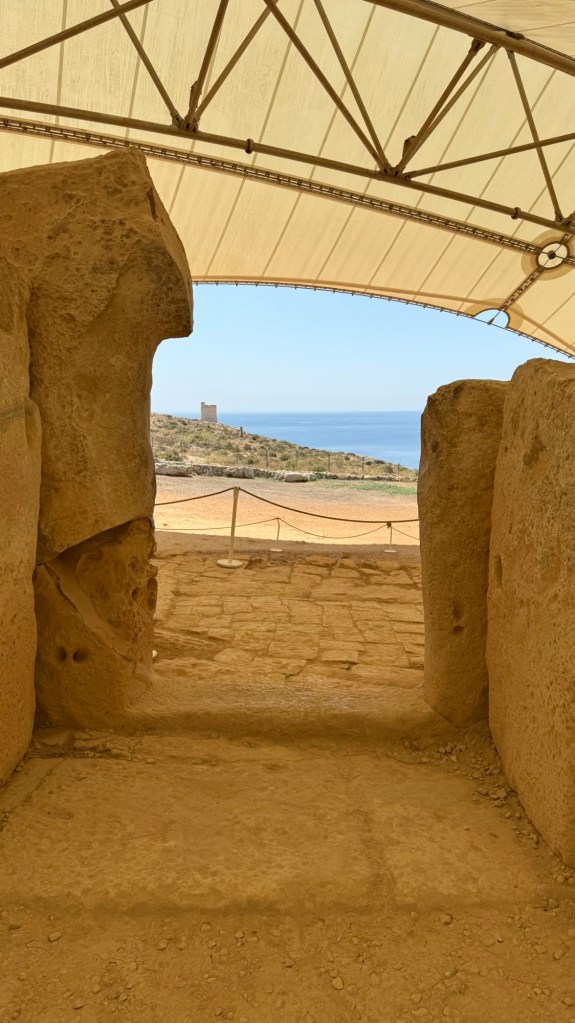
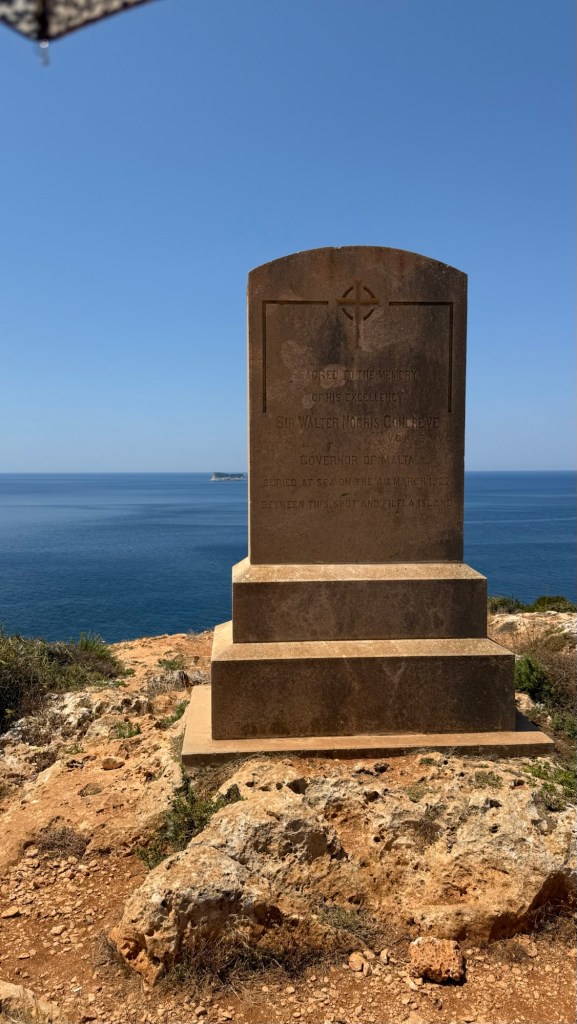
Once we’d seen the temples, we followed a heritage trail that took us along a signposted route where we saw a few other points of interest along the coast. The first was the Congreve memorial, dedicated to Sir Walter Congreve (1862-1927). He was born in Kent and was educated in Oxford and became governor of Malta. When he died, he was buried at sea between Malta and Filtla.
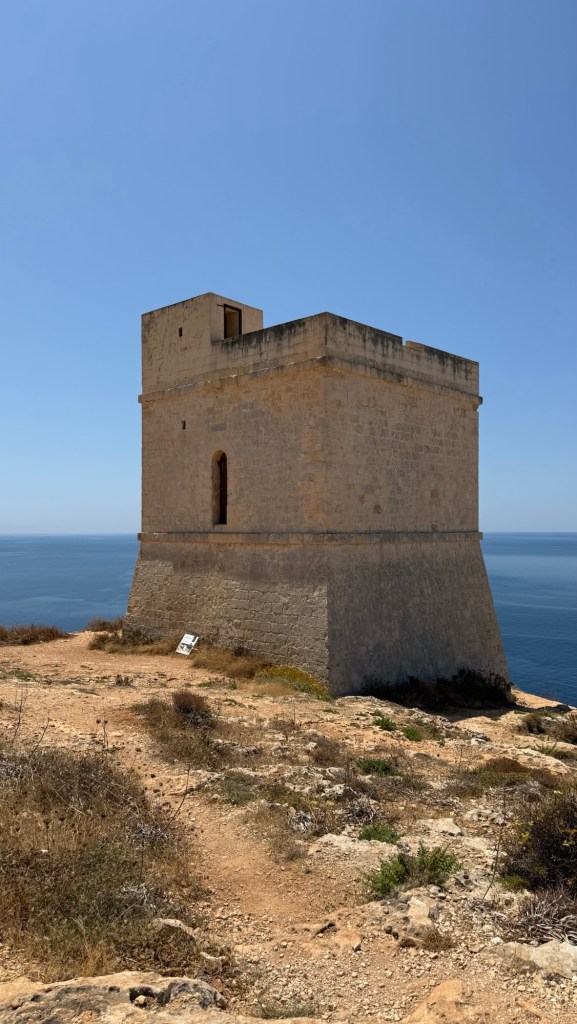
Further along, we came across the Ħamrija Tower. This is one of the De Redin towers, a series of fortifications built by the Order of St. John in the 17th century to defend the Maltese coastline from pirate and Ottoman raids.
All in all, the route took us about 45 minutes to walk. Sturdy footwear and plenty of water is recommended for this walk!
We then went back to the information centre to cool down. We ordered another taxi to Marsaxlokk, (pronounced Mar-sa-shlok) which is a traditional fishing village located in the southeastern part of Malta. It is known for its colourful boats (called luzzus), fresh seafood, and historical significance.
Marsaxlokk was used as a landing site by Phoenicians, Carthaginians, and Romans. Napoleon’s forces landed near here in 1798 when the French occupied Malta. It also became an important fishing hub throughout the centuries.
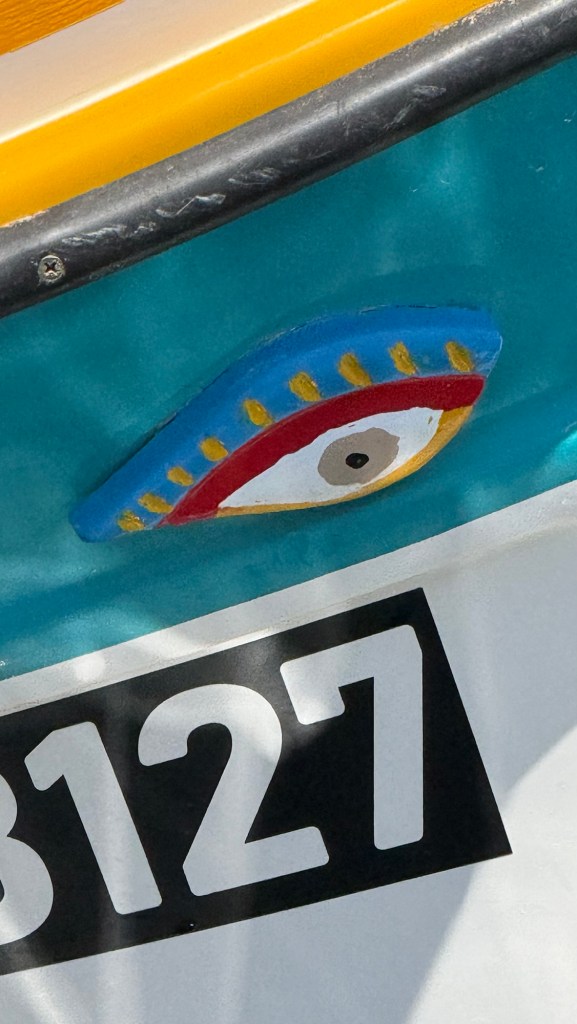
The taxi dropped us in the harbour area where we saw many luzzus, brightly painted with the eyes of Osiris on the bows — which are believed to protect fishermen.
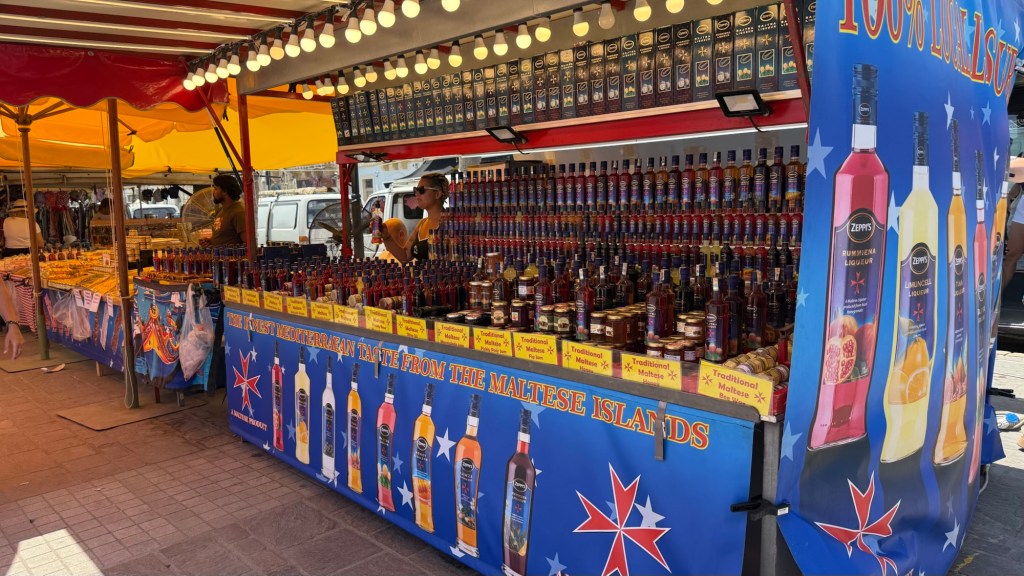
The harbour has plenty of restaurants and cafes, as well as a small market and people selling boat trips. We walked through the market where we sampled a local drink made from prickly pear, which was nice and refreshing.
Marsaxlokk is the seafood capital of Malta. Restaurants serve fresh-caught fish, octopus, squid, and aljotta (fish soup). The village also hosts festas (religious festivals), notably the Feast of Our Lady of Pompei (church) in early August. We found a restaurant on the harbour called Mare Bello, where we stopped for a lunch of sea bass, olives, capers and tomatoes, accompanied by potatoes flavoured with butter and fennel, and a small salad. The fish was locally caught and delicious.
We wandered along the harbour before catching another taxi to Birgu. This place is one of the Three Cities (alongside Senglea and Cospicua).
Also known as Vittoriosa, Birgu is one of the oldest and most historically rich cities in Malta. Located on the Grand Harbour, directly across from Valletta, Birgu played a central role in the island’s military, religious, and maritime history, especially during the era of the Knights of St. John.
It was hot, hot, hot when we arrived and there weren’t many people walking about. We walked along the Grand Harbour Marina, filled with super yachts and traditional fishing boats. There was nowhere to escape the sun, there was no shade at all, so we decided to try and cool down in a bar.
Service was disappointingly slow at Fra Divino but we were kept fairly cool as our table was next to a fan. Once the drinks came we didn’t stay long and thought it best to head back to Valletta. It was simply too hot to enjoy walking about again.
It was lovely back at our hotel room where I showered my salty, sweaty body and then relaxed in the jacuzzi. It was a godsend!
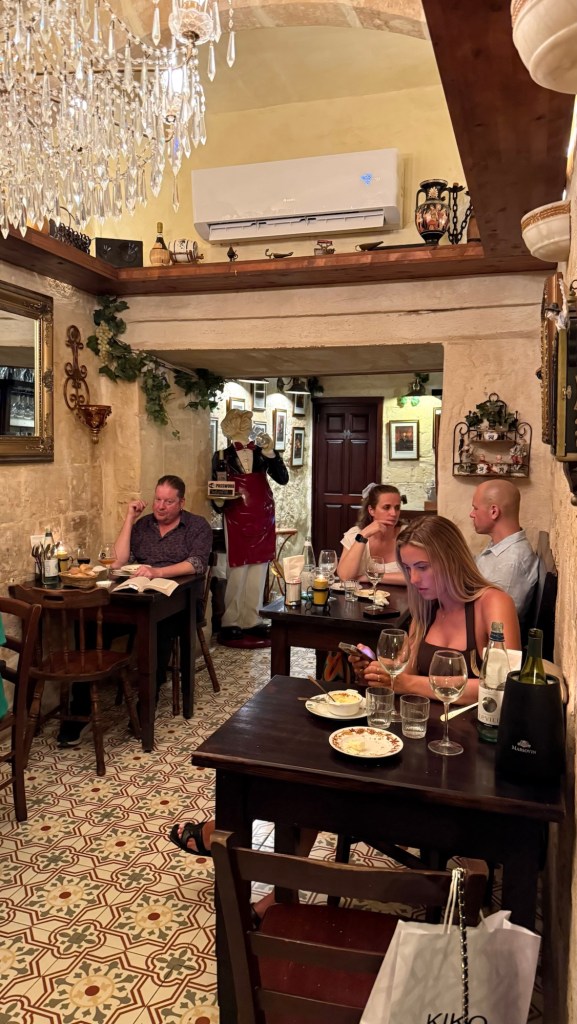
There was no rush to go out for something to eat, but we eventually did. Not knowing where to go, we came across a place called Legligin which had Michelin signs in the window. This restaurant had been recommended to us by a friend, and it offered a 7 course tasting menu as standard. The restaurant itself is located in Santa Lucia street, in a building with stone walls, quirky decor and tables on different levels. We managed to get in on a cancellation, and were glad we could experience such culinary delights. We had wine pairings that made great accompaniments to the dishes too. They were also very accommodating because I don’t eat rabbit, which happened to be one of the courses. We sampled gazpacho soup, Maltese tapas, tuna carpaccio, sea bream, quail, pork, chicken and tiramisu. We were also told about each wine as it was served. I would have no hesitation in recommending this place.
With full bellies and aching limbs, we went back to the hotel and it wasn’t long before we went to sleep.
 jctraveller
Leave a comment