
After we’d had breakfast at the rooftop restaurant again, we went to catch a bus to Mdina as planned. We thought it best to go from the main bus terminal, which is close to the Triton Fountain, and a short walk from our hotel.
After we’d sussed out how to get there – line 52, 52 or 53 – we bought a pass which allowed us to have unlimited bus rides and one-time access on the fast ferry to Gozo. Buses run regularly so once we’d found the bus stop, C2, we tapped our pass when getting onto the bus. It was absolutely full of people, maybe bus 630 (it’s reg plate) allowed 630 people on…? Maybe not, but at least there was air conditioning on the bus.
It took roughly 40 minutes with a few stops en route, including an emergency stop that the driver had to do when a homeless person wandered out in front of him. The lady sat next to me was cursing in Maltese and English. She was helpful though, telling us where to go when we got off the bus.
It was a short walk from the terminus before we got to Mdina’s majestic main gate, which has been featured in films and TV shows, such as Game of Thrones. Mdina is entirely encircled by defensive walls, and entry is usually through this gate. It was bustling with people when we passed through.
As the medieval fortified and former capital of Malta, Mdina dates back more than 4,000 years. It was originally settled by the Phoenicians around 700 BC and later became a Roman municipium. Its importance continued through the Arab, Norman, and medieval periods. The city’s architecture is a blend of medieval and baroque styles, thanks to its long and varied history. The narrow, winding streets and high stone walls reflect its Arab and Norman past, while several buildings were redesigned after the 1693 Sicily earthquake in a baroque style. It has a very small population — fewer than 300 residents — but it’s a major tourist attraction. We saw St. Paul’s Cathedral, one of Mdina’s most prominent landmarks. It’s said to be built on the site where Roman governor Publius met St. Paul after his shipwreck on Malta in 60 AD.
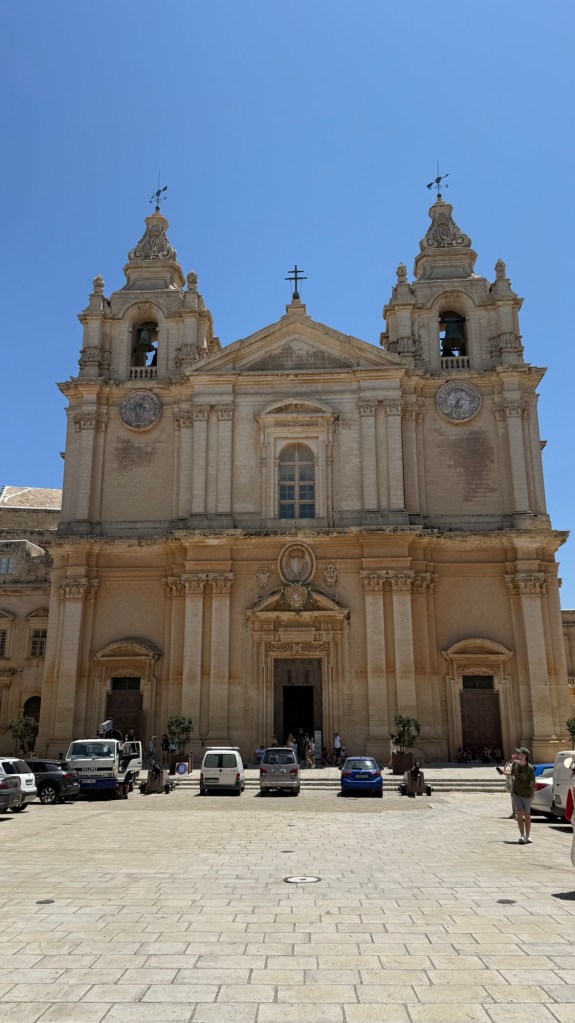
Only residents and limited vehicles are allowed in, preserving its peaceful ambiance and making it ideal for exploring on foot. We saw a few vehicles and the horse and carts that are used to take tourists on city tours.
We stumbled across Mdina glass, a shop that sells handmade glassware. We browsed around and I made my obligatory purchase for my Christmas tree.
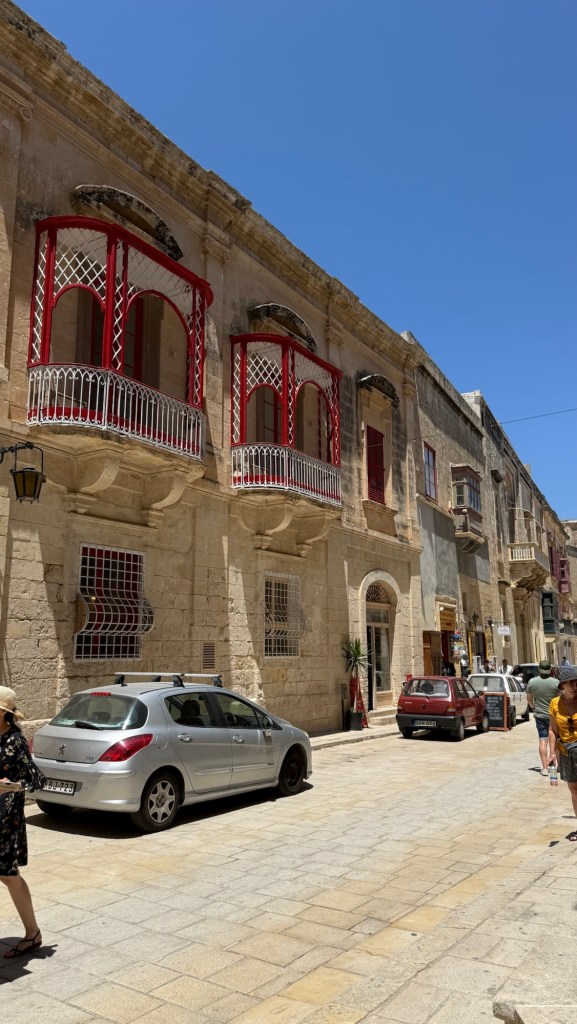
It was very hot whilst navigating the narrow streets of Mdina, and we tried to keep to the shady side where possible. It was where we found the restaurant, Bacchus, tucked away down a side street.
Bacchus is housed in the two chambers built by Grand Master Fe Martino De Redin between 1657 and 1660. The chambers are double vaulted and were built in between original Roman settlement walls dating back to the first century, and the Arab walls dating back to the 10th century.
We enjoyed a nice relaxed lunch here in the shaded Secret Garden before continuing to explore.
We wandered through more narrow streets until we reached the city walls, where Mdina meets Rabat. Situated just beyond Mdina’s fortified wall, Rabat grew as its outer suburb—its name derived from the Arabic word ribat, meaning “suburb.” While Mdina served as the fortified city, Rabat developed as the surrounding settlement beyond its walls.
Rabat is rich in Roman, early Christian, and medieval history. Many of Malta’s most significant archaeological finds have come from here. During the Roman period, Rabat was part of the city of Melite, which included both present-day Mdina and Rabat. Here, there are catacombs (we didn’t visit) and other significant buildings, including the Domvs Romana.
This Roman house was discovered in 1881, during the planting of trees in a public garden. It had been built in the 1st century BC, during the Roman Republic era, and was likely the residence of a wealthy Roman family, situated in the ancient city of Melite.
Here, we saw intricate floor mosaics, especially those in the tablinum (reception room). These mosaics are said to be among the oldest and finest in the western Mediterranean.
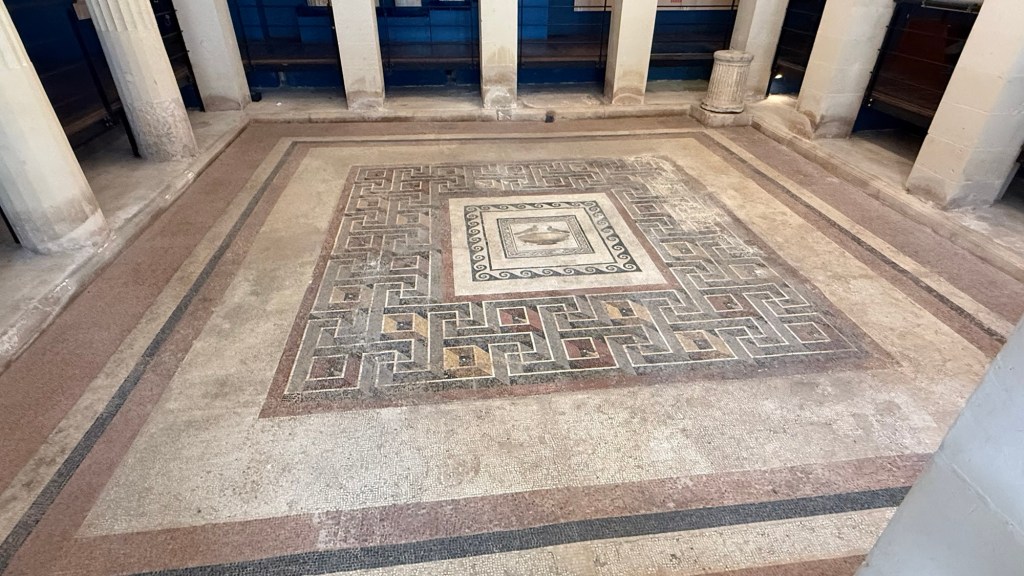
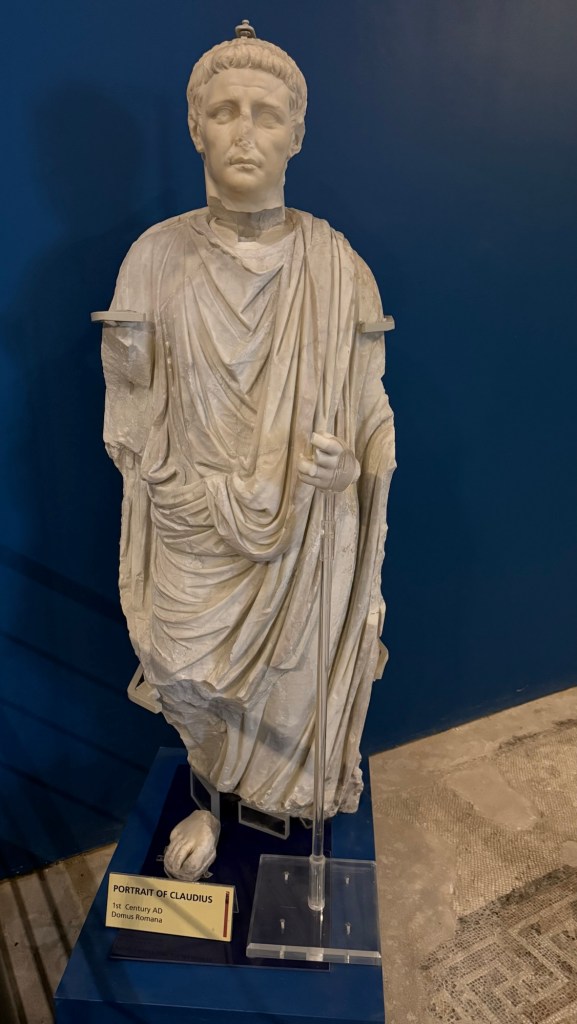
The museum, built around the original house to preserve it, displays artifacts uncovered on-site and from other Roman sites including pottery, oil lamps, glassware, jewellery, coins, busts and statues, including a famous marble statue of Emperor Claudius.
After we’d walked round the museum, we decided to head back to Mdina and work out the bus situation to get us back to Valletta. There was a number 52 bus just pulling away, but the driver saw us and waited for us to hop on. This was a good time to leave, the bus wasn’t even half full and the ride back was much quicker.
Valletta was busy round the bus terminal and the Triton Fountain. We stopped for a quick glass of local wine (two for the price of one at €6) at a restaurant called Manon. The staff were friendly and the wine tasted good.
We then walked back to the hotel along Strait Street. We passed the Frascati Cafe which has an upstairs window decorated with women’s bras.
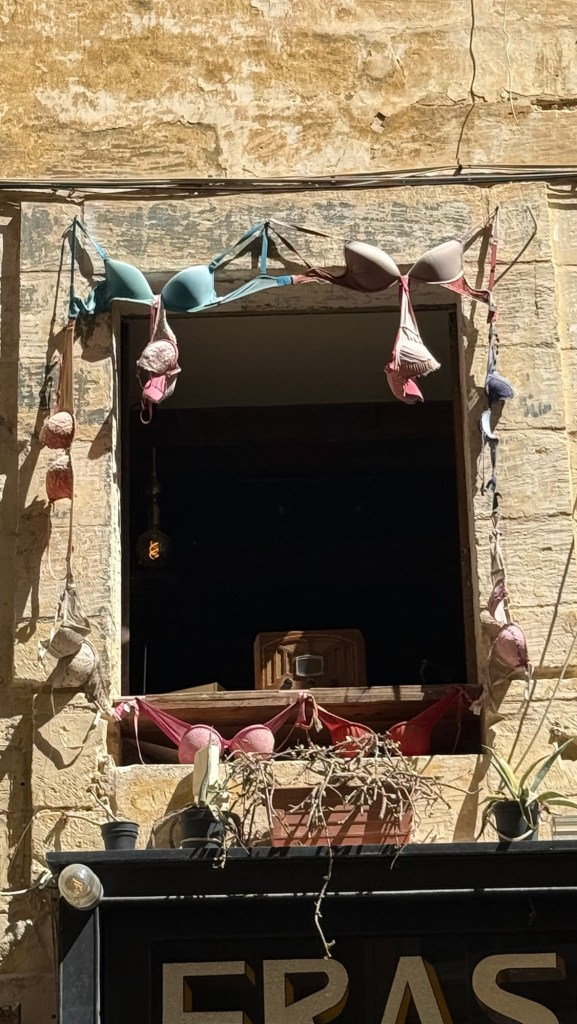
Back at the hotel, a much needed freshening up was the first thing I did, then we had a quick chill with a glass of Prosecco that Luka on reception had given us.
We headed back out and went to San Giovanni for a quick drink and then headed down Triq San Gwann (St John’s Street) where we found a great area for chilling out. There are outdoor seating areas at numerous bars, all positioned so they are facing down the street, looking towards the wharf.
We found a bohemian style place called Vino’s cafe bar, where a pint of Cisk lager or a local wine costs €4. There was a great vibe here, very laid back, and we stayed there for a few drinks. The inside of the bar was quite rustic and the stairs to the bathroom downstairs had to be negotiated with extreme caution. The bar owner was a friendly chap who wandered around in his bare feet.
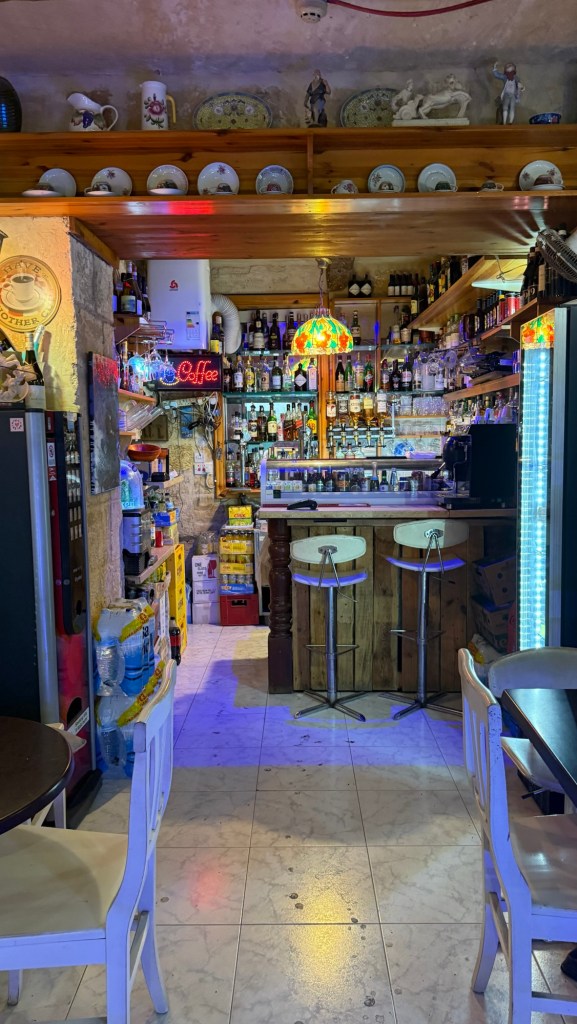
We headed down the steps afterwards, passing more people sat outside the bars. A saxophonist added to the ambience. Some people were even sat on the steps leading down to the water. It’s a great place for a proper chill.
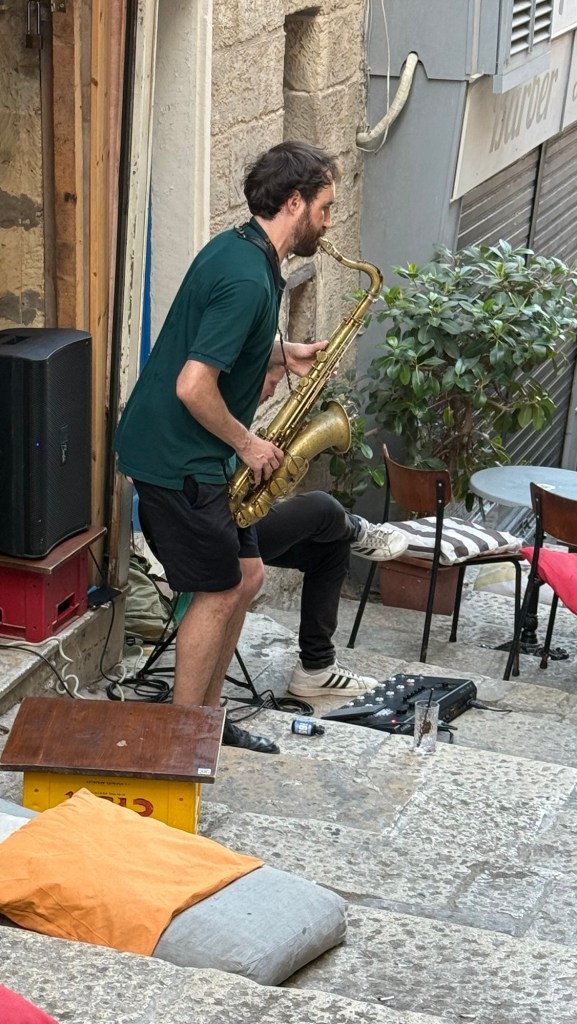
We left St John’s Street as we felt that we needed something to eat. We decided to revisit Mamavon, on Old Theatre Street, for some home made pasta. We were looked after by a different person but we still had the same great service.
We had a dip in the jacuzzi when we got back to the hotel, before retiring to bed.
 jctraveller
Leave a comment