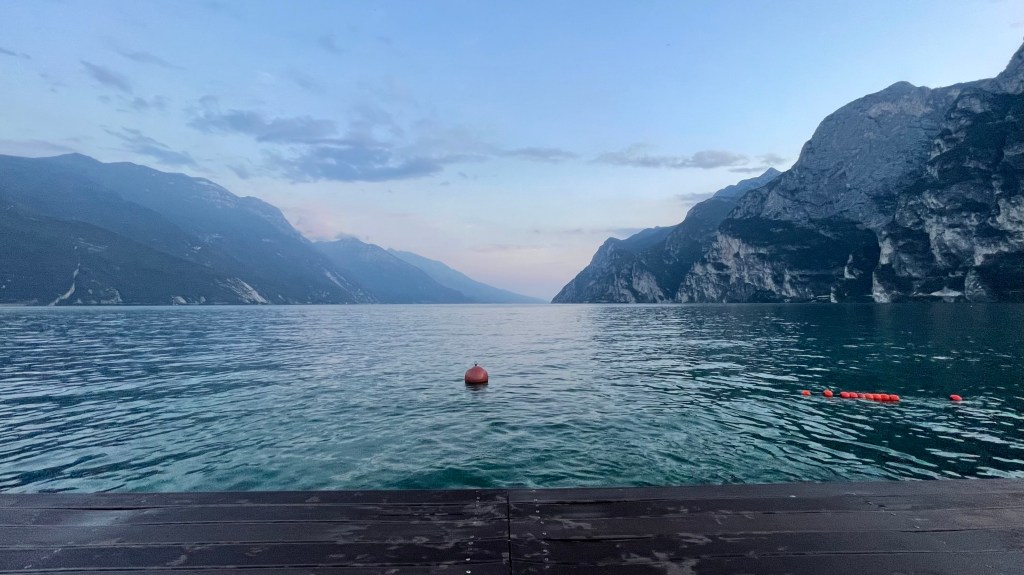
It was another sunny day when we left Bergamo on Tuesday morning. We set off at 10am as the sat nav said it should take 2.5 hours to drive to our next destination. This was Riva del Garda, a town at the north end of Lago Di Garda. I knew there would be narrow roads winding all the way round the lake, and there was plenty of them, with lots of crazy drivers, mainly motorcyclists who did daredevil passes facing oncoming traffic. There were also lots of tunnels to drive through, which also made the journey more interesting. This is where we had a few delays, waiting in stationary traffic for traffic lights to go green so we could enter.
We arrived at Hotel Villa Nicolli just after 1pm, later than expected. Gladly we were able to check in as the room was ready. We dumped our bags and then went to find something to eat.
https://www.hotelvillanicolli.com/en?gclid=EAIaIQobChMI6YTEvZe9gAMVnJGDBx3-mw5cEAAYASAAEgK7u_D_BwE
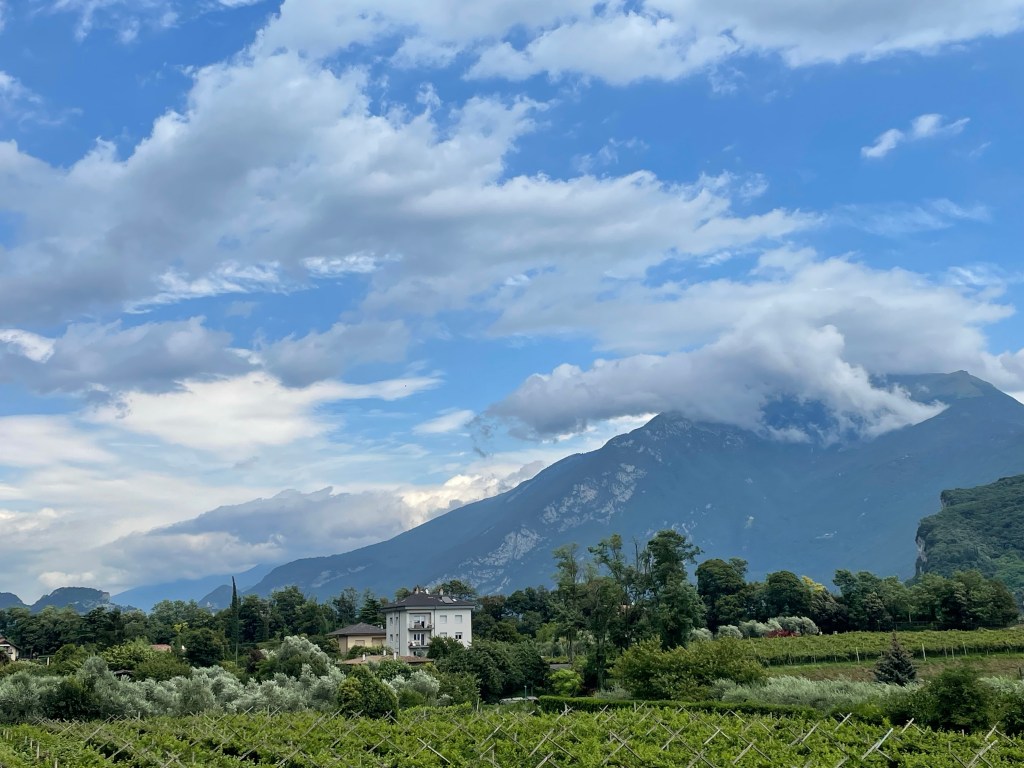
Lake Garda is popular with windsurfers as it is known for its intense breezes. It was certainly windy whilst we were sitting eating lunch close to the lake, outside at Ristorante Commercio. It didn’t spoil anything and was a great spot for people watching,
We went for a walk through the back streets of the old town. Here, we saw the funicular which takes people up to the grey stone bastion, which is positioned on the slopes of Monte Rocchetta. This bastion was built in the 1500s to give security to Riva del Garda following the end of Venetian dominance. It was, however, destroyed by French troops in 1703. It became unusable but has since been restored so it can be enjoyed by visitors. Further up is the church of Santa Barbara which is accessible by a path from the bastion, and overlooks the town.

Down another street we saw a plaque with the Star of David on it. This symbolises the Jewish Ghetto, an area called Vicolo delle Larve or degli Ebrei (amongst the townsfolk) and signifies the important presence of the Jewish community. Jews were allowed to settle in Riva del Garda from 1430, until the end of the 18th century. The community were integrated and very active in the economic, political and cultural life of the city. This was despite the prohibitions and restrictions in force, but these were never rigidly applied.
If you’re interested in the history of Riva del Garda, there are other landmarks which are worth seeing, such as the city gates.
Porta San Marco, was built by the Venetians in the 11th century, and Porta San Michele in the 13th century. These are the remnants of the medieval city walls. The Porta San Michele has a small battlement belfry for the church of Maria Assunta.
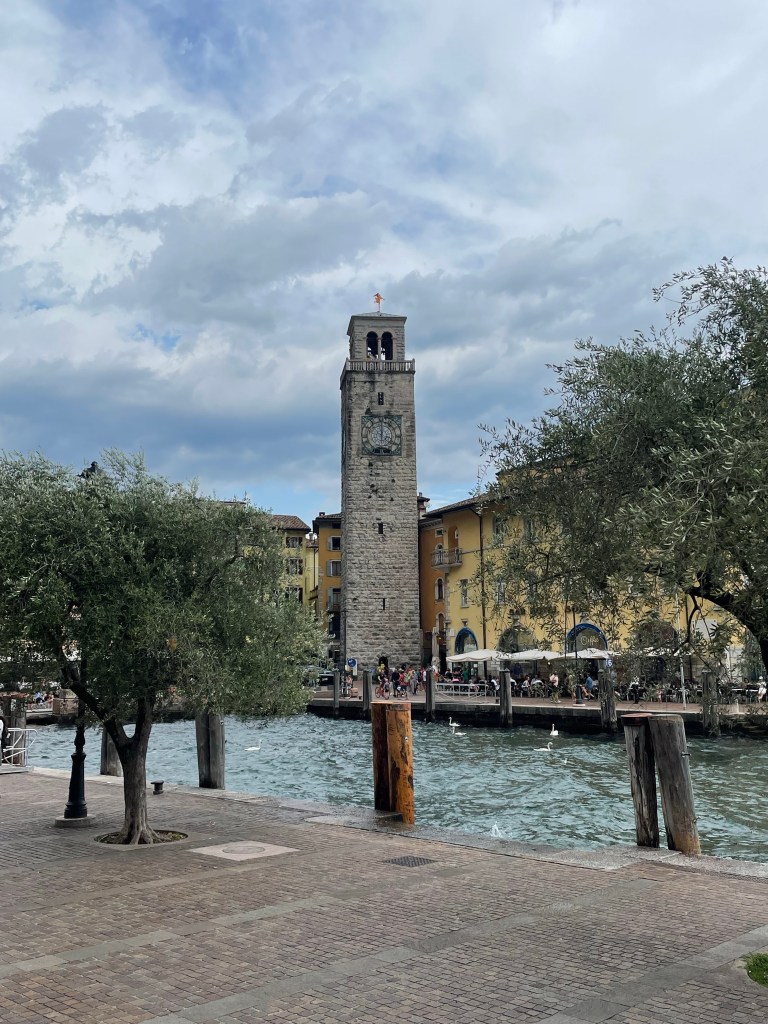
There is also the Torre Apponale, a tower which formed part of the town’s fortress that no longer exists.
Riva del Garda is situated at the southern edge of the Italian Alps, close to the Dolomites. The imposing Monte Rocchetta and Monte Brione surround the town make stunning scenery, and are great to photograph.
Back at the accommodation, we had to sort an air conditioning problem out, before going out for tea. We went to Ristorante Pizzeria L’Ora which was a good fifteen minute walk from Hotel Villa Nicolli.
This restaurant overlooks the lake so, once we’d eaten, we walked back along the waterfront back to the old town. The lighting was perfect at this point for taking more photographs of this beautiful place.
Something that we were introduced to at Busat bar was Lugana, which is a locally produced white wine and is lovely to drink. A couple of glasses ended another day on a perfect note.
http://www.veronissima.com/sito_inglese/html/wine_lugana_ing.html
 jctraveller
Leave a comment